What is Customer Perception & How to Improve it?
Customer perception—how customers view a brand through experiences—crucially drives trust, loyalty, and business success.

Customer perception—how customers view a brand through experiences—crucially drives trust, loyalty, and business success.
Modern consumers have endless options at their fingertips, companies need to go above and beyond to stand out from the crowd. Creating a positive image in the minds of customers can have a significant impact on the success of a business.
About 81% of customers state they will only buy from brands they find trustworthy, indicating that a positive perception significantly affects purchasing behavior.
Companies that prioritize customer perception are more likely to thrive in a crowded marketplace. By understanding the importance of customer perception, companies can gain a competitive edge.
Let us dive into how to effectively manage consumer perceptions and build a loyal customer base.
Consumer perception is defined as how customers view or interpret a company’s products, services and overall brand. It is crucial for businesses to manage customer perception in order to attract & retain clients and build a positive reputation.
Consumer behaviour perception is influenced by a variety of factors, including a company’s marketing efforts, customer service, product quality, pricing and overall brand image. These factors can shape how customers perceive a business, whether positively or negatively.
Key objectives:
1. Understand customer experience: Customer perception stems from the total brand experience across all touchpoints, shaping how people understand and value a company’s offerings.
2. Measure brand emotional connection: Understanding customers’ emotional connections with a brand reveals key drivers that turn simple transactions into enduring relationships.
3. Identify perception influencing factors: A holistic understanding of what shapes customer perception helps companies refine their engagement strategies across all touchpoints.
4. Monitor and adapt perception dynamics: Customer perception evolves constantly, demanding ongoing monitoring and swift adaptations to maintain brand strength in dynamic markets.
Understanding and managing consumer perception can have a significant impact on a company’s bottom line.
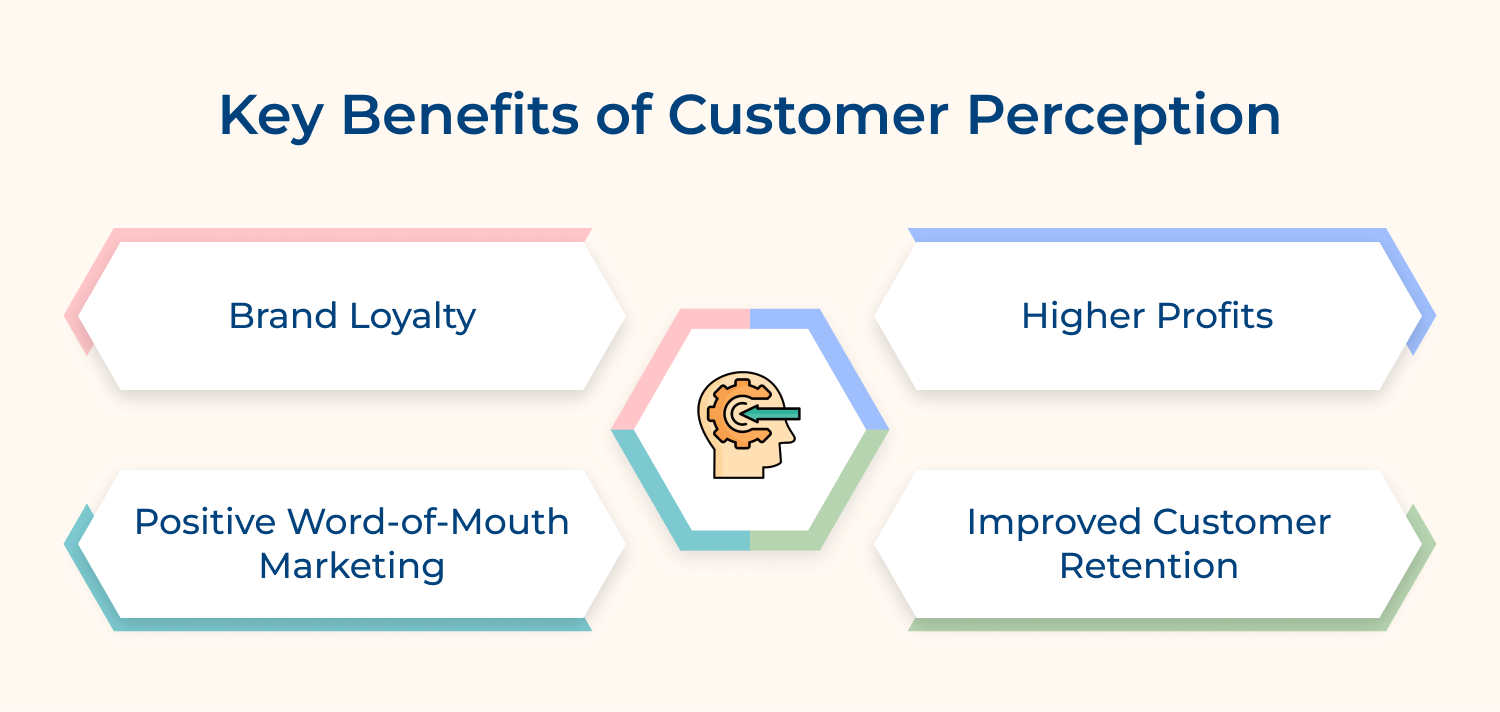
Every business knows that customer perception is key to success. How customers perceive your overall can directly impact your sales and reputation. But how do you actually identify and measure customer perception?
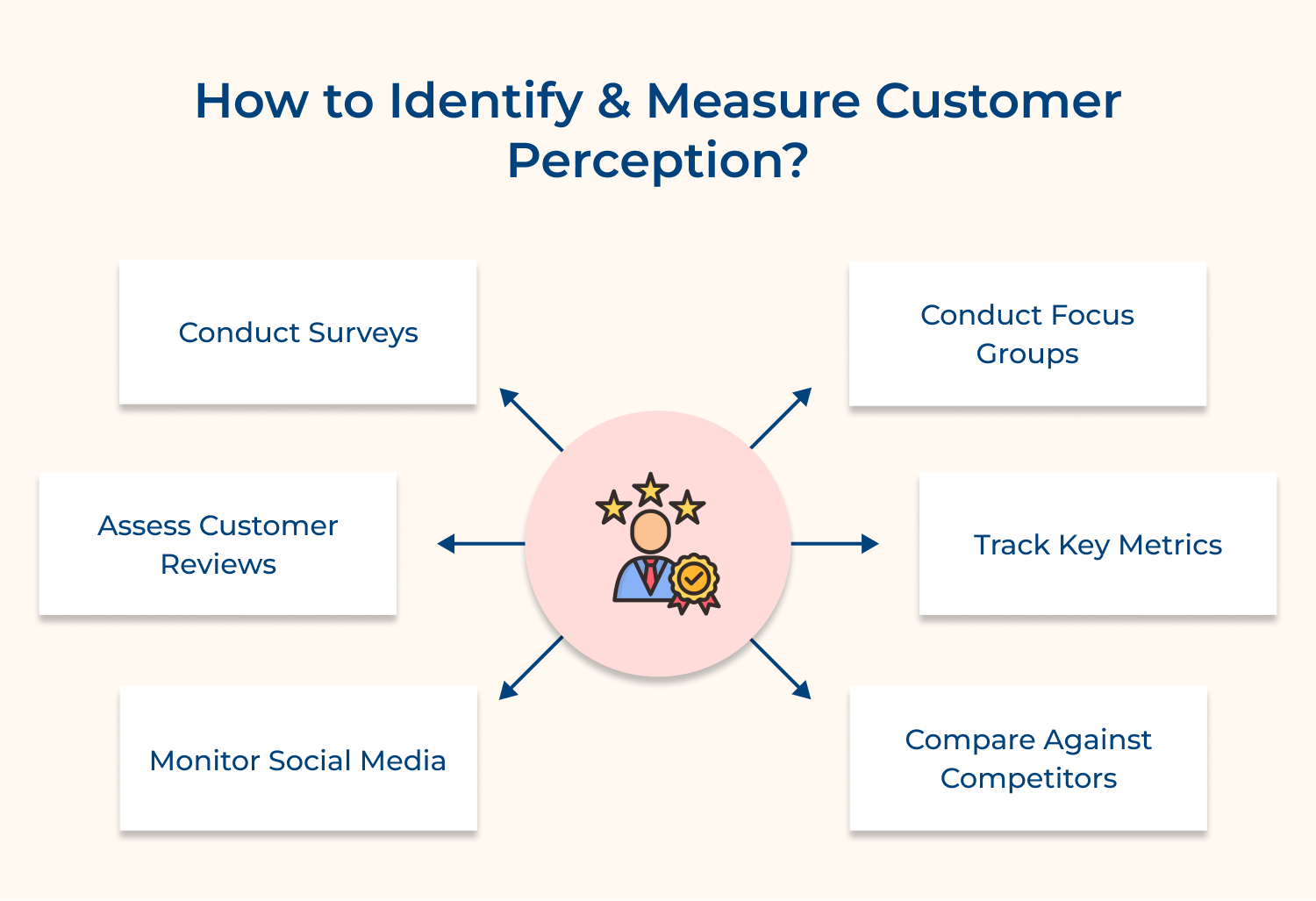
One of the most common ways to measure customer perception is through surveys. You can create surveys that ask customers about their experiences with your brand, products or services. Make sure to ask specific questions that will give you insight into how customers perceive your business.
Pro tips:
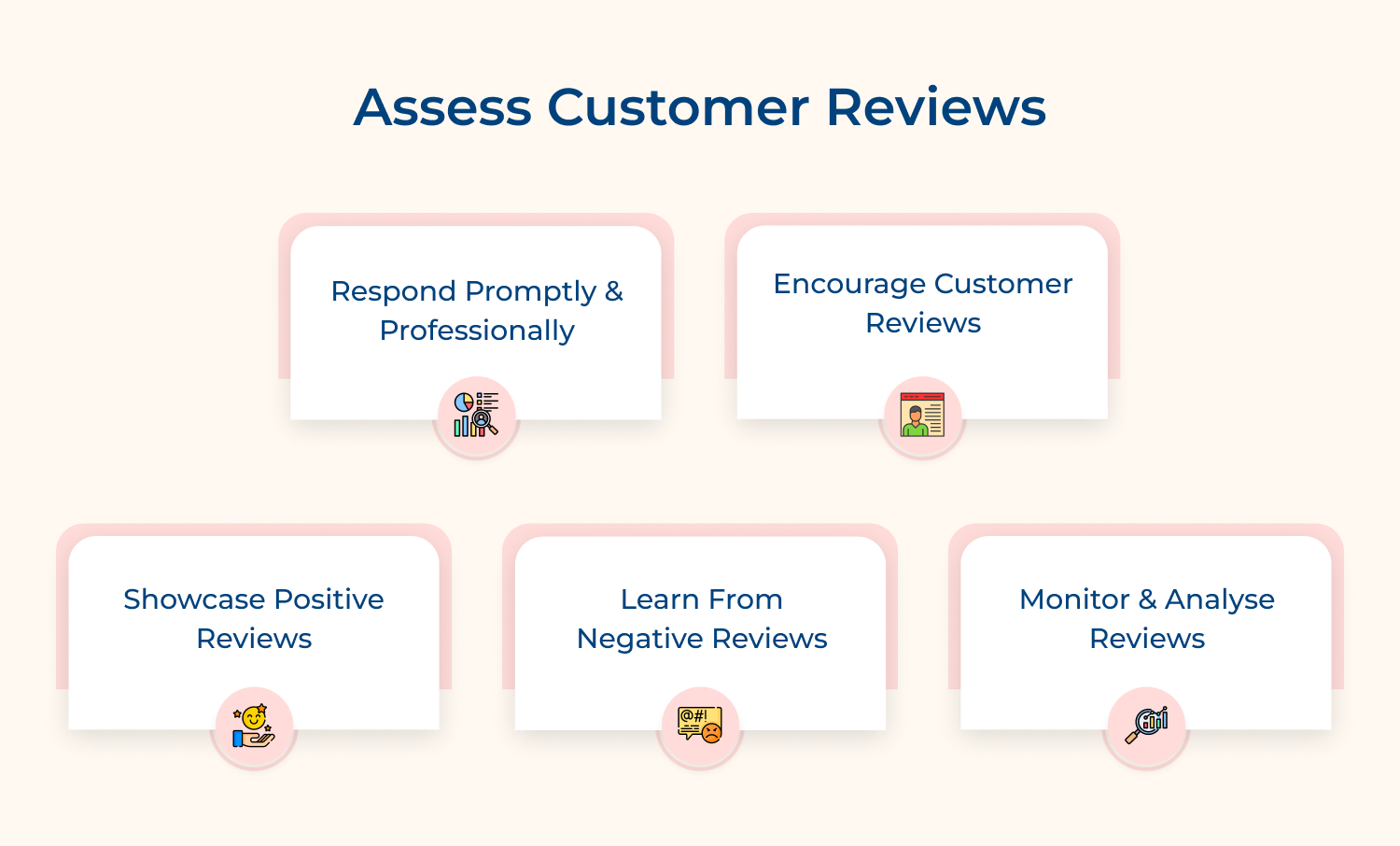
Online reviews can be a goldmine of information to understanding customer perception. Take the time to read reviews on platforms such as Google, Yelp and social media to see what customers are saying about your business.
Look for common themes and sentiments to get a better understanding of how customers perceive your brand.
Pro tips:
Social media is a great tool for tracking customer perception. Keep an eye on mentions of your brand on platforms like Twitter, Facebook and Instagram. Always pay attention to both positive and negative comments to gauge how customers perceive your business.
Pro tips:
Focus groups can provide valuable qualitative insights into customer perception. By bringing a group of customers together to discuss your brand, products or services, you can gain a deeper understanding of their perceptions and emotions.
Pro tips:
There are several metrics you can track to measure customer perception, such as Net Promoter Score (NPS), Customer Satisfaction Score (CSAT) and Customer Effort Score (CES). These metrics can give you a quantitative measure of how customers perceive your business.
Pro tips:
To truly understand customer perception, it’s important to compare your business against competitors. Look at how customers perceive your competitors and identify areas where you can differentiate yourself to improve perception.
Pro tips:
When it comes to understanding your customers and their perception of your brand, conducting a consumer perception survey can be extremely valuable. The right questions can provide you with valuable insights into what your customers think about your brand.
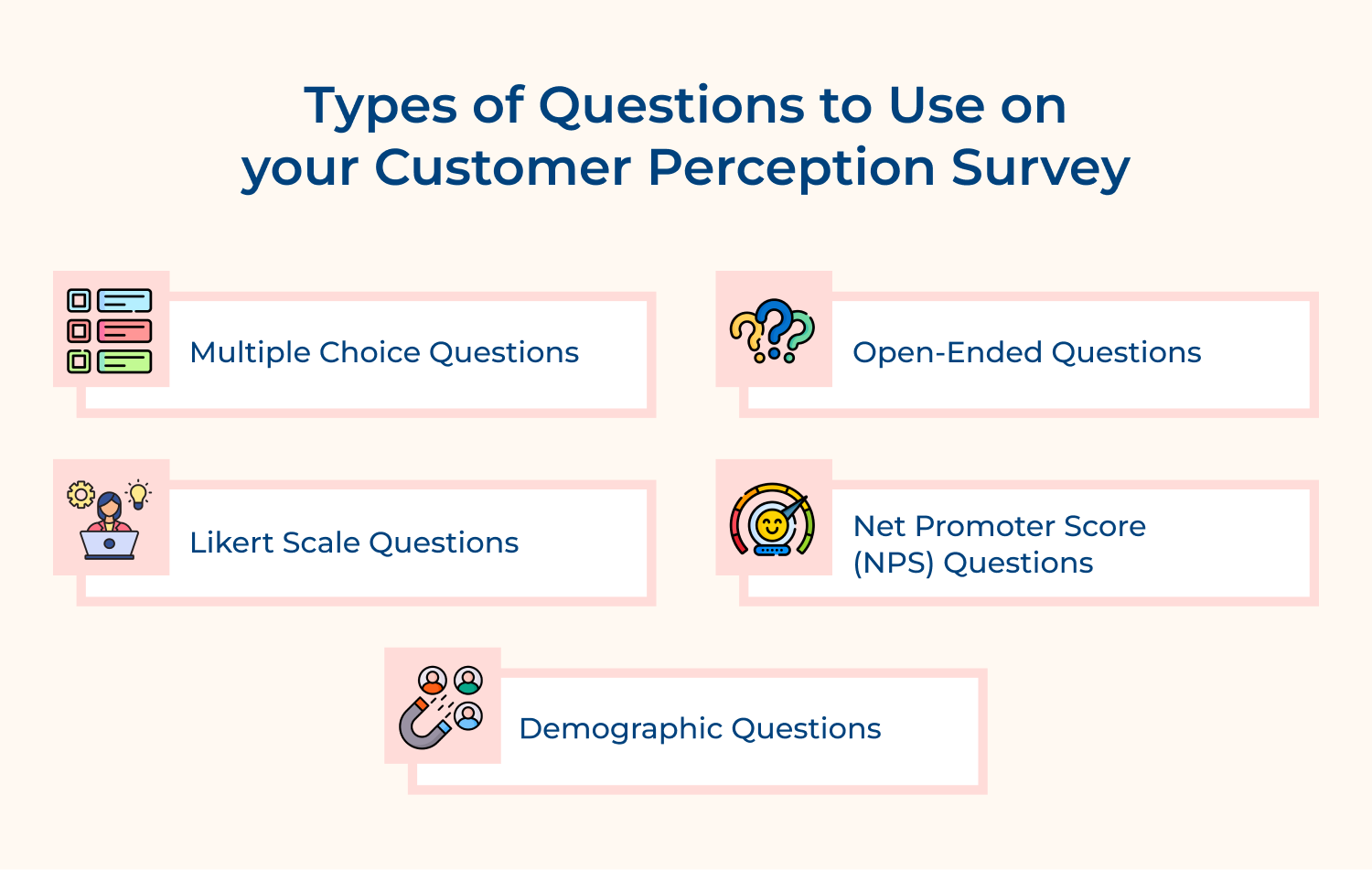
Multiple choice questions are a great way to gather quantitative data quickly and easily. These questions allow customers to choose from a specific set of options, making it easier to analyze and compare responses. For example, you could ask customers to rate their satisfaction with your product on a scale of 1-5.
Open-ended questions allow customers to provide detailed and personalized feedback. These questions can provide you with valuable insights into customers’ thoughts, feelings and experiences. Examples of open-ended questions include “What do you like most about our product?” or “How could we improve our customer service?”
Likert scale questions are a type of multiple choice question that measures respondents’ agreement or disagreement with a statement. Customers are typically asked to rate their level of agreement on a scale, such as strongly agree, agree, neutral, disagree and strongly disagree. Likert scale questions are useful for measuring attitudes and opinions.
NPS questions help measure customer loyalty and satisfaction by asking customers how likely they are to recommend your product or service to others. Customers are typically asked to rate their likelihood on a scale of 0-10. Customers who score 9-10 are considered promoters, while those who score 0-6 are detractors.
Demographic questions can provide you with valuable information about your customers, such as their age, gender, income, location and more. This data can help you segment and target your audience more effectively, as well as identify any trends or patterns in perception based on demographic factors.
How customers perceive a brand influences their decision-making process and their loyalty to the brand. In order to maintain a positive consumer behaviour perception, businesses must implement certain best practices.
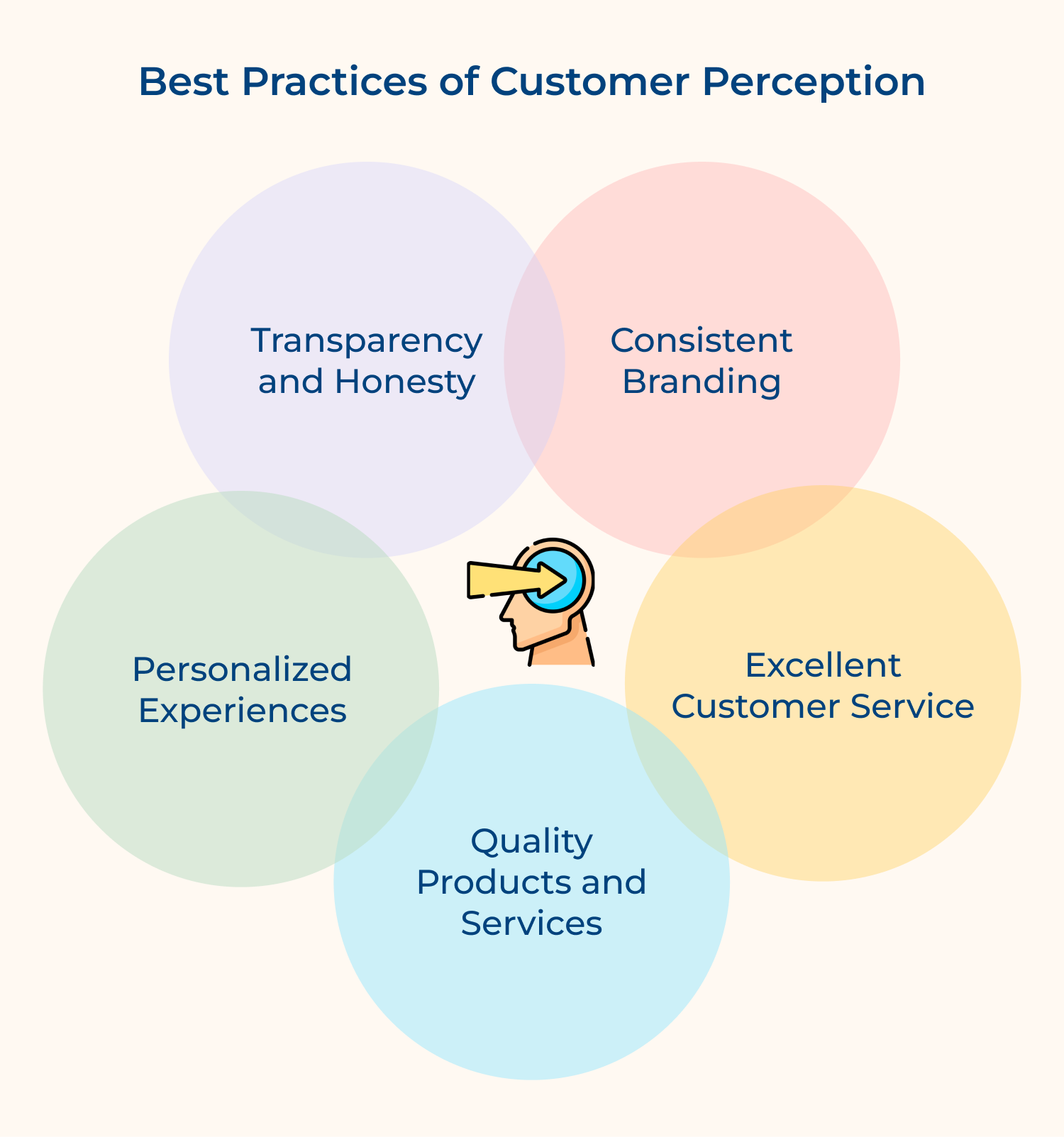
1. Consistent Branding
Consistency is key when it comes to branding. Customers should have a clear understanding of what your brand represents and what it stands for. Confirm that your branding is consistent across all touchpoints, including your website, social media and marketing materials.
2. Excellent Customer Service
Providing excellent customer service is essential for creating a positive perception of your brand. Customers value businesses that are responsive, helpful and attentive to their needs. Ensure to train your employees on how to handle customer inquiries effectively.
3. Quality Products and Services
The quality of your products and services has a direct impact on customer perception. Make sure that you deliver high-quality products that meet or exceed customer expectations. Consistently seeking feedback from customers can help you identify areas for improvement.
4. Personalized Experiences
Tailoring your marketing efforts to meet the individual needs and preferences of customers can go a long way in enhancing customer perception. Use data and analytics to create personalized experiences for customers, such as targeted email campaigns or personalized recommendations.
5. Transparency and Honesty
Building trust with customers is essential for maintaining a positive customer perception. Be transparent and honest in your business practices, from pricing to customer policies. Customers appreciate businesses that are truthful and upfront about their offerings.
Customer perception plays a crucial role in the success of any business. How customers perceive a brand, product or service can greatly impact their buying decisions and loyalty.
Apple has built a strong reputation for producing high-quality, innovative products that are seen as status symbols. Customers perceive Apple products as superior in design, performance and reliability, which has helped the company maintain a loyal customer base.
Coca-Cola has successfully positioned itself as a timeless and iconic brand that evokes feelings of happiness. The company’s marketing campaigns, such as the “Share a Coke” campaign, have reinforced positive perceptions of the brand and strengthened customer loyalty.
Amazon has earned a reputation for convenience, reliability and excellent customer service. The company’s focus on fast delivery, easy returns and personalized recommendations has shaped customers’ perceptions of Amazon as the go-to destination for online shopping.
Tesla has revolutionized the automotive industry by producing electric vehicles that are seen as environmentally friendly and technologically advanced. Customers perceive Tesla as a forward-thinking and innovative company, which has helped the brand gain a loyal following of environmentally conscious consumers.
Maintaining good customer perception is vital for elevating a company’s reputation in the market. By providing excellent customer service, addressing their needs promptly and going above and beyond to exceed their expectations, a company can build a positive image.
Happy customers are more likely to recommend the company to others, leading to more business opportunities and growth. It is essential for businesses to prioritize customer satisfaction and always strive to improve their overall experience. In a competitive market, a positive customer perception can set a company apart from its competitors and contribute to long-term success.

What are the stages of customer perception?
Customer perception can be broken down into three stages: exposure, attention and interpretation. Exposure refers to the customer coming into contact with the product or service, attention is when the customer focuses on the product or service and interpretation is when the customer forms a judgment or opinion about the product or service.
Why Is Perception Important in Business?
Perception is important in business because it influences how customers view a product or service, which can ultimately impact their purchasing decisions. A positive perception can lead to increased customer satisfaction and loyalty, while a negative perception can result in lost sales or damaged reputation.
How can customer perception be improved?
Customer perception can be improved by consistently delivering high-quality products and services, providing excellent customer service and effectively communicating with customers to address any concerns or issues. It is also important to actively seek feedback from customers to understand their perception and make necessary improvements.
How does branding affect customer perception?
Branding plays a significant role in shaping customer perception. A consistent brand identity can create a positive image in the minds of customers, leading to increased trust and loyalty. On the other hand, inconsistent branding or negative brand associations can result in a negative perception among customers.
Why do customers sometimes have differing perceptions of the same product or service?
Customers may have differing perceptions of the same product or service due to individual preferences, past experiences, cultural influences, or marketing messages. Factors such as personal biases, social proof and word-of-mouth recommendations can also influence how customers perceive a product or service.
What role does customer feedback play in shaping perception?
Customer feedback plays a crucial role in shaping perception as it provides valuable insights into the customer experience. By listening to customer feedback, businesses can identify areas for improvement, address customer concerns and make informed decisions to enhance the overall customer experience.
How do societal trends impact customer perception?
Societal trends can impact customer perception by shaping consumer preferences, values and behaviors. For example, changing attitudes towards sustainability, diversity, or technology can influence how customers perceive certain products or brands. It is important for businesses to stay attuned to societal trends and adapt their strategies accordingly to meet evolving customer expectations.
 https://omni24.io/wp-content/uploads/2026/08/conversational-ai-ecommerce.png
1256
2400
Webvision Solution
https://omni24.io/wp-content/uploads/2023/04/Omni-Logo-1.svg
Webvision Solution2026-09-08 04:06:222026-09-08 04:06:22How Conversational AI for Ecommerce Boosts Sales in 2026
https://omni24.io/wp-content/uploads/2026/08/conversational-ai-ecommerce.png
1256
2400
Webvision Solution
https://omni24.io/wp-content/uploads/2023/04/Omni-Logo-1.svg
Webvision Solution2026-09-08 04:06:222026-09-08 04:06:22How Conversational AI for Ecommerce Boosts Sales in 2026 https://omni24.io/wp-content/uploads/2026/08/Ecommerce-Customer-Segmentation.png
1256
2400
Tushar Joshi
https://omni24.io/wp-content/uploads/2023/04/Omni-Logo-1.svg
Tushar Joshi2026-09-07 04:53:302026-09-07 04:53:30How Ecommerce Customer Segmentation Drives Higher Conversions
https://omni24.io/wp-content/uploads/2026/08/Ecommerce-Customer-Segmentation.png
1256
2400
Tushar Joshi
https://omni24.io/wp-content/uploads/2023/04/Omni-Logo-1.svg
Tushar Joshi2026-09-07 04:53:302026-09-07 04:53:30How Ecommerce Customer Segmentation Drives Higher Conversions https://omni24.io/wp-content/uploads/2026/08/Enterprise-Customer-Engagement.png
1256
2400
Tushar Joshi
https://omni24.io/wp-content/uploads/2023/04/Omni-Logo-1.svg
Tushar Joshi2026-09-02 05:29:412026-09-02 05:29:41How to Scale Enterprise Customer Engagement Strategies
https://omni24.io/wp-content/uploads/2026/08/Enterprise-Customer-Engagement.png
1256
2400
Tushar Joshi
https://omni24.io/wp-content/uploads/2023/04/Omni-Logo-1.svg
Tushar Joshi2026-09-02 05:29:412026-09-02 05:29:41How to Scale Enterprise Customer Engagement Strategies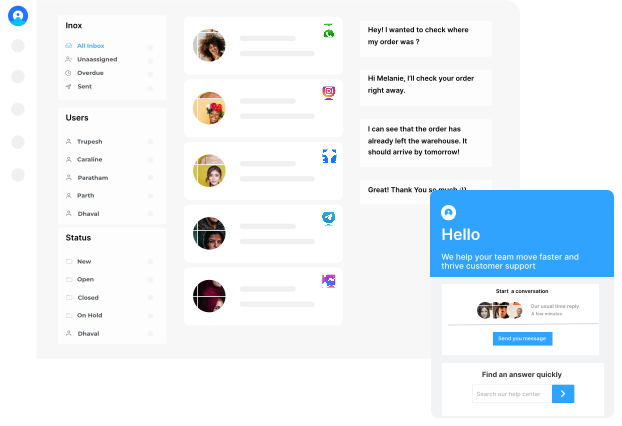
Whether it’s about acquire, engage or support – Omni24 covers all your customer engagement needs in one complete platform.

Copyright ©2026 Veemo All rights reserved.
CA, Los Angeles, Hall Ave, 19011