The Ultimate Guide to Ecommerce Customer Service in 2026
Boost ecommerce customer service success with top practices: prioritize speed, convenience and omnichannel support for superior satisfaction and growth.

Boost ecommerce customer service success with top practices: prioritize speed, convenience and omnichannel support for superior satisfaction and growth.
There are endless online eCommerce customer support solutions available at the fingertips of digital natives, there is a battle going on in the online business space for customer attention.
Global e-shopping is nowhere near a halt – which is great news for eCommerce business growth. But, it calls for the need to deliver a strong customer experience.
How can businesses overcome this challenge?
Customer prioritization via ecommerce customer services is the answer. It hands businesses a competitive advantage, complements every other aspect of the product life cycle and maximizes the benefits of your efforts as well as investments. Otherwise, the rest of your work will be like a bucket with holes where customers would keep exiting your marketing and product funnels.
Ecommerce Customer Service refers to the support and assistance provided to online shoppers throughout their buying journey. It encompasses all interactions between a business and its customers in the digital realm, from pre-purchase inquiries to post-sale support.
The service aims to enhance the online shopping experience, address customer concerns, and build trust in the brand. Effective ecommerce customer service is crucial for customer satisfaction, retention, and driving repeat business.
Key features of ecommerce customer service:
Ecommerce customer support delivers value to the company which improves customer retention along with revenue generation.
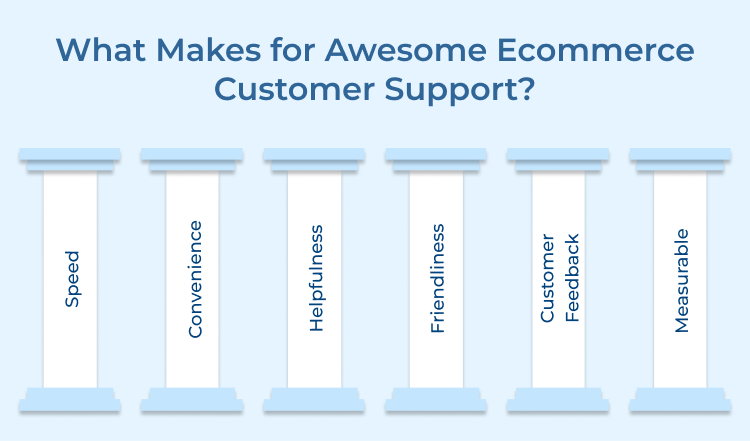
Quick response times are crucial in ecommerce. Customers expect rapid solutions to their queries and issues. Implement systems that allow for immediate acknowledgment of customer contacts and strive for swift resolution.
Utilize tools like chatbots for instant responses and ensure your support team is well-staffed to handle inquiries promptly. Fast service prevents customer frustration, reduces cart abandonment, and enhances overall satisfaction with the shopping experience.
Offer multiple support channels to cater to different customer preferences. Provide options such as live chat, email, phone support, and social media assistance. Implement a user-friendly self-service portal with comprehensive FAQs and how-to guides.
Ensure your support is available across devices and platforms. The easier it is for customers to get help, the more likely they are to complete purchases and return for future transactions.
Equip your support team with in-depth product knowledge and problem-solving skills. Train them to go beyond simply answering questions to proactively offering solutions and alternatives.
Empower agents to make decisions that benefit the customer, such as processing returns or offering discounts when appropriate. Helpful support not only resolves issues but also builds trust and loyalty, turning potentially negative experiences into positive ones.
A warm, personable approach can significantly impact customer perception. Train your support team in effective communication skills, emphasizing empathy and active listening. Encourage agents to use a friendly tone in all interactions, whether written or verbal.
Personalize responses when possible, addressing customers by name and referencing their specific situation. Friendly support creates a positive emotional connection with your brand, enhancing customer satisfaction and loyalty.
Regularly solicit and act on customer feedback to continually improve your support and overall service. Implement post-interaction surveys to gauge satisfaction. Monitor social media and review sites for unsolicited feedback.
Use this information to identify areas for improvement in your products, services, and support processes. Demonstrating that you value and act on customer input builds trust and shows your commitment to customer satisfaction.
Implement key performance indicators (KPIs) to track and improve your customer support effectiveness. Monitor metrics such as response times, resolution rates, customer satisfaction scores, and Net Promoter Score (NPS).
Use analytics tools to identify trends and areas needing improvement. Regularly review these metrics with your team and set goals for enhancement. Measurable support allows for data-driven decisions and continuous improvement of your customer service strategy.
Following best practices not only improves customer experience but also gains you competitive advantage in the market. Here’s the list you need to consider:
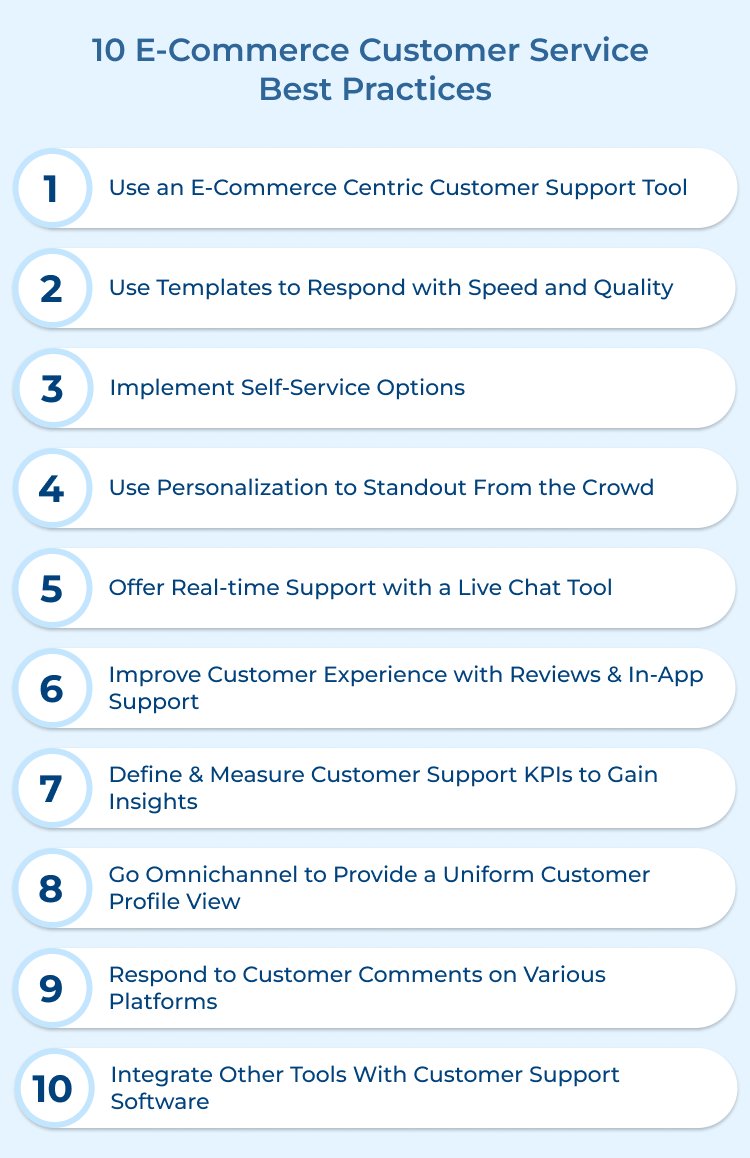
Your customer service is as good as your customer support team. And one of the indicators of a business being serious about its customer is the investment it makes in the right e-commerce customer support solution.
When you equip your customer support team with the right tools, you ensure their success as your customer’s success. There are plenty of options for eCommerce customer service tools and the best choice for any business is the one that fits its needs.
Choose a customer support tool made especially for eCommerce businesses to enjoy features and tools that complement your online store. This way, you can stay clear of the features specific to other industries, such as travel, medical and logistics.
One of the excellent customer service strategies is using templates to maintain consistent messaging across multiple channels. A generic response is taken rather passively than a personalized one and today’s tech-savvy consumers notice the difference.
No wonder having ready-made templates in your arsenal boosts your response time and is a great practice to ensure quality. Harness the power of templates to save your customer support reps from copy-pasting information and focus on personalizing it. You can sharpen your customer support via email by incorporating templates with integrations and automation.
Any instance of customer support in which a human support agent is not involved is called customer self-service. The purpose of self-service options is to provide resources to your customers. It eliminates the need to reach out to the customer service team.
Efficiently handling your customer queries is one thing; empowering your customers with the right resources, so they don’t need the customer support is one of the best practices. Look for tools with the necessary technology to offer self-service options to help customers resolve their queries independently.
Knowledge bases are the most preferred self-service channel by customers. It is one of the ways to reduce the ticket volume for your customer support team. Self-service options extend customer service and deliver 24/7 support to frequently asked questions.
A customer support tool that integrates with your eCommerce tech stack helps you deliver a personalized response to your customer. Customer support reps can use the data from the following platforms to curate personal responses.
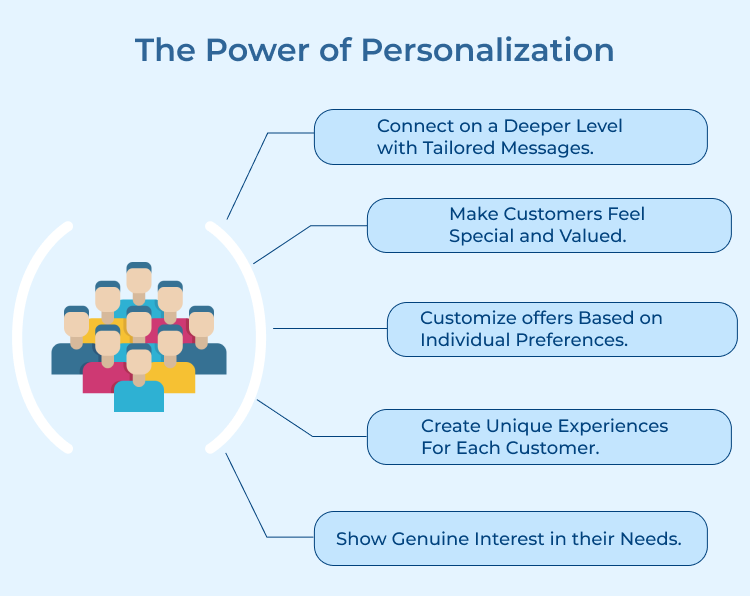
For instance, if a customer is complaining about receiving damaged goods, you can ask them about their previous experience with your shipping service to gauge the issue. It is possible only when your customer rep has the customer order history available. This level of personalization makes you stand out and is possible with necessary integrations that consolidate customer data.
Customers often seek information before placing an order to feel comfortable making the purchase decision. 53% of the buyers like to research about the product to ensure they’re making the right choice. Responding quickly with accurate information is vital to push them closer to the purchase. Live chat has the following benefits:
Become one amongst the companies that 64% of the customers prefer to shop from because they meet the customers needs in real-time.
The customer support team’s interaction with your customer is a great way to collect feedback about your brand. Add the feedback to your roadmap to improve your processes and support services. You can market positive customer feedback to exhibit customer satisfaction with your brand.
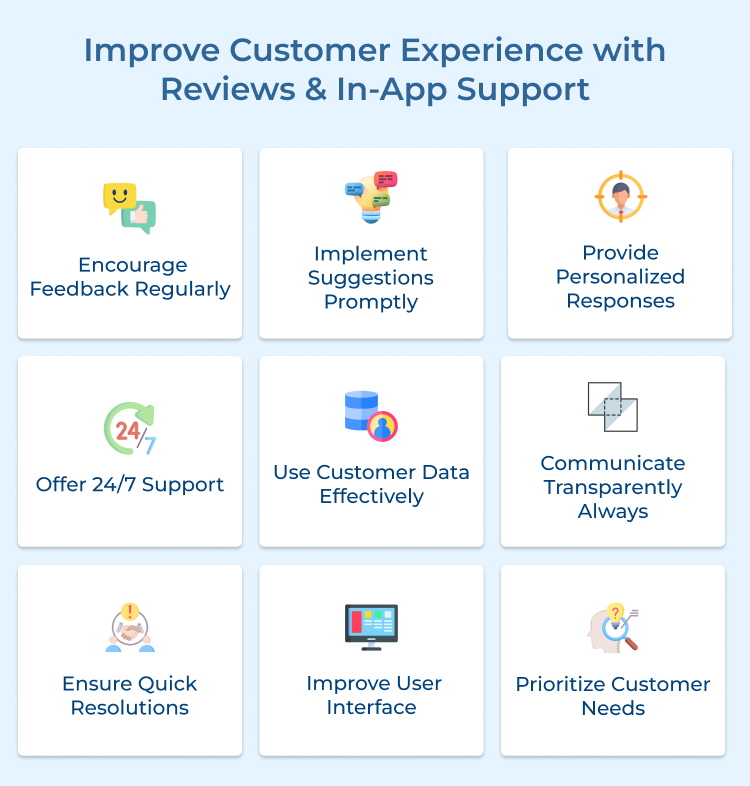
Keeping up with the trends and having up-to-date customer support tech gives you a competitive edge. Optimize your customer support for mobile users because of the increased web access through mobile devices. It ensures convenience and accessibility of customer support to your mobile shoppers.
Customer support practices are not hard and fast rules – although, your customer service team performance does impact your bottom line. Set clear KPIs aligned with company goals to gain insights for optimizing customer service.
To refine your processes, evaluate your customer support team performance over various metrics. Some of the key metrics you can measure and optimize are as follows:
Track the eCommerce customer service metrics to better understand the quality of your customer experience. The following are major CX elements you can improve:
A good eCommerce customer support help desk houses all past, present and future customer communications in the same place, regardless of how, when and where they contact you.
Depending on your target customer demographics, support channel preferences may vary.
Businesses that empower customers to choose their preferred channel are more likely to strengthen their brand credibility and improve customer loyalty.
One of the significant benefits of omnichannel customer service is that it provides a unified view of customers to each customer service rep. It paints a complete picture containing customer profiles, support tickets, order information and responses from other reps about closed tickets over multiple platforms. It also helps in handling any angry customers if a query stays unresolved from the past. Since they won’t have to repeat themselves; omnichannel communication increases their satisfaction.
One of the ways to prioritize customer feedback is to keep an eye on customer interactions over multiple customer service channels. Whether your customer is commenting on a social media post or messaging about an ad campaign, responding to comments quickly makes your customer feel heard.
Make sure to use an eCommerce customer support tool that lets you collect, respond and track comments on various platforms. Moreover, you can forward customer feedback to other parts of the eCommerce business, such as the marketing and product development team, for further decision-making.
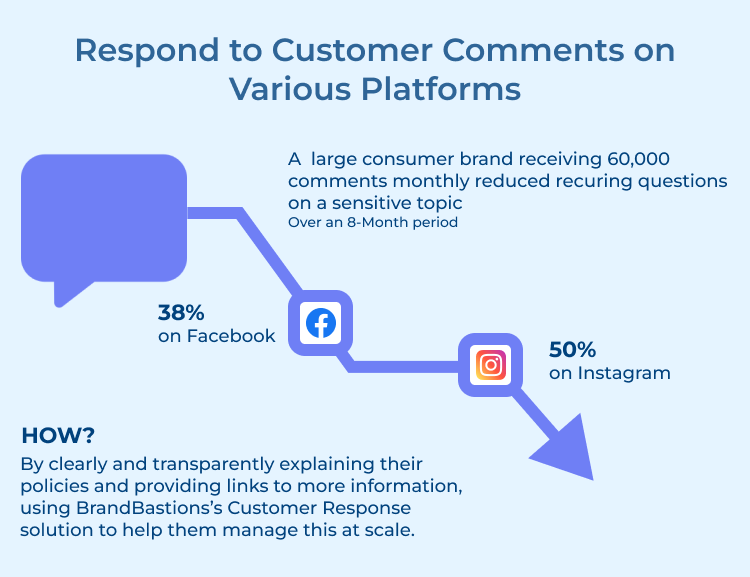
Responding to comments on social media increases your customer base and engagement. It enables you to address any negative responses shared publicly about your brand. And if you address customer concerns the right way, you can cultivate strong customer relations while also improving the brand reputation.
A game changer for eCommerce businesses is to opt for a customer service tool that can integrate inventory, order and shipping data from other software into your help desk responses. It saves your customer service representative from hunting for information from other tools.
Investing in a customer support tool that integrates with your eCommerce platform helps reduce cart abandonment because of the quick responses from customer service.
You can offer personalization as well as help right away, saving time and effort with a customer support tool that keeps complete customer history.
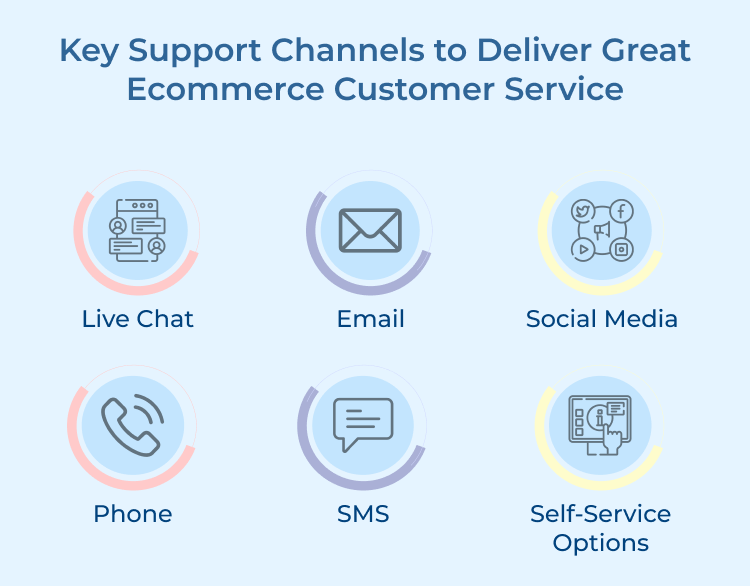
Customer support is a multifaceted service. Consider these key support channels to improve customer expectations by being available on various platforms.
Your customer is the most essential part of your business, no matter the industry. The customer service team is your brand’s face in dealing with the customer. Not only should your product be impressive, but your customer service should also delight your customers.
For eCommerce businesses, getting as well as keeping customers is a challenge without a doubt. Moreover, customer support service impacts eCommerce businesses’ marketing and sales funnel. It offers more revenue, increased customer satisfaction, fewer expenses and customer retention.
eCommerce customer service is the key driver for your business. Investing in the right customer support tool offers excellent returns.

What is an Ecommerce Customer Experience?
Ecommerce customer experience is your customer’s perception about their interactions with your brand, be it good or bad experience. It is built through their engagement during the pre-purchase, purchase and post-purchase phases of the customer journey. CX matters because it’s a major differentiator for them to choose between competitive products. Customers are more likely to prefer a brand that makes them feel understood and delivers a positive impression along with product satisfaction.
How Important Is Customer Service in Ecommerce?
Customer service for the eCommerce industry is important because it builds trust and brand loyalty, boost your conversion rate as well as revenue while improving retention by making them return for more purchases. Your customers become your brand advocates, which leads to more customers. It enhances customer lifetime value and crafts a positive eCommerce store’s customer experience.
How Ecommerce Customer Service Helps to Boost Customer Satisfaction?
Offering robust eCommerce customer service shows your customers that you care about them. You should be conducting customer satisfaction surveys regularly to understand how they feel about your brand and proactively work on the problem areas to remove the frictions.
 https://omni24.io/wp-content/uploads/2026/08/AI-Customer-Service-Agents.png
1256
2400
Webvision Solution
https://omni24.io/wp-content/uploads/2023/04/Omni-Logo-1.svg
Webvision Solution2026-09-21 04:48:512026-09-21 04:48:51How to Build an AI Customer Service Agents: 8 Key Steps
https://omni24.io/wp-content/uploads/2026/08/AI-Customer-Service-Agents.png
1256
2400
Webvision Solution
https://omni24.io/wp-content/uploads/2023/04/Omni-Logo-1.svg
Webvision Solution2026-09-21 04:48:512026-09-21 04:48:51How to Build an AI Customer Service Agents: 8 Key Steps https://omni24.io/wp-content/uploads/2026/08/Omnichannel-Conversational-AI.png
1256
2400
Tushar Joshi
https://omni24.io/wp-content/uploads/2023/04/Omni-Logo-1.svg
Tushar Joshi2026-09-16 03:51:072026-09-16 03:51:07How to Build Omnichannel Conversational AI Strategy
https://omni24.io/wp-content/uploads/2026/08/Omnichannel-Conversational-AI.png
1256
2400
Tushar Joshi
https://omni24.io/wp-content/uploads/2023/04/Omni-Logo-1.svg
Tushar Joshi2026-09-16 03:51:072026-09-16 03:51:07How to Build Omnichannel Conversational AI Strategy https://omni24.io/wp-content/uploads/2026/08/Customer-Service-Teams.png
1256
2400
Tushar Joshi
https://omni24.io/wp-content/uploads/2023/04/Omni-Logo-1.svg
Tushar Joshi2026-09-15 04:01:522026-09-15 04:02:16How to Build Customer Service Teams: 6 Key Steps
https://omni24.io/wp-content/uploads/2026/08/Customer-Service-Teams.png
1256
2400
Tushar Joshi
https://omni24.io/wp-content/uploads/2023/04/Omni-Logo-1.svg
Tushar Joshi2026-09-15 04:01:522026-09-15 04:02:16How to Build Customer Service Teams: 6 Key Steps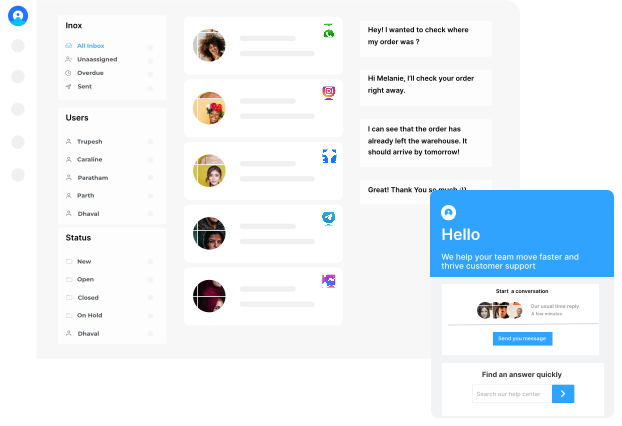
Whether it’s about acquire, engage or support – Omni24 covers all your customer engagement needs in one complete platform.

Copyright ©2026 Veemo All rights reserved.
CA, Los Angeles, Hall Ave, 19011