10 Customer Service Problems and How to Solve Them
Customer service problems are inevitable, but effective support requires listening to customers and avoiding common pitfalls.

Customer service problems are inevitable, but effective support requires listening to customers and avoiding common pitfalls.
Customer service is a crucial aspect of any business, yet many companies struggle to provide a positive experience for their customers.
70% of the customer’s journey is dictated by how the customer feels they are being treated.
Good customer service can make or break a business. Customers are the best judge for what your company offers. However, businesses go through a constant struggle to handle customer service problems and deliver a great service experience, as it is indisputably better to have satisfied customers than dissatisfied customers.
Consumers who shared complaints about poor customer experience online had their complaints ignored. And after one negative experience, customers will never do business with that company again.
Hence, identifying customer service issues and proactively solving them is crucial to building long-term client relationships and increasing customer retention.
Let us explore the common issues with customer service and discuss strategies for overcoming them.
Customer service problems are defined as issues or challenges that arise during the interaction between a customer and a business. These problems can be a result of poor communication, lack of responsiveness, or fail to meet the customer’s expectations.
In the hyper-competitive market, customer service issues can have a significant impact on a company’s reputation and bottom line. It is important for businesses to identify and address these issues in a timely manner to maintain higher customer satisfaction index.
Solving customer service problems is crucial for any business, regardless of its size or industry. Customer service plays a vital role in building and maintaining a loyal customer base, improving brand reputation as well as ultimately driving business growth.
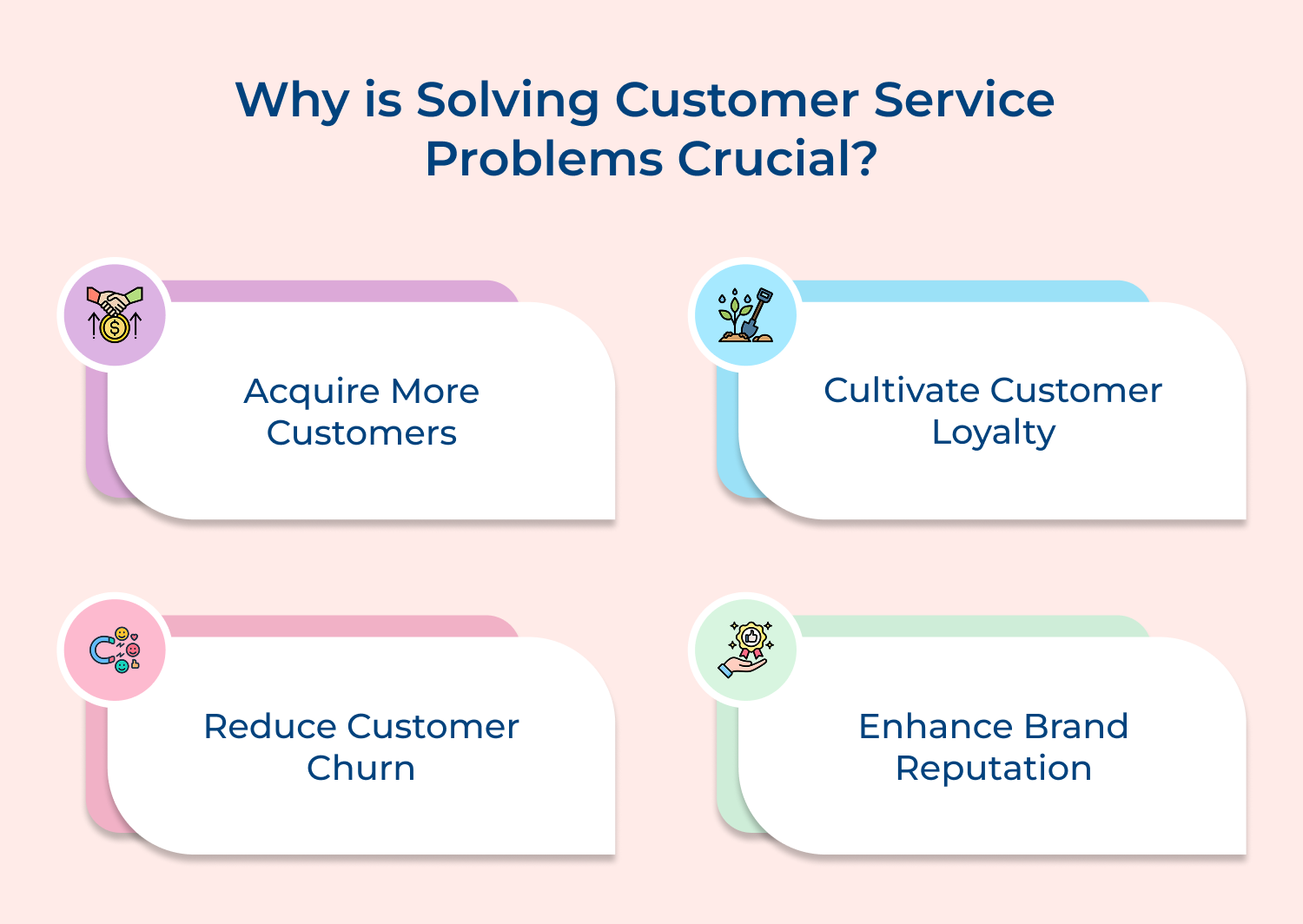
Here are several reasons why solving customer service problems is so important:
When you go the extra mile and deliver great customer service, it improves the satisfaction level of your clients. Happy customers can refer to you more customers through word of mouth which helps increase your customer base and increase sales conversion. It eventually strengthens the customer retention system of the business.
Offering prompt support and acknowledging their customer service problems with effective solutions they are highly impressed. Satisfied customers are more likely to be associated with you that increases customer loyalty.
If you deliver an unpleasant service experience, customers are likely to deflect to competitors even if your product is of high quality. Offering premium customer service is an investment to your business as it reduces customer churn and increases the lifetime customer value (LTV).
Customer service problems that are handled poorly can damage a company’s reputation. A negative experience can quickly spread and tarnish a company’s image. Addressing issues promptly can help to enhance a company’s reputation and show customers that they are valued.
Businesses encounter several difficulties as they work to provide the products and services their customers most need. But customers often remember how a company handles a difficult experience more than what caused the issue in the first place.
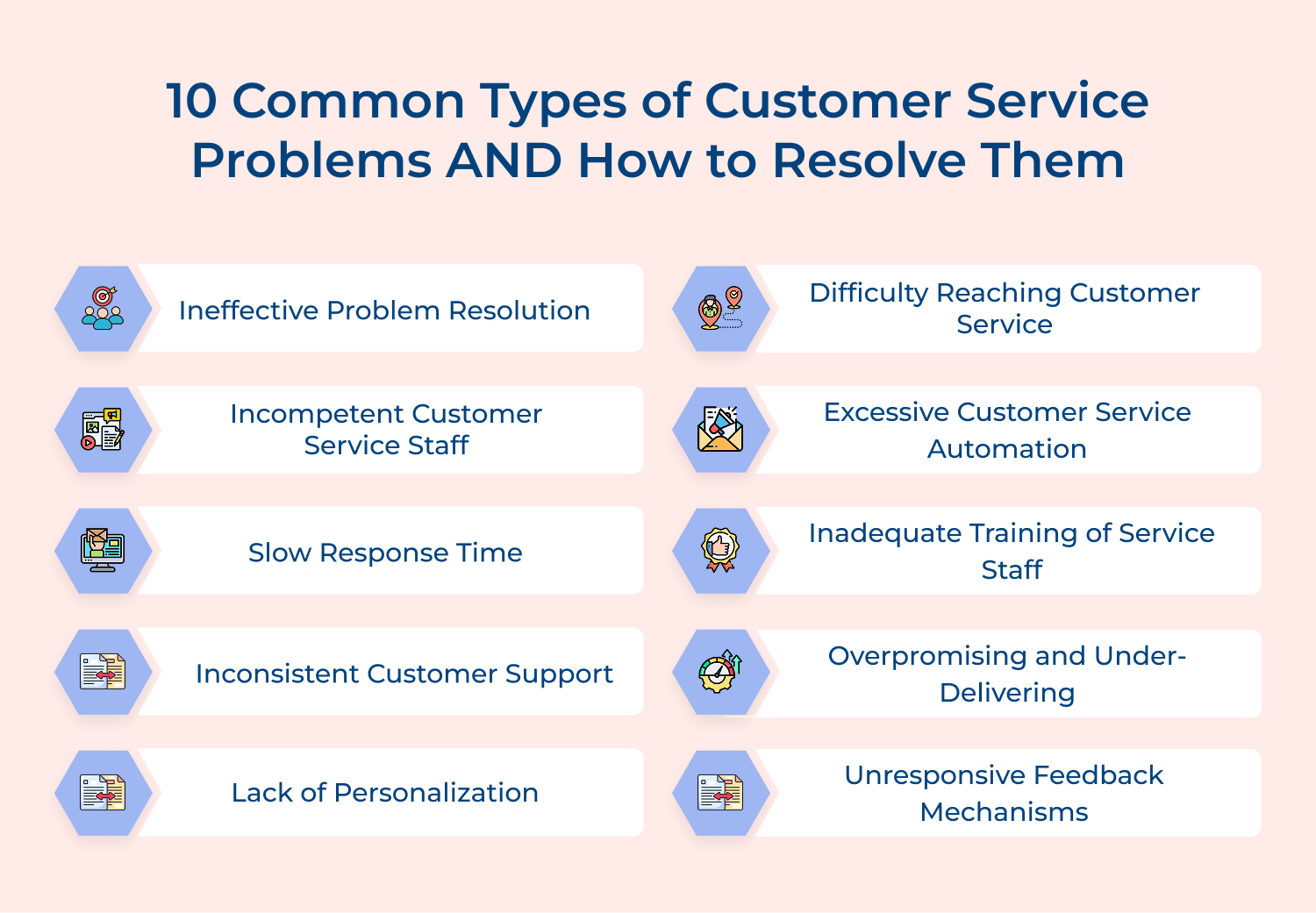
We have summarized the 10 most common customer service problems. Let us discuss the strategies and tips on how to address them effectively.
Effective resolution of the issue is essential in customer service, as it involves addressing customer concerns promptly. However, some customer service representatives may struggle to resolve customer problems effectively, leading to unresolved issues and dissatisfaction.
The root cause of ineffective problem resolution can be attributed to inadequate training, lack of empowerment for front-line staff, or inefficient escalation processes within the organization.
Empowering staff with the necessary tools and authority to resolve customer issues can improve problem resolution outcomes.
One of the most common customer service problems is poor communication.
It can happen in different ways like inexperienced staff providing incorrect information, long wait times, or have unclear business messaging. Poor communication can lead to customer frustration and dissatisfaction.
The root cause of poor communication is due to insufficient training for customer service staff, lack of communication channels within the company, or failure to provide accurate information to staff members.
Nobody likes waiting on hold.
76% of respondents said, “Just one unpleasant contact center experience was likely to make them take their business elsewhere”. It is clear if, given the opportunity, customers will choose companies that provide better customer service. Furthermore, they will tell their friends and family about their experience.
So, reducing hold times should be a priority. Delayed responses can make customers feel unimportant and lead to a loss of trust in the company.
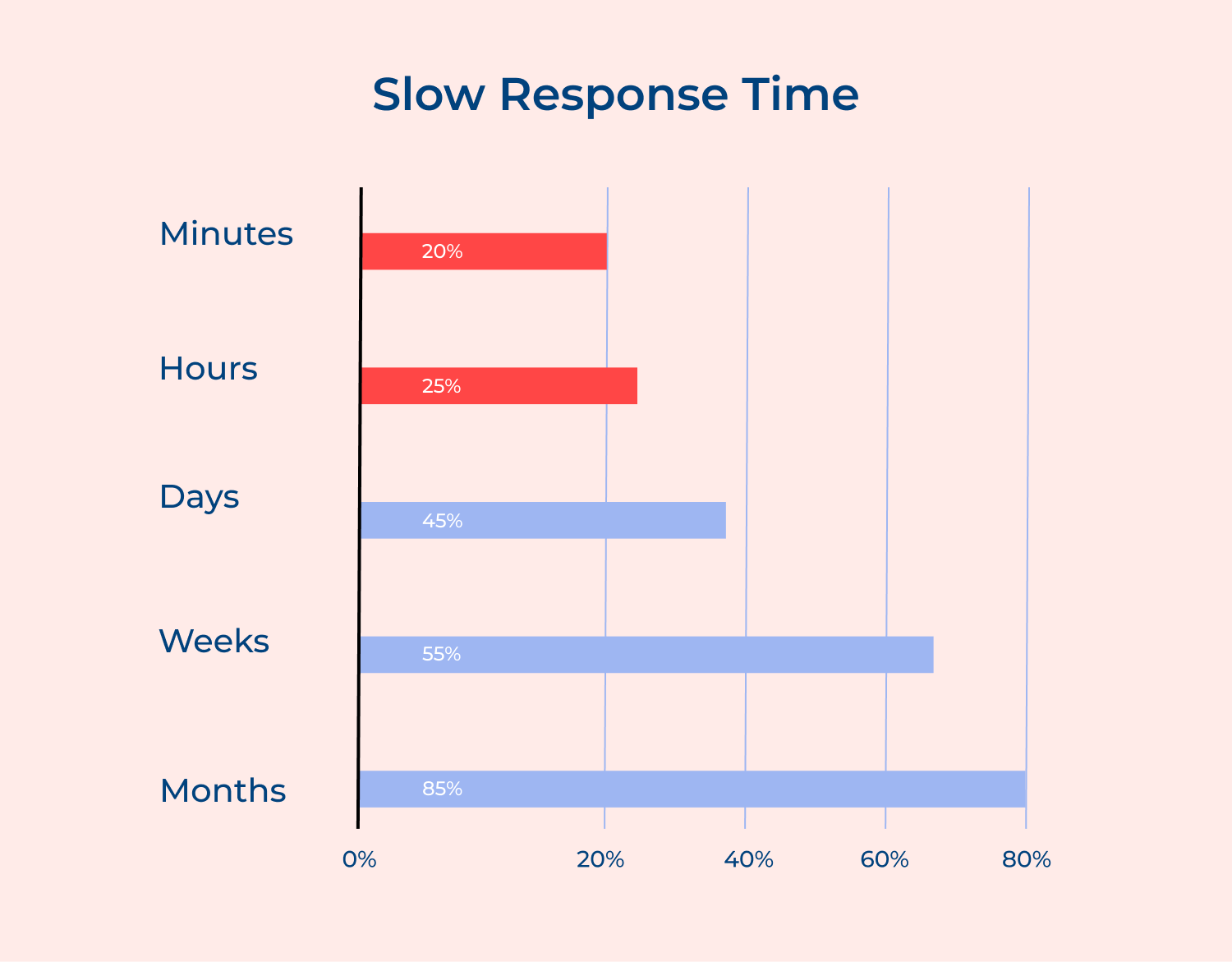
Slow response times usually happen due to understaffing, inefficient communication systems, or a lack of prioritization for customer service. It is essential for companies to prioritize prompt responses to customer queries to maintain good customer relationships.
Consistency is key in customer service.
As customers expect the same level of service quality each time they interact with the company. Inconsistencies in service delivery can lead to customer confusion and dissatisfaction.
The main reason for inconsistency in service can be caused by poor communication, lack of standard operating procedures, or inadequate oversight of customer service operations. Implementing clear guidelines and protocols for customer interactions can help ensure consistent service delivery.
Personalization is a key element in delivering excellent customer service. It involves addressing customers by name, understanding their preferences and offering tailored solutions to their needs.
The underlying cause of a lack of personalization can be attributed to insufficient customer data collection, outdated customer relationship management systems, or a lack of emphasis on personalized service within the organization.
Investing in customer data analytics and training staff on personalization techniques can enhance customer experiences.
Unable to reach out to the support team is one of the common issues of customer service. Whether it’s long wait times, unresponsive email inquiries or limited availability of customer service channels, it can annoy customers.
When customers have trouble reaching customer service, they may feel ignored and undervalued.
The key reason for this problem can be understaffing, inadequate technology infrastructure or lack of prioritization for customer service. Companies should prioritize accessibility and responsiveness in customer service channels to meet customer expectations.
Excessive of anything creates a problem so does customer service automation.
Businesses deploy automation technology to streamline their processes and cut costs. While automation can be helpful in certain situations, relying too heavily on it can lead to a lack of personalized service.
Automation helps companies to reduce the need for human interaction, increase efficiency and save costs. Parallelly, it can backfire if customers feel like they are not being heard or valued.
Inadequate training of customer service representatives can lead to customer service problems. When staff members are not properly trained on products, services, or company policies, they may provide incorrect information to customers.
Businesses usually overlook investing in employee development. Investing in ongoing training and development for customer service staff is crucial for ensuring quality customer service.
Being overpromising or under-delivering can erode brand trust and credibility.
Many times customer support staff may make promises that the business cannot fulfill, which leads to disappointment and dissatisfaction among customers.
It happens when the support reps lack training, set unrealistic expectations, or there is improper communication between departments.
Feedback is essential for improving customer service and addressing customer concerns.
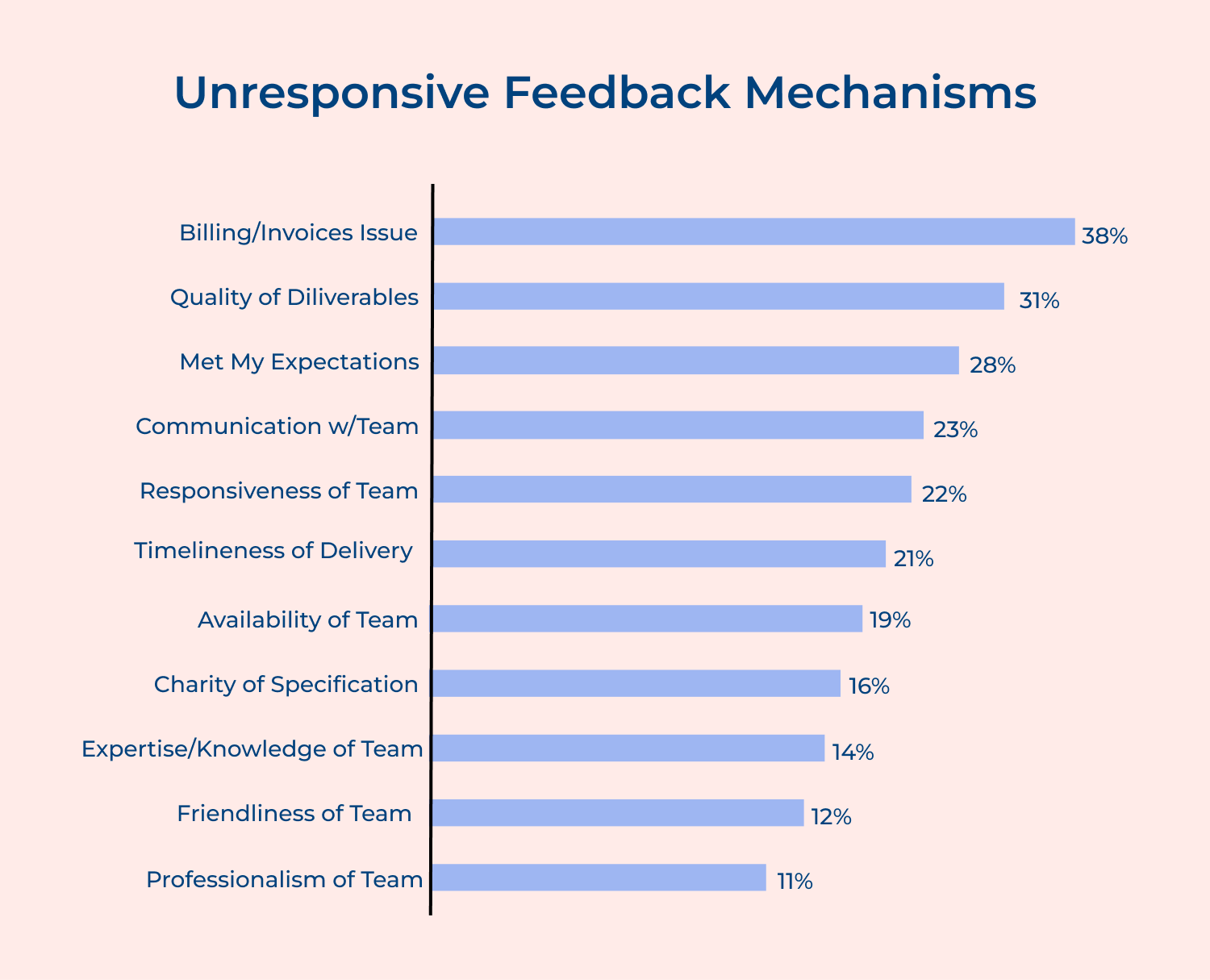
Many companies may have unresponsive feedback mechanisms, such as online surveys that go unanswered or lack of follow-up on customer suggestions.
The root cause of unresponsive feedback mechanisms is due to lack of dedicated resources for feedback analysis or limited communication channels. Implementing proactive feedback collection and response strategies can help companies better understand customer needs.
There are times when problems arise and customers are left unsatisfied. Customer service representatives need to have effective problem-solving techniques to resolve issues and ensure a positive customer experience.
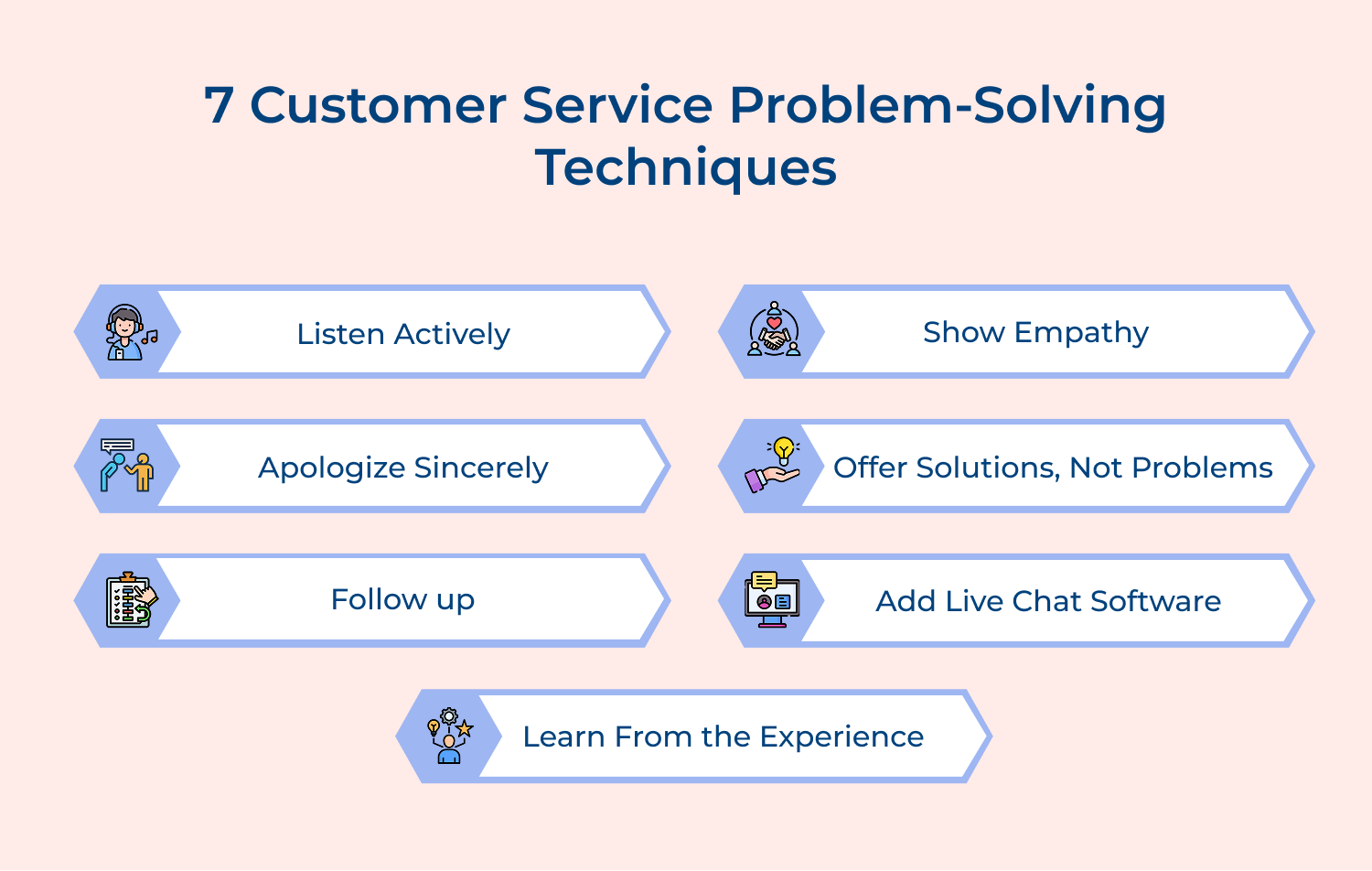
Here are some key problem-solving techniques that customer service representatives can use:
The solution to any customer service problem is to listen actively. Allow the customer to fully convey their issue without interruption and show empathy towards their situation. It will help build trust with the customer and demonstrate that their concerns are being taken seriously.
Showing empathy towards the customer can go a long way in resolving customer service issues. Let the customer know that you understand their frustration and are committed to finding a resolution. Empathy can help build rapport with the customer, making them more likely to accept the solution.
If the customer has experienced a problem, it is important to apologize sincerely on behalf of the company. Express genuine regret for the customer’s negative experience and assure them that their feedback is valued. A sincere apology can go a long way towards resolving the issue and rebuilding trust.
Instead of focusing on the limitations that hinder a solution from being possible, customer service reps should focus on finding alternative solutions. It demonstrates a proactive approach to problem-solving and shows customers that their needs are being taken seriously.
Once the issue has been resolved, follow up with the customer to ensure that they are satisfied or not. It shows that you value their feedback and are committed to providing excellent customer service. It also prevents future problems and strengthens customer relationships.
Live chat software is a great tool that helps customer service problems in real-time. By adding live chat to your website, customers can easily reach out to your support team for assistance and receive immediate help. It further reduces frustration and enhances the overall customer experience.
Use customer service problems as learning opportunities to improve your processes and prevent similar issues from occurring in the future. Reflect on what went wrong and how you can better handle the same situations.
Many companies have faced customer service problems at some point, but what sets them apart is how they handle these challenges and turn them into opportunities to improve.
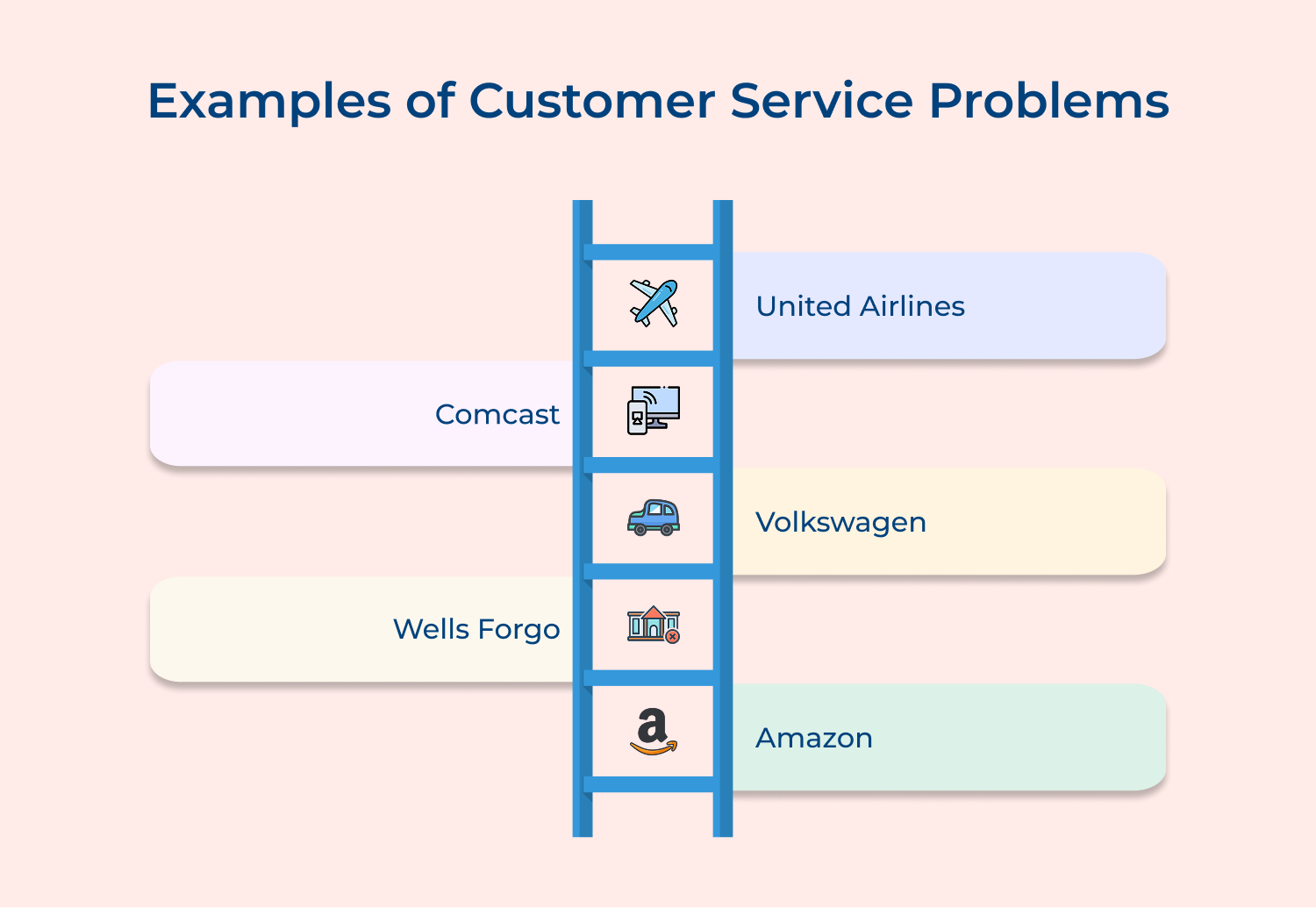
Here are five examples of brands that have faced customer service problems and how they have overcome them:
United Airlines faced a massive public relations crisis in 2017 when a video of a passenger being violently dragged off a plane went viral. The incident sparked outrage and backlash against the airline, But United Airlines took swift action to address the situation.
Takeaways
Comcast has a history of poor customer service with many customers complaining about long wait times, billing errors and rude representatives.
Takeaways
In 2015, Volkswagen faced a major scandal when it was discovered that they had rigged their diesel engines to cheat emissions tests. The company’s reputation took a hit and customers lost trust in the brand.
Takeaways
Wells Fargo came under fire in 2016 for opening millions of unauthorized accounts in their customer’s names. The scandal damaged the bank’s reputation and led to widespread criticism.
Takeaways
Amazon, known for its customer-centric approach, faced criticism in the past for issues such as late deliveries, poor product quality and inadequate customer support.
Takeaways
Customer service issues can often be seen as a challenge, but in reality, they present an opportunity to learn and grow your business. Addressing customer concerns effectively help businesses to improve customer satisfaction and retention. Implementing feedback from customer service issues can also help you identify areas for improvement and make necessary changes to enhance your overall operations.
Embracing customer service problems as a chance to learn and grow can ultimately lead to a more successful business in the long run. Remember, happy customers are loyal customers, so make customer service a top priority in your business strategy.

1. How do you write a problem statement for a customer?
When writing a problem statement for a customer, it’s important to clearly outline the issue they are experiencing. It includes providing specific details about the problem, such as when it occurred, how long it has been happening and the impact it has on the customer. You should outline the steps that will be taken to address the issue and provide a timeline for resolution.
2. What are the problems faced by customers?
Customers may face a variety of problems when interacting with a company, including issues with product quality, delivery delays, billing errors, poor communication and more. These problems can lead to frustration, dissatisfaction and ultimately, a loss of business for the company.
3. How can language barriers affect customer service?
Language barriers can greatly impact customer service, as they can lead to miscommunication for both customers and customer service representatives. To address language barriers, companies can provide multilingual support, use translation services and offer clear communication that is easily understood by all customers.
4. How can companies address long wait times in customer service?
Long wait times in customer service can be frustrating for customers and can negatively impact their experience with a company. To address this issue, companies can implement strategies such as investing in technology to streamline customer service processes, hiring additional staff during peak times, offering self-service options for customers and providing regular updates to customers on their wait time.
5. How can businesses overcome technical problems in customer service?
Technical problems in customer service, such as website crashes, system errors, or communication issues, can disrupt the customer experience and damage the reputation of a company. To overcome technical problems, businesses can invest in reliable technology infrastructure, provide training for staff on how to troubleshoot technical issues and offer alternative communication channels for customers to reach out for assistance.
 https://omni24.io/wp-content/uploads/2026/08/Omnichannel-Chatbots.png
1256
2400
Tushar Joshi
https://omni24.io/wp-content/uploads/2023/04/Omni-Logo-1.svg
Tushar Joshi2026-08-13 04:43:302026-08-24 09:02:01How Omnichannel Chatbots Improve Your Customer Experience
https://omni24.io/wp-content/uploads/2026/08/Omnichannel-Chatbots.png
1256
2400
Tushar Joshi
https://omni24.io/wp-content/uploads/2023/04/Omni-Logo-1.svg
Tushar Joshi2026-08-13 04:43:302026-08-24 09:02:01How Omnichannel Chatbots Improve Your Customer Experience https://omni24.io/wp-content/uploads/2026/08/Ecommerce-Chatbots-1.png
1256
2400
Tushar Joshi
https://omni24.io/wp-content/uploads/2023/04/Omni-Logo-1.svg
Tushar Joshi2026-08-12 03:57:552026-08-24 09:03:22Ecommerce Chatbots: What are They and Their Use Cases
https://omni24.io/wp-content/uploads/2026/08/Ecommerce-Chatbots-1.png
1256
2400
Tushar Joshi
https://omni24.io/wp-content/uploads/2023/04/Omni-Logo-1.svg
Tushar Joshi2026-08-12 03:57:552026-08-24 09:03:22Ecommerce Chatbots: What are They and Their Use Cases https://omni24.io/wp-content/uploads/2026/08/Omnichannel-Ecommerce.png
1256
2400
Tushar Joshi
https://omni24.io/wp-content/uploads/2023/04/Omni-Logo-1.svg
Tushar Joshi2026-08-11 04:50:362026-08-24 09:00:45How to Create an Omnichannel Ecommerce Strategy: 7 Best Ways
https://omni24.io/wp-content/uploads/2026/08/Omnichannel-Ecommerce.png
1256
2400
Tushar Joshi
https://omni24.io/wp-content/uploads/2023/04/Omni-Logo-1.svg
Tushar Joshi2026-08-11 04:50:362026-08-24 09:00:45How to Create an Omnichannel Ecommerce Strategy: 7 Best Ways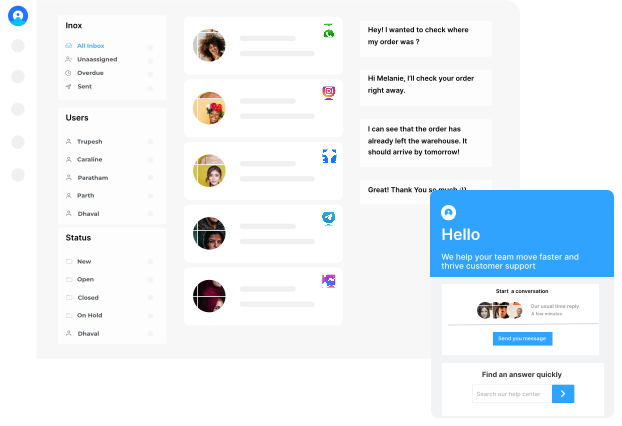
Whether it’s about acquire, engage or support – Omni24 covers all your customer engagement needs in one complete platform.

Copyright ©2026 Veemo All rights reserved.
CA, Los Angeles, Hall Ave, 19011