What is Customer Data Management & Why It Matters?
Customer data management is crucial for targeted marketing strategies and delivering exceptional support experiences.

Customer data management is crucial for targeted marketing strategies and delivering exceptional support experiences.
Businesses have more access to customer data than ever before.
A Gartner online survey of CX leaders cited customer data and analytics as “extremely important” for achieving their organizational goals in 2023.
But the question is how well are they managing this valuable information?
The importance of keeping customer data management (CDM) cannot be overstated, as it plays a crucial role in enhancing customer relationships and driving business growth.
Consumer data management involves the thorough analysis of collected information to better understand their needs, preferences, and behaviors. With the right data management practices in place, businesses can personalize their marketing efforts, improve customer service, and make informed business decisions.
Explore the key reasons why keeping CDM is vital for businesses of all sizes. From building customer trust to increasing sales and loyalty, effective data management can truly set a business apart. Let’s delve into the importance of maintaining and utilizing customer data effectively.
Customer data management (CDM) is defined as the process of analyzing customer information to better understand their behavior, preferences and needs. Modern businesses have access to a vast amount of data about their customers, including demographic information, purchase history, interaction history, and more.
Consumer data management helps businesses make sense of this data and use it to improve client relationships, drive personalized marketing campaigns and increase overall business revenue. 49% of companies use marketing data to enhance and improve the customer experience.
Key objectives:
Customer data management helps businesses is crucial to have a successful marketing strategy in place. By effectively managing customer data, they can better understand their customers, personalize their marketing efforts and ultimately drive more sales.
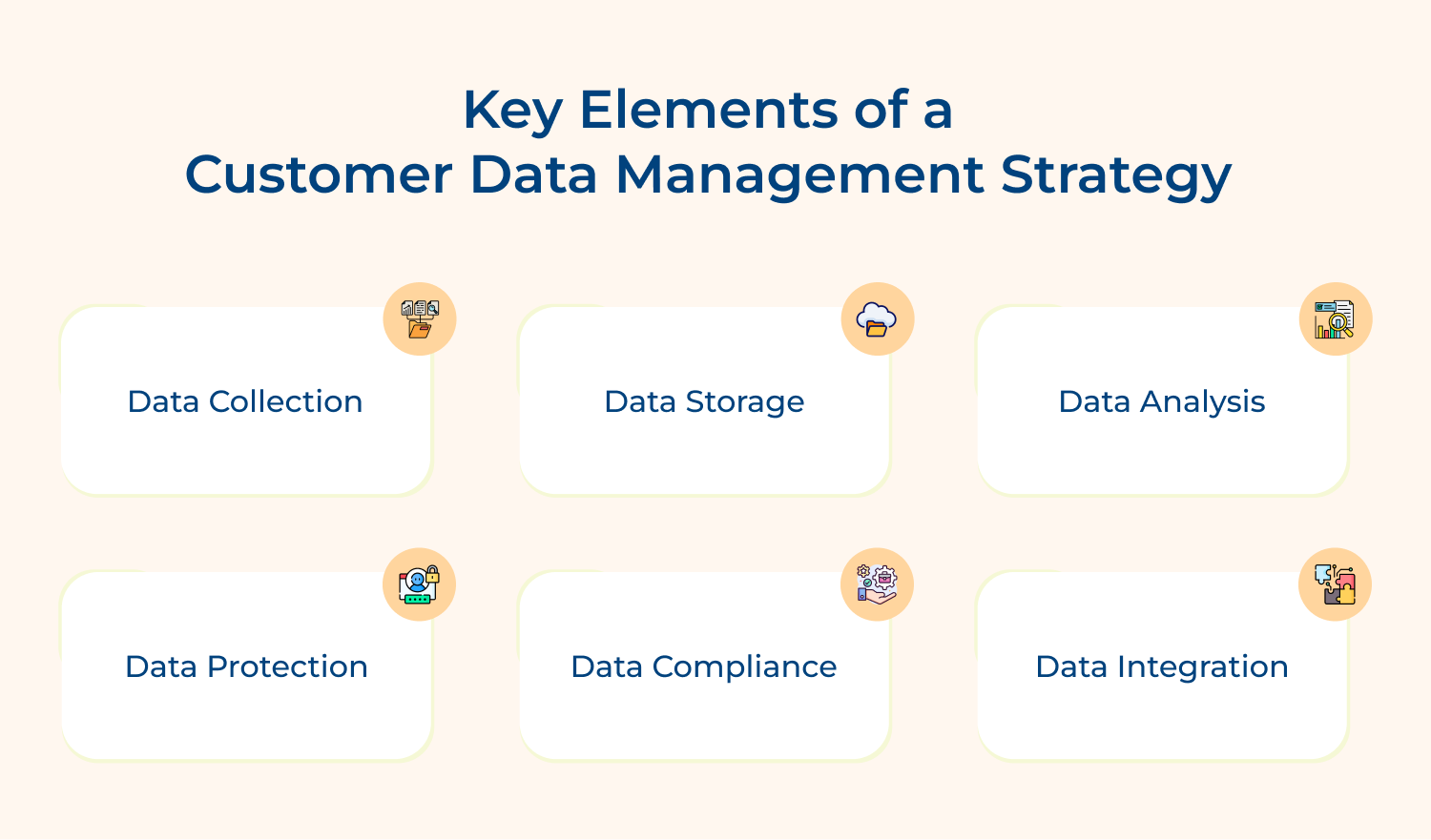
Here are some vital elements of a consumer data management strategy:
The first step in a customer data management strategy is collecting relevant client data. It includes demographics, purchasing behavior, browsing history etc. Businesses can collect this data through various channels such as online forms, social media, and customer surveys.
Once the data is collected, it needs to be stored in a secure and organized manner. Businesses can use customer relationship management (CRM) software to store and manage customer data. The software allows businesses to centralize all customer information in one place, making it easier to access and analyze.
Analyzing customer data is crucial for understanding customer behavior and preferences. Businesses can use data analysis tools to identify trends, patterns, and insights from the data. The information can then be used to create targeted marketing campaigns and personalized customer experiences.
Businesses need to ensure that customer data is protected with the increasing concerns about data privacy and security. Implementing data protection measures such as encryption, access controls, and regular security audits can help prevent data breaches and protect customer information.
Businesses need to ensure that they are compliant with data protection regulations such as GDPR and CCPA. It means obtaining consent from customers before collecting their data, providing transparency about how the data will be used, and allowing customers to opt out of data collection if they wish.
Having a complete view of the customer helps businesses integrate customer data from various sources such as sales, marketing, and customer service. It allows businesses to have a holistic view of the customer journey and better understand how customers interact with the brand.
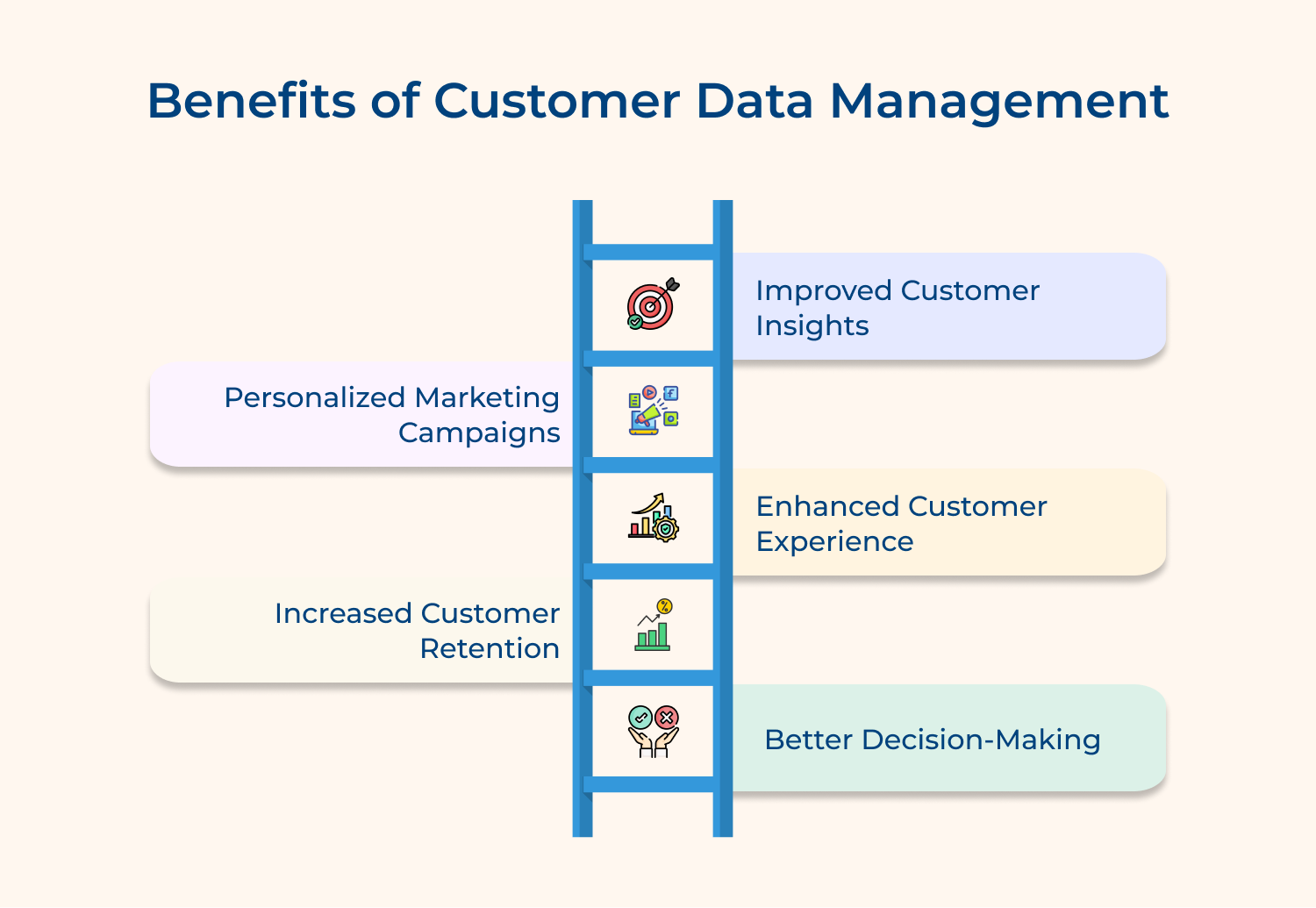
Customer data management is a critical aspect of any successful business, as it allows companies to effectively collect, store, and analyze client information. By implementing a solid customer data management strategy, businesses can gain valuable insights that can help them make informed decisions and improve their marketing efforts. Here are some key benefits of customer data management:
Implementing sound principles for managing customer data can help companies to optimize their operations, enhance their customer experiences, and drive growth. Here are some key principles to follow for improving your customer data management:
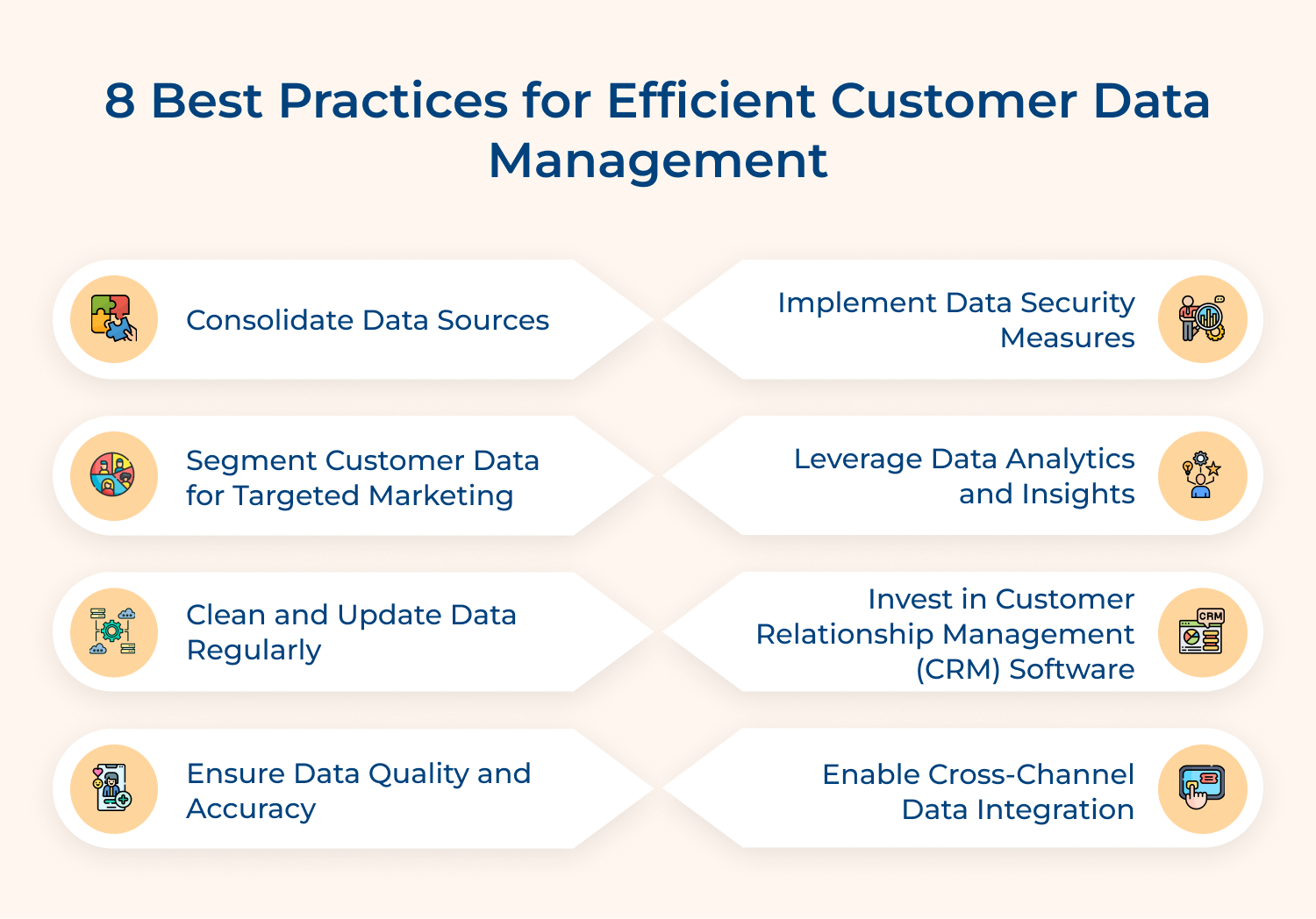
The first step to effective customer data management is to centralize and consolidate your data sources. It involves bringing all customer data sources together into a single, unified platform. By centralizing your data, you can easily access and analyze it, ensuring consistency and accuracy across all touchpoints.
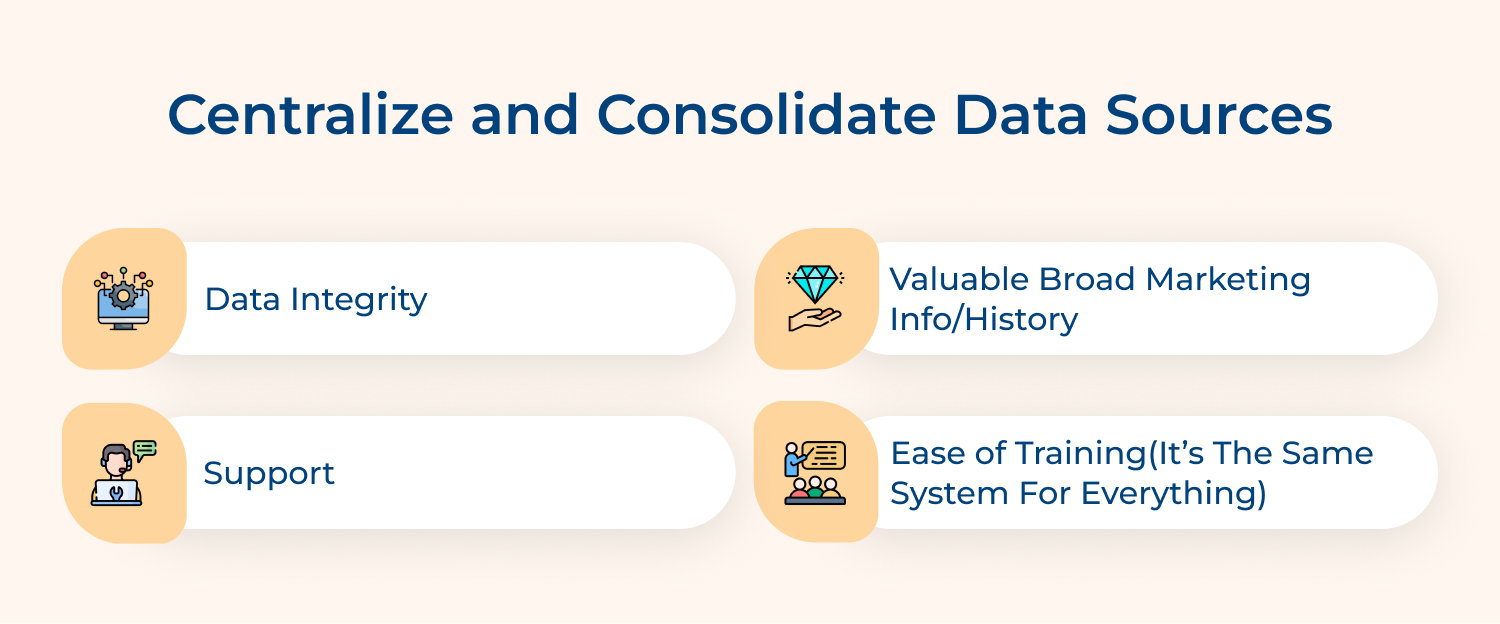
Tips to consider:
Segmenting customer data is essential for targeted marketing campaigns.
You can divide customers into groups based on demographics, behavior, or preferences, businesses can create personalized marketing messages that resonate with their audience. It can lead to higher engagement and conversion rates, as well as increased customer loyalty.
Tips to consider:
Customer data can quickly become outdated or inaccurate if not regularly maintained. Hence, it is important for businesses to regularly clean and update their data to ensure its accuracy.
You have to remove duplicate records, correct errors, and update contact information. By keeping data clean and up-to-date, businesses can improve the effectiveness of their marketing campaigns and better understand their customers.
Tips to consider:
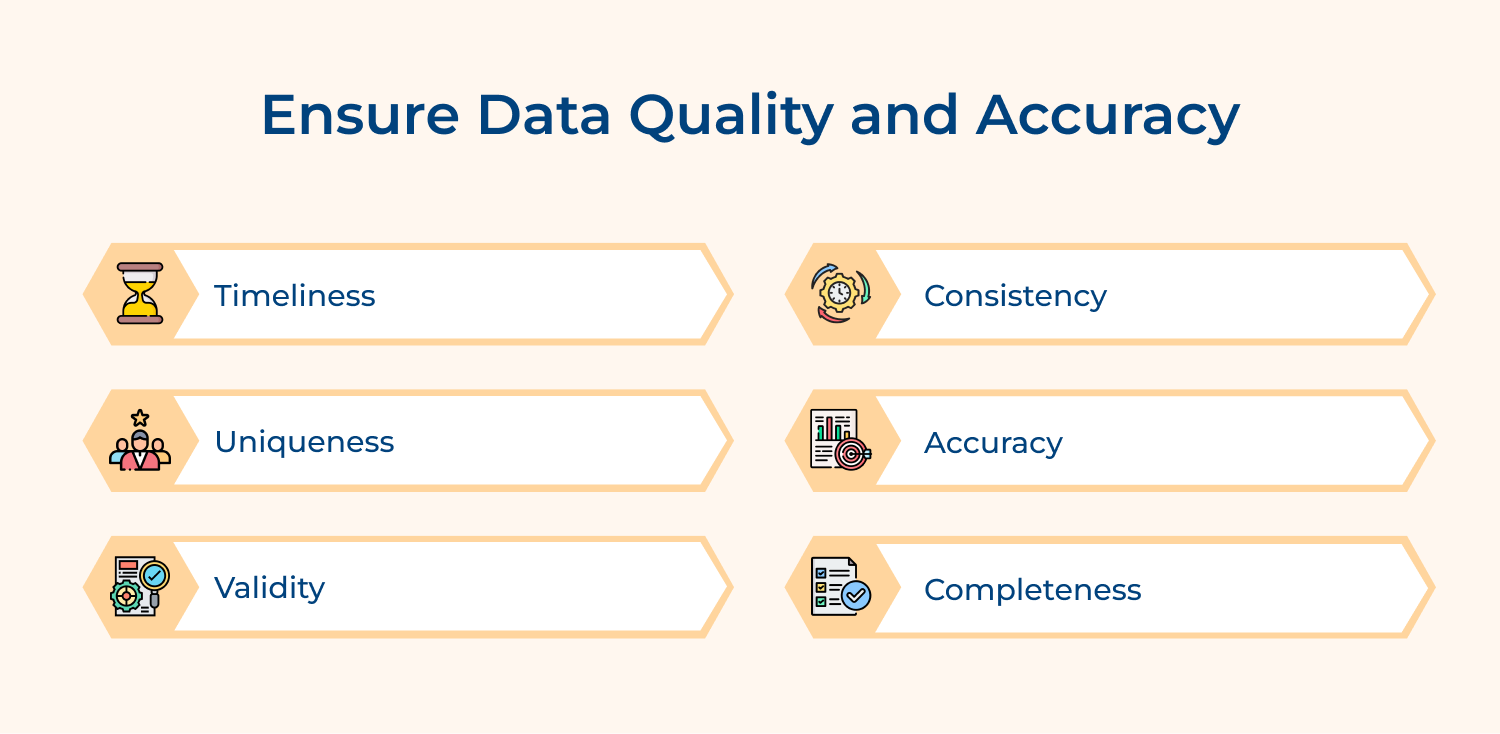
Data quality is essential for making informed business decisions and driving successful marketing campaigns.
To improve your customer data management, it’s crucial to regularly monitor and clean your data for accuracy, completeness, and consistency. Implement data validation processes, eliminate duplicates, and update outdated information to maintain high-quality customer data.
Tips to Consider:
Protecting customer data is paramount in today’s regulatory environment.
For maintaining customer trust and comply with data protection regulations, implement robust data security measures to safeguard sensitive information. Encrypt data, restrict access to authorized personnel, and regularly audit your security protocols to prevent data breaches and unauthorized access.
Tips to Consider:
Utilize advanced data analytics tools and technologies to gain valuable insights into customer behavior, preferences, and trends.
When you analyze customer data, you can uncover patterns, identify opportunities for personalization, and optimize your marketing strategies to drive engagement and conversions. Use data analytics to segment your customer base, conduct A/B testing, and measure the effectiveness of your campaigns.
Tips to Consider:
CRM software is a powerful tool for managing customer data and enhancing customer relationships. Invest in a reliable CRM system that allows you to capture, store, and analyze customer interactions across various channels.
Use CRM software to track customer communications, personalize marketing messages, and provide a seamless customer experience throughout the customer journey.
Tips to Consider:
Integrate data from multiple channels and touchpoints to create a unified view of your customers. By connecting data from websites, social media platforms, email campaigns, and other channels, you can gain a comprehensive understanding of customer behavior and preferences.
Enable cross-channel data integration to deliver personalized experiences and targeted marketing campaigns that resonate with your audience.
Tips to Consider:
Consumer data management (CDM) is essential for any business looking to effectively target and engage with their clients. There are several types of customer data management that businesses can utilize to improve their marketing strategies and enhance customer relationships. Here are some common types of customer data management:
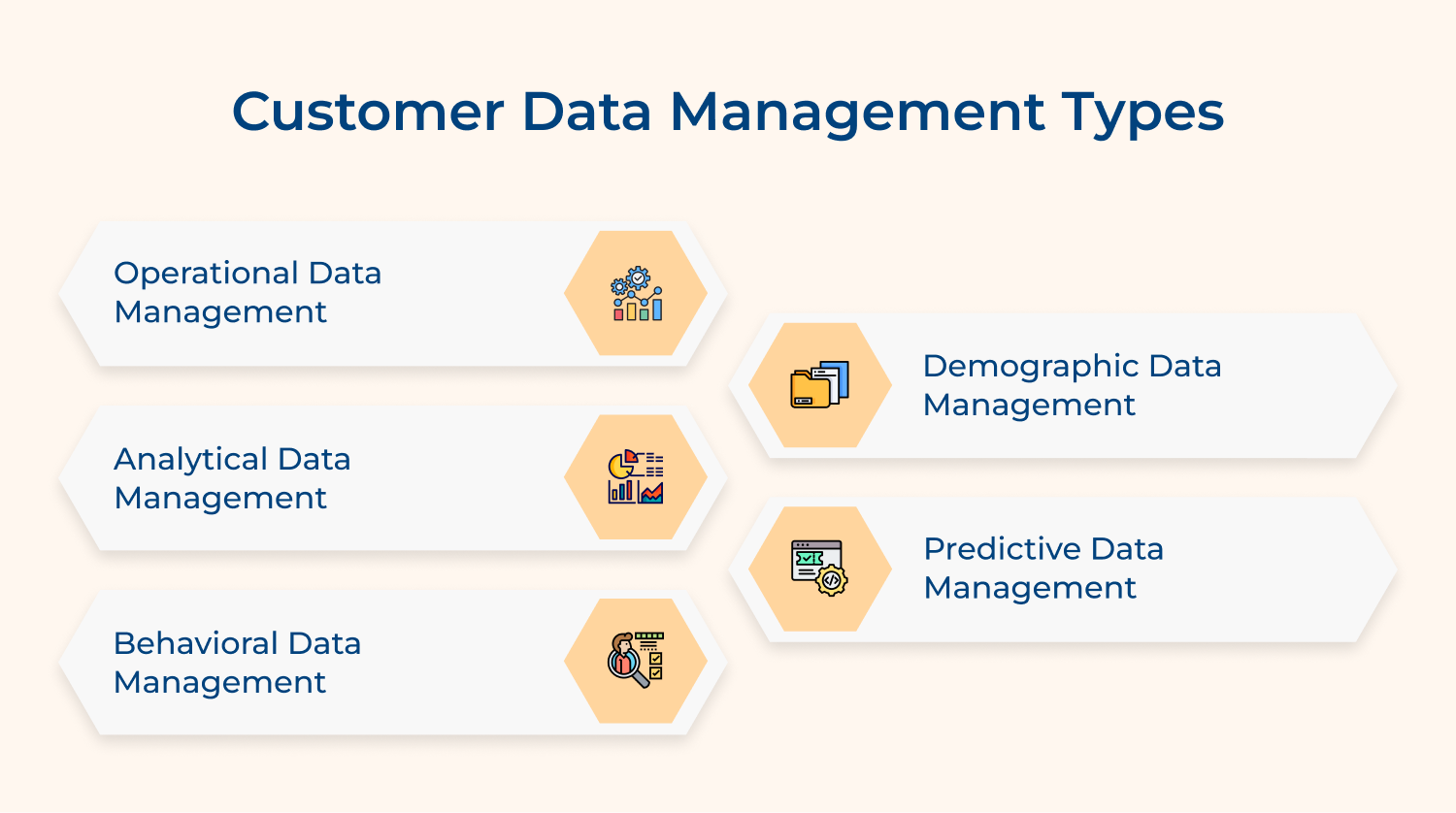
Operational data management involves collecting and managing customer data for day-to-day operations. Such a data management category includes information like contact details, purchase history, and transactional data. Businesses use operational data to track customer interactions, monitor consumer behavior, and provide personalized services.
Analytical data management focuses on analyzing customer data to gain insights to make informed decisions. It involves using data analytics tools and techniques to identify trends, patterns, and correlations within customer data. Businesses use analytical data management to improve marketing campaigns, optimize customer experiences, and drive strategic decision-making.
Behavioral data management specifically focuses on collecting and analyzing customer behavior data to understand how customers interact with a business. Such type of data management includes tracking customer clicks, website visits, and social media engagement to build customer profiles and segment audiences. Businesses use behavioral data management to personalize marketing messages, target specific customer segments, and improve user engagement.
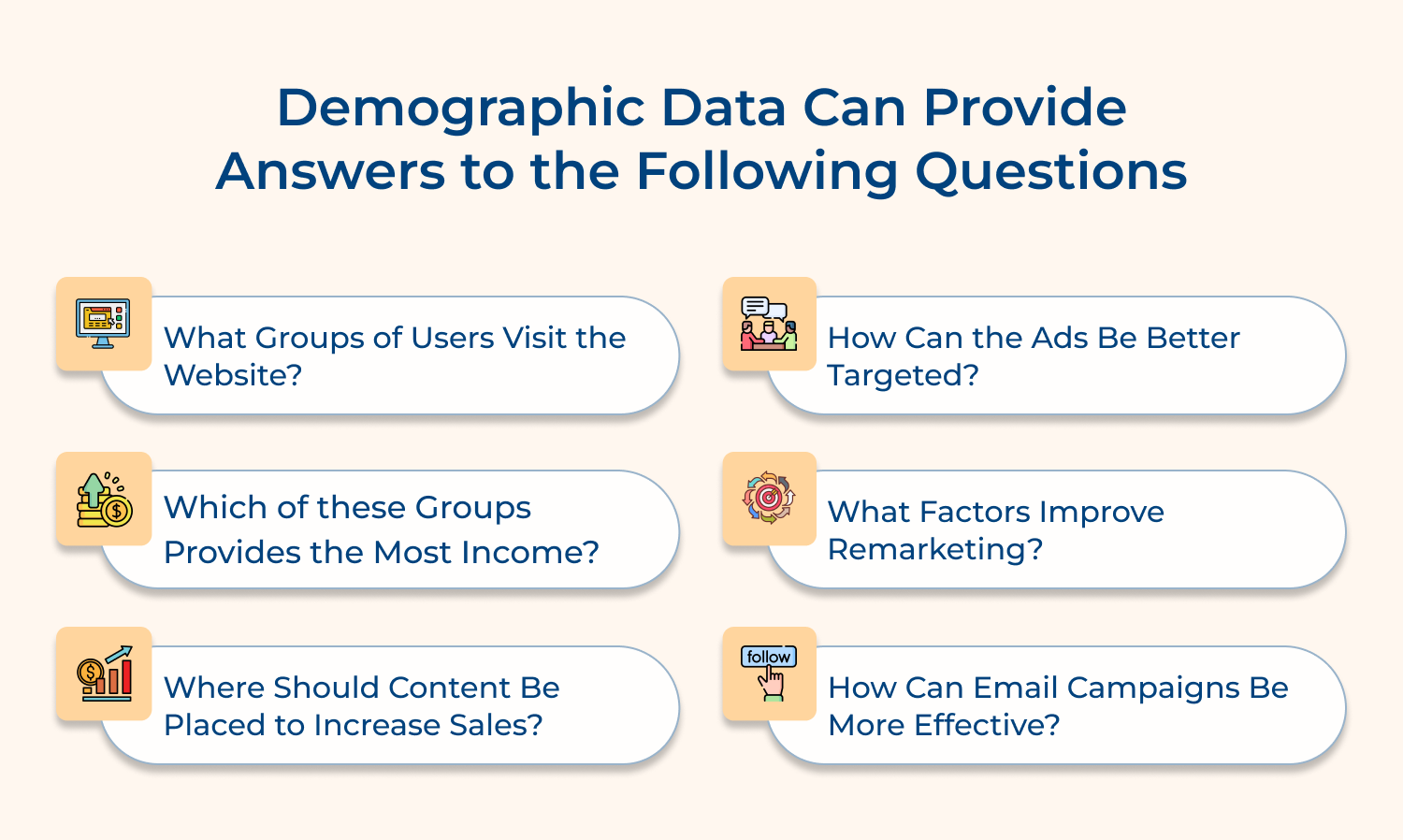
Demographic data management involves collecting and organizing customer data based on demographic information such as age, gender, income, and location. It helps businesses understand their target audience and tailor marketing strategies to specific demographic segments. Businesses use demographic data management to create targeted advertising campaigns, develop customer personas, and improve customer segmentation.
Predictive data management uses advanced analytics and machine learning algorithms to forecast future customer behavior and trends. It usually involves modeling customer data to predict outcomes, anticipate customer needs, and optimize marketing strategies. Businesses use predictive data management to identify potential leads, increase customer retention, and drive revenue growth.
Consumer data management is a powerful tool that can empower your support team to provide exceptional service to your customers. Leveraging data to better understand customer preferences and needs, support teams can tailor their interactions to each individual, creating a more personalized and effective customer experience.
Customer data management process allows for more streamlined and efficient support processes, leading to faster resolutions and higher satisfaction rates. Investing in customer data management not only benefits your customers, but also your business as a whole by improving retention rates, fostering loyalty, and ultimately driving growth and success.

What tools are there for customer data management?
There are a variety of tools available for customer data management, ranging from customer relationship management (CRM) systems like Salesforce and HubSpot, to data management platforms (DMPs) like Adobe Audience Manager and Lotame, to customer data platforms (CDPs) like Segment and Tealium. These tools help businesses collect, organize, and analyze customer data to improve their marketing efforts.
What are the benefits of customer data management?
Customer data management (CDM) can provide businesses with a wealth of benefits, including improved customer insights, personalized marketing campaigns, enhanced customer experience, increased customer loyalty, and higher return on investment (ROI). By effectively managing customer data, businesses can better understand their customers’ needs and preferences, leading to more targeted and effective marketing strategies.
Why do marketers need to prioritize CDM?
Marketers need to prioritize customer data management because it allows them to better understand their target audience, personalize their marketing campaigns, and improve overall business performance. By collecting and analyzing customer data, marketers can identify trends, preferences, and behaviors that can inform their marketing strategies and drive better results.
What are the different types of customer data?
There are several types of customer data that businesses can collect and analyze, including demographic data (age, gender, location), psychographic data (interests, values, lifestyle), behavioral data (purchase history, website interactions), and attitudinal data (satisfaction, brand loyalty). By collecting and analyzing these different types of data, businesses can gain valuable insights into their customers and tailor their marketing efforts accordingly.
Why customer data management is important?
Customer data management is important because it allows businesses to better understand their customers, personalize their marketing efforts, and improve overall business performance. By effectively managing customer data, businesses can create more targeted and effective marketing campaigns, enhance the customer experience, and ultimately drive higher sales and ROI. Customer data management is essential for businesses looking to stay competitive in today’s digital marketplace.
 https://omni24.io/wp-content/uploads/2026/09/Social-commerce-scaled.png
1340
2560
Webvision Solution
https://omni24.io/wp-content/uploads/2023/04/Omni-Logo-1.svg
Webvision Solution2026-10-23 12:18:272026-10-23 12:18:27What is Social Commerce and Why Does It Matter?
https://omni24.io/wp-content/uploads/2026/09/Social-commerce-scaled.png
1340
2560
Webvision Solution
https://omni24.io/wp-content/uploads/2023/04/Omni-Logo-1.svg
Webvision Solution2026-10-23 12:18:272026-10-23 12:18:27What is Social Commerce and Why Does It Matter? https://omni24.io/wp-content/uploads/2026/08/AI-Customer-Service-Agents.png
1256
2400
Webvision Solution
https://omni24.io/wp-content/uploads/2023/04/Omni-Logo-1.svg
Webvision Solution2026-09-21 04:48:512026-09-21 04:48:51How to Build an AI Customer Service Agents: 8 Key Steps
https://omni24.io/wp-content/uploads/2026/08/AI-Customer-Service-Agents.png
1256
2400
Webvision Solution
https://omni24.io/wp-content/uploads/2023/04/Omni-Logo-1.svg
Webvision Solution2026-09-21 04:48:512026-09-21 04:48:51How to Build an AI Customer Service Agents: 8 Key Steps https://omni24.io/wp-content/uploads/2026/08/Omnichannel-Conversational-AI.png
1256
2400
Tushar Joshi
https://omni24.io/wp-content/uploads/2023/04/Omni-Logo-1.svg
Tushar Joshi2026-09-16 03:51:072026-09-16 03:51:07How to Build Omnichannel Conversational AI Strategy
https://omni24.io/wp-content/uploads/2026/08/Omnichannel-Conversational-AI.png
1256
2400
Tushar Joshi
https://omni24.io/wp-content/uploads/2023/04/Omni-Logo-1.svg
Tushar Joshi2026-09-16 03:51:072026-09-16 03:51:07How to Build Omnichannel Conversational AI Strategy
Whether it’s about acquire, engage or support – Omni24 covers all your customer engagement needs in one complete platform.

Copyright ©2026 Veemo All rights reserved.
CA, Los Angeles, Hall Ave, 19011