What is Chatbot Automation and How Can You Make It Work?
Chatbot automation is important for delivering instant 24/7 customer support while reducing workload. It boosts efficiency and enhances overall customer satisfaction.
Chatbot automation is important for delivering instant 24/7 customer support while reducing workload. It boosts efficiency and enhances overall customer satisfaction.
Have you ever wondered how chatbot automation is revolutionizing the business world?
Businesses are increasingly turning to chatbots to enhance customer service and streamline business operations. But what exactly is the impact of chatbot automation on businesses?
The global chatbot market is valued at $15.57 billion in 2026 and is projected to reach $46.64 billion by 2029.
Chatbot automation is rapidly changing the way businesses interact with customers. Understanding the implications of chatbot automation is crucial for businesses looking to stay ahead in a digital age.
Let us explore the impact of chatbot automation on businesses and how it is reshaping the customer experience landscape.
Chatbot automation is the use of artificial intelligence (AI) and machine learning technology to create AI chatbots that can interact with users conversationally. These chatbots are programmed to respond to user queries, provide information and even complete transactions without direct human intervention.
Chatbot automation helps businesses streamline customer support, sales and engagement by providing instant assistance. It reduces the need for human agents in handling repetitive queries and ensures consistency in communication. By integrating with CRM systems, e-commerce platforms, or help-desk software, automated chatbots can deliver personalized experiences.
Key objectives:
1. Improved customer service: Chatbots can provide immediate assistance to customers, answering common queries and providing information on time.
2. Cost savings: Automating repetitive tasks, businesses can save time and money on customer service operations. Chatbots can handle a high volume of inquiries simultaneously, reducing the need for human agents to handle each query individually.
3. Personalization: AI bots can be customized to provide personalized recommendations and responses based on the user’s preferences.
Chatbot automation has become increasingly popular for good reason. Businesses across all industries are deploying chatbots to improve customer service and increase operational efficiency.
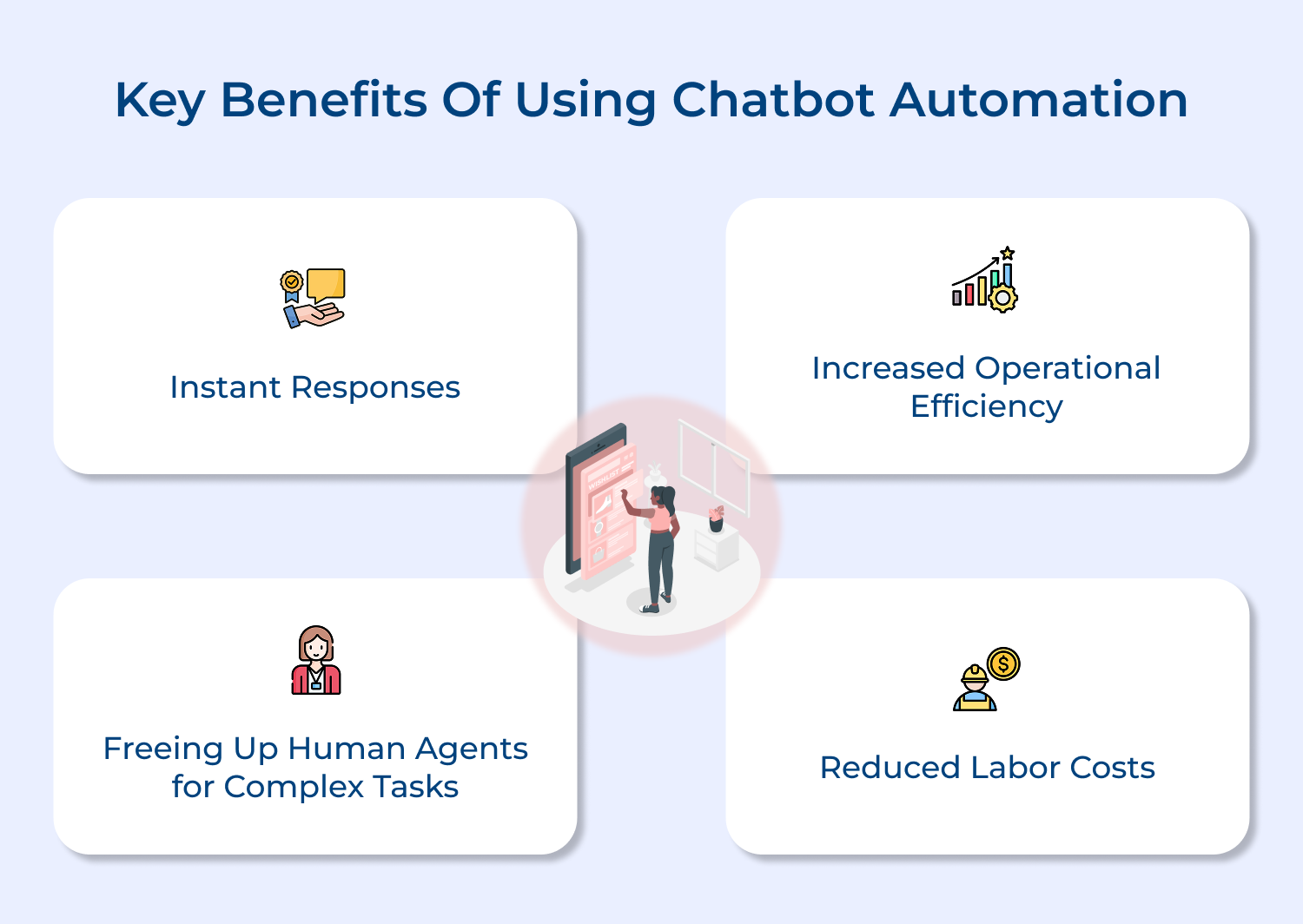
1. Instant responses: Using AI bots provides the ability to provide instant responses to customer inquiries. Chatbots are available 24/7, allowing customers to get information anytime. The response time can lead to higher customer satisfaction and increased loyalty.
2. Increased operational efficiency: Chatbots can handle a high volume of inquiries simultaneously. By automating routine customer interactions, chatbots free up human agents to focus on high-priority tasks. It can help businesses streamline their operations and enhance productivity.
3. Freeing up human agents for complex tasks: Offloading routine tasks to chatbots, human agents can spend more time on complex and specialized tasks that require human expertise. It increases efficiency but also improves the overall quality of customer service. Human agents can provide personalized assistance and build stronger relationships with customers.
4. Reduced labor costs: Chatbot automation can help businesses reduce labor costs by eliminating the need for additional customer support staff. With chatbots handling a significant portion of customer inquiries, businesses can operate with a leaner workforce. This can result in cost savings and increased profitability in the long run.
Implementing chatbot automation can transform businesses with better customer experiences, efficiency, and cost savings. A strategic approach ensures smooth integration and maximizes its potential.
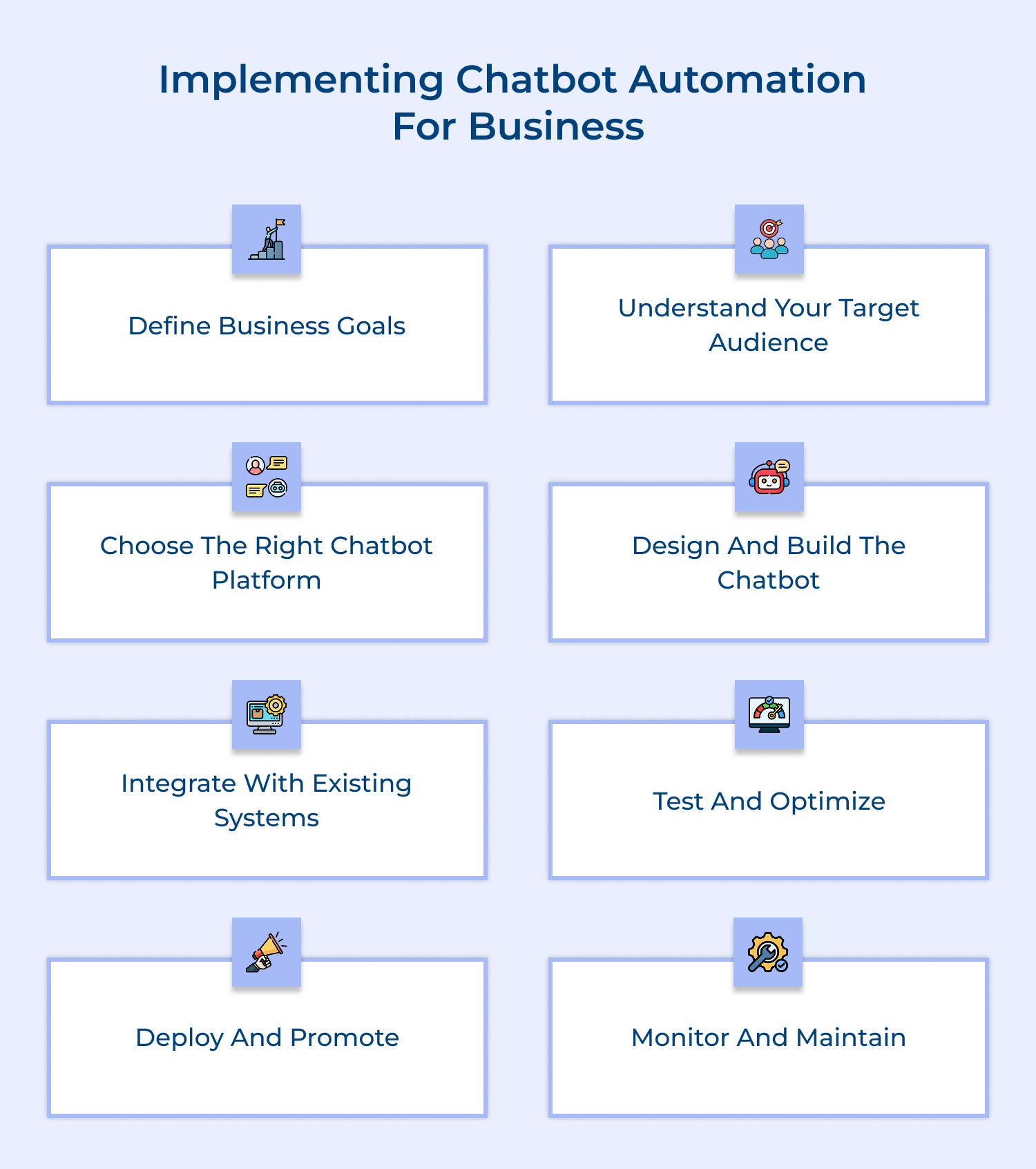
Before diving into chatbot implementation, it’s essential to have a clear understanding of your business objectives and the areas where chatbots can bring value.
Define your goals, whether it’s enhancing customer support, generating leads, automating sales processes or streamlining internal operations. Identify the specific tasks and interactions that can be automated using chatbots.
Gain insights into your target audience’s preferences and communication styles. Such understanding will guide the design and conversational flow of your chatbot, ensuring a seamless personalized experience. Analyze customer data and gather feedback to better understand their expectations.
There are numerous chatbot platforms available in the market; hence, it’s crucial to evaluate the options and select the one that best suits your business requirements.
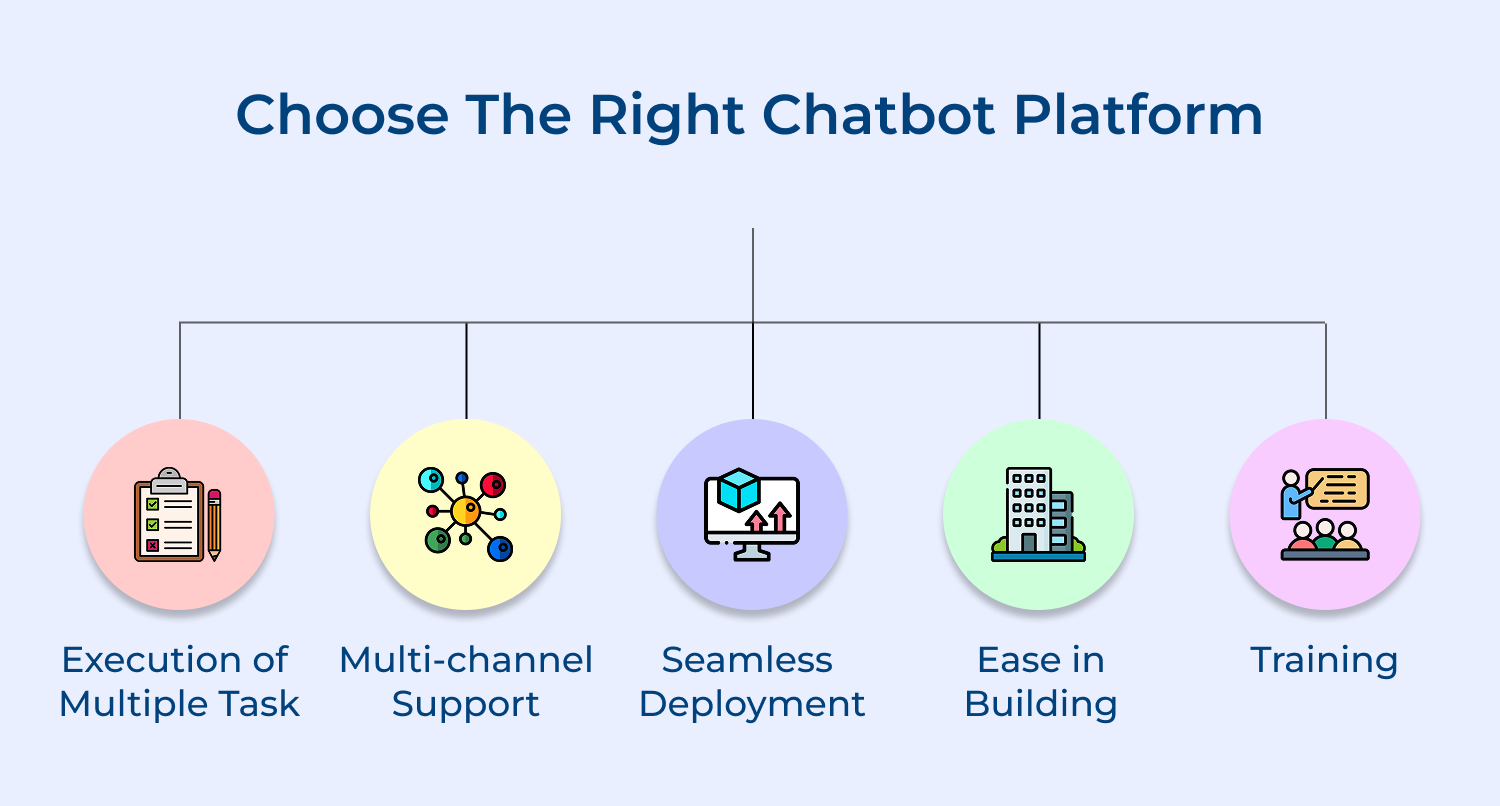
Consider factors such as ease of use, integration capabilities with existing systems (e.g., CRM, knowledge base), scalability, natural language processing (NLP) capabilities and pricing models. Popular platforms include IBM Watson, Google Dialog Flow, Amazon Lex and Microsoft Bot Framework.
Collaborate with your team, including developers, designers and subject matter experts, to create an engaging chatbot experience. Define the conversational flow aligning user journey, ensuring it aligns with your business objectives and the target audience’s needs. Develop personalized dialogues that mimic natural human interactions and train the chatbot with relevant data or scenarios.
To maximize the chatbot’s efficiency and functionality, integrate it with your existing systems. The integration allows the chatbot to access and retrieve relevant information, such as product details, order statuses or customer profiles, ensuring accurate responses.
Thorough testing is crucial before deploying the chatbot. Conduct extensive testing with various scenarios and user inputs to identify potential issues or gaps. Collect feedback from a diverse group of users to refine the chatbot’s responses and improve the overall user experience. Continuously optimize the chatbot based on user interactions and analytics.
Once the chatbot has been thoroughly tested and optimized, it’s time to deploy it across the relevant channels. These channels can include your website, mobile app, social media platforms, or messaging apps like WhatsApp or Facebook Messenger. Promote the chatbot to your target audience through marketing campaigns, email newsletters and other communication channels, highlighting its benefits.
Implementing a chatbot is not a one-time task; it requires ongoing monitoring and maintenance. Continuously track the chatbot’s performance, analyze user interactions and gather feedback. Use this data to identify areas for improvement, update the chatbot’s knowledge base with new information and refine its conversational abilities.
When evaluating automated chatbot software for your business, there are several important features to consider. Here are some key features to look for:
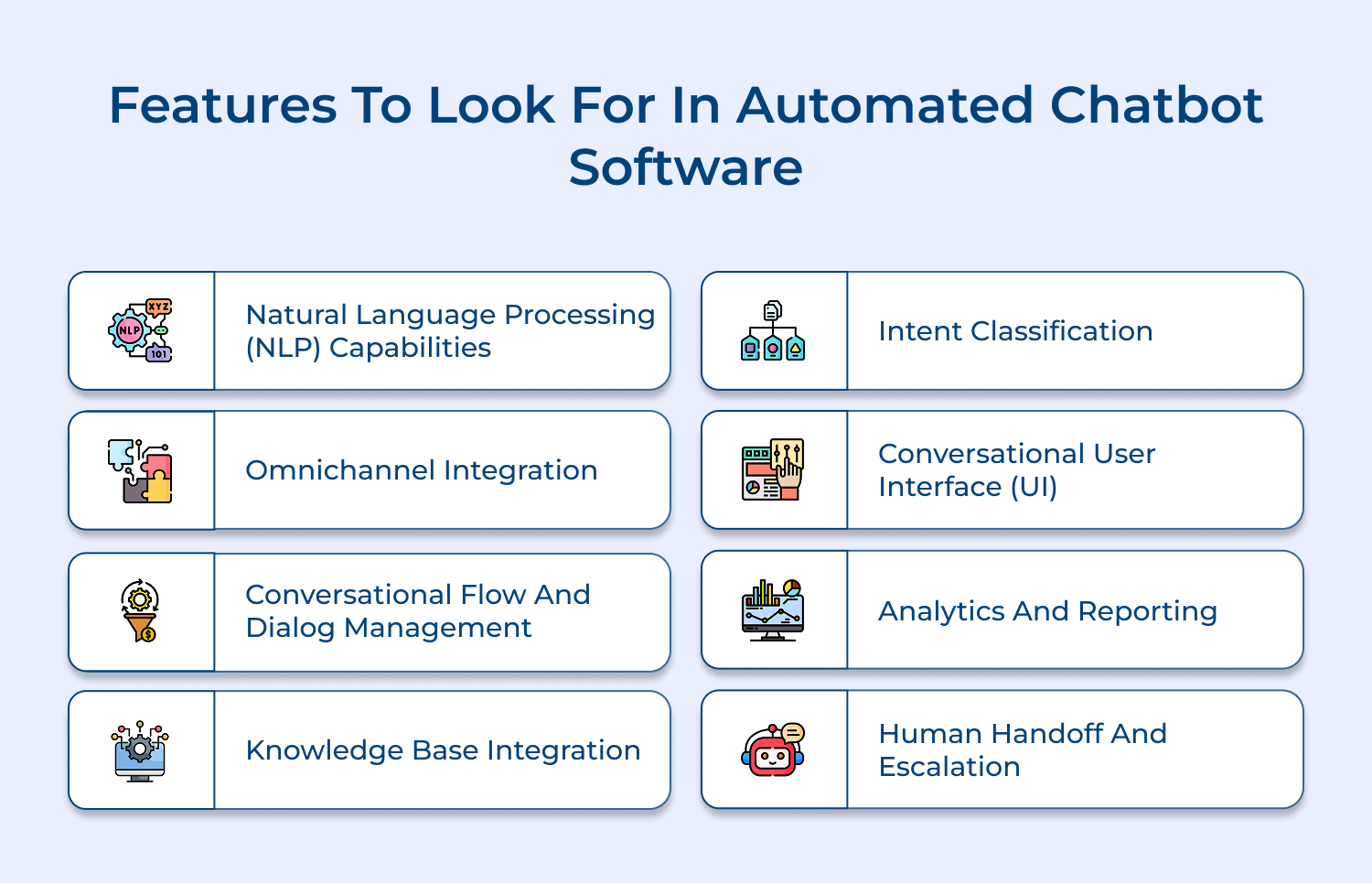
Chatbot automation has become increasingly popular across various industries due to its ability to streamline processes, improve customer experiences and enhance operational efficiency.
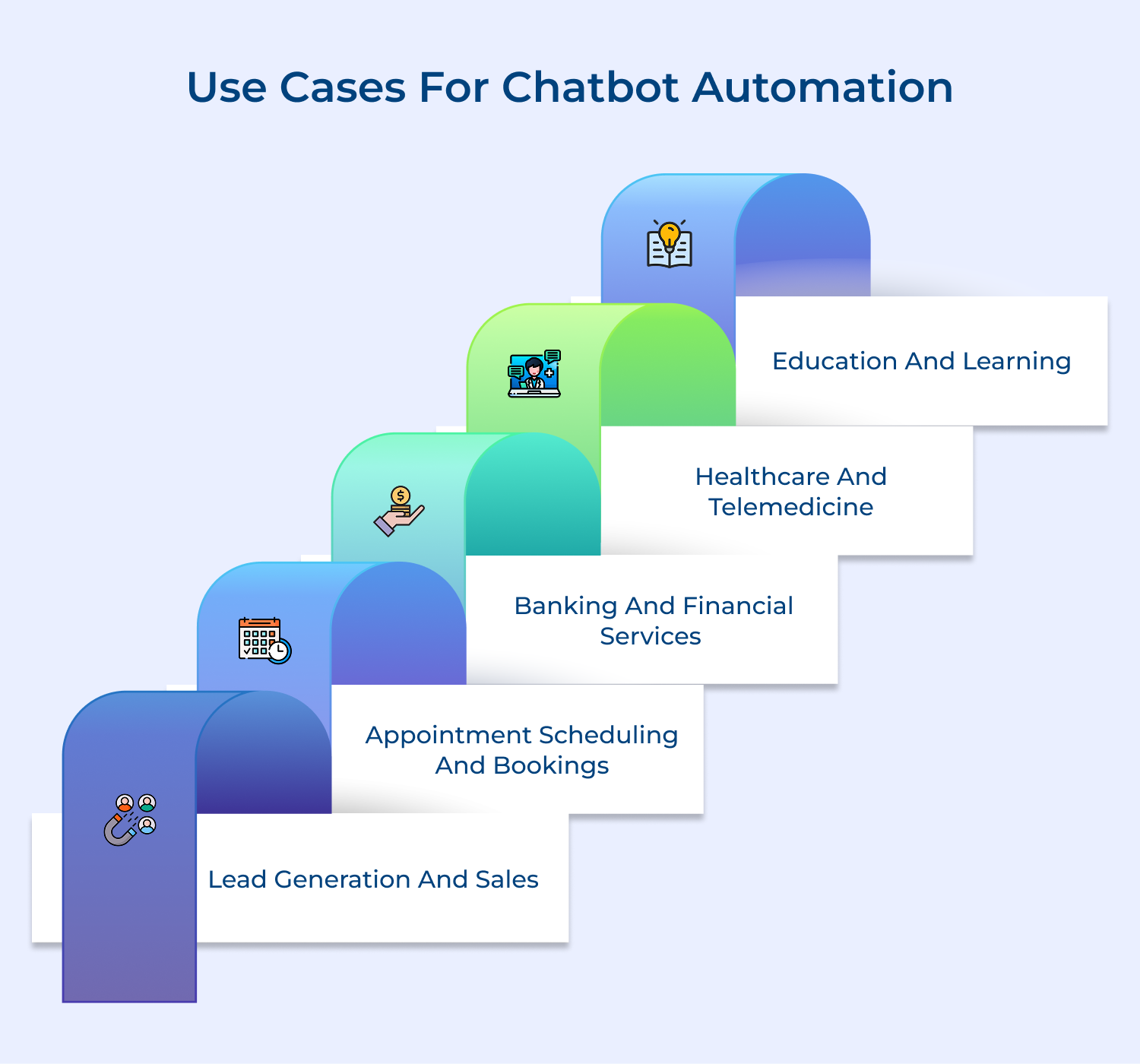
1. Lead Generation and Sales
Chatbots can be effective tools for lead generation and sales. They can engage with website visitors, provide product recommendations, capture lead information and even facilitate sales transactions. This can help businesses nurture leads and drive conversions more efficiently.
2. Appointment Scheduling and Bookings
Chatbots can automate the process of scheduling appointments, managing calendars and facilitating bookings for various services, such as healthcare, hospitality or professional services. This streamlines the scheduling process and provides a convenient experience for customers.
3. Banking and Financial Services
In the banking/financial sector, chatbots can assist customers with account inquiries, transaction histories, and basic financial advice. They can also guide customers through the application processes for various financial products or services.
4. Healthcare and Telemedicine
In the healthcare industry, chatbots can help with appointment scheduling, provide general health information, answer medication-related queries and offer initial triage or symptom assessment.
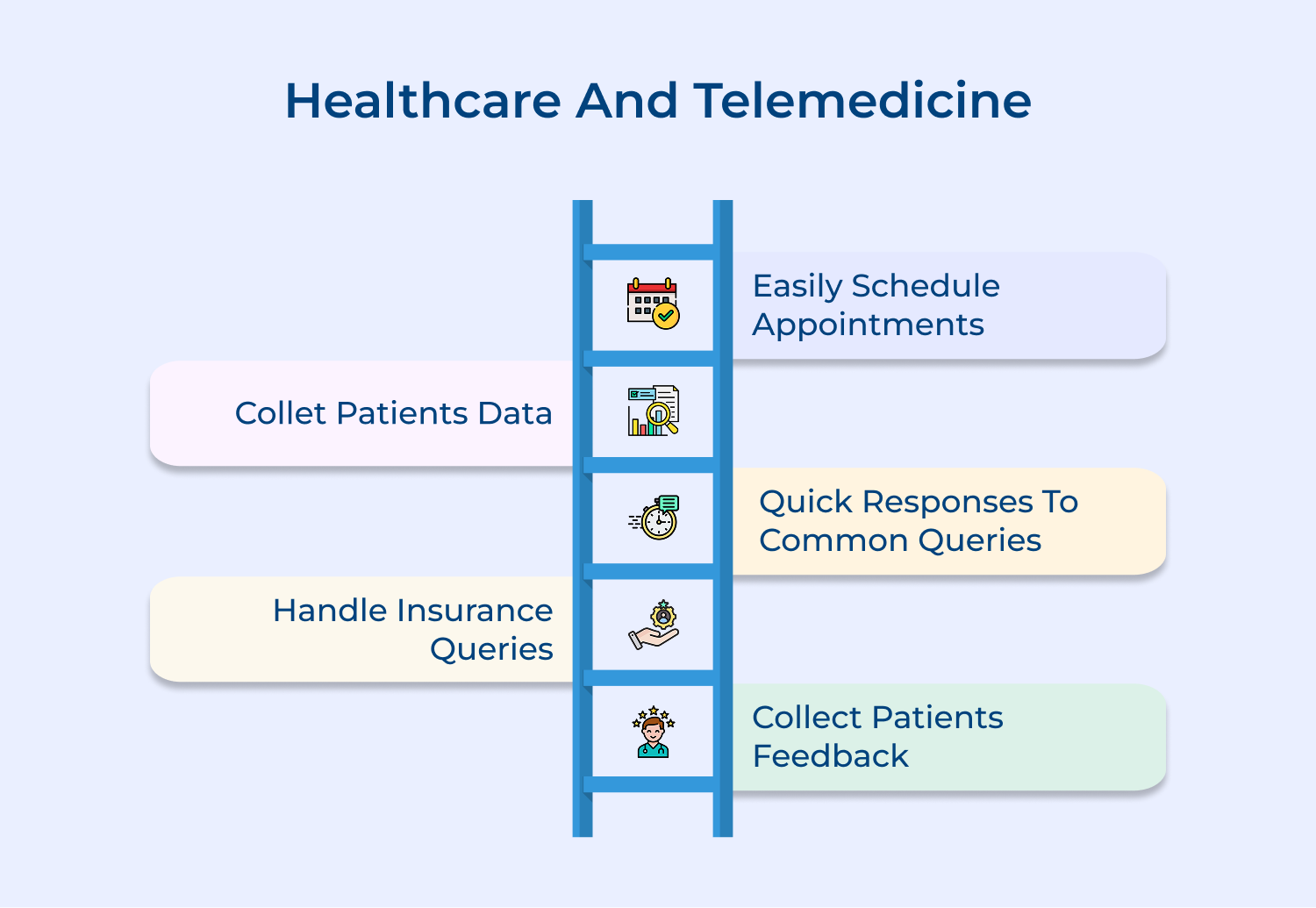
They can also assist in reminding patients about upcoming appointments or follow-up care.
5. Education and Learning
Chatbots use cases also include educational settings to provide personalized learning experiences, answer questions related to course materials and offer tutoring or support services to students. They can also assist with administrative tasks, such as enrollment, scheduling or information dissemination.
The chatbot revolution is transforming customer experiences in a significant way. Bots are streamlining customer interactions, improving response times and providing personalized experiences that enhance customer satisfaction. Businesses that implement chatbots are seeing increased efficiency, reduced costs and higher customer engagement levels.
As technology continues to advance, chatbots will only become more sophisticated and essential for businesses looking to stay competitive in the digital landscape. It is clear that chatbots are revolutionizing the way businesses interact with customers and providing a glimpse into the future of customer service. Embracing chatbot technology is crucial for businesses looking to thrive in the digital age.

How does chatbot automation work?
Chatbot automation works by using artificial intelligence (AI) to analyze user inputs and respond with pre-programmed messages or actions. Chatbots can be programmed to handle a wide range of customer inquiries, from answering simple questions to providing personalized recommendations.
What are the 4 types of chatbots?
The four main types of chatbots are:
How do you automate chatbot testing?
Automating chatbot testing involves using software tools to simulate user interactions and test the chatbot’s responses. Test scripts can be created to check for various scenarios and ensure that the chatbot is functioning as intended. Automated testing can help identify bugs and optimize the chatbot’s performance.
How do you make an automated chatbot?
To create an automated chatbot, you will need to choose a platform or software tool that supports chatbot development, such as Dialog Flow, IBM Watson, or Microsoft Bot Framework. You will then need to define the chatbot’s functionality, including its responses, actions, and integrations with other systems. Once the chatbot is built, you can train it using real user interactions and feedback.
Which industries can benefit the most from chatbot automation?
Many industries can benefit from chatbot automation, including customer service, e-commerce, healthcare, finance and travel. Chatbots can help businesses provide 24/7 support, improve response times, reduce costs and increase customer satisfaction. In industries where repetitive tasks are common, such as retail or banking, chatbots can handle routine inquiries and free up human employees to focus on more complex issues.
 https://omni24.io/wp-content/uploads/2026/09/Social-commerce-scaled.png
1340
2560
Webvision Solution
https://omni24.io/wp-content/uploads/2023/04/Omni-Logo-1.svg
Webvision Solution2026-10-23 12:18:272026-10-23 12:18:27What is Social Commerce and Why Does It Matter?
https://omni24.io/wp-content/uploads/2026/09/Social-commerce-scaled.png
1340
2560
Webvision Solution
https://omni24.io/wp-content/uploads/2023/04/Omni-Logo-1.svg
Webvision Solution2026-10-23 12:18:272026-10-23 12:18:27What is Social Commerce and Why Does It Matter? https://omni24.io/wp-content/uploads/2026/08/AI-Customer-Service-Agents.png
1256
2400
Webvision Solution
https://omni24.io/wp-content/uploads/2023/04/Omni-Logo-1.svg
Webvision Solution2026-09-21 04:48:512026-09-21 04:48:51How to Build an AI Customer Service Agents: 8 Key Steps
https://omni24.io/wp-content/uploads/2026/08/AI-Customer-Service-Agents.png
1256
2400
Webvision Solution
https://omni24.io/wp-content/uploads/2023/04/Omni-Logo-1.svg
Webvision Solution2026-09-21 04:48:512026-09-21 04:48:51How to Build an AI Customer Service Agents: 8 Key Steps https://omni24.io/wp-content/uploads/2026/08/Omnichannel-Conversational-AI.png
1256
2400
Tushar Joshi
https://omni24.io/wp-content/uploads/2023/04/Omni-Logo-1.svg
Tushar Joshi2026-09-16 03:51:072026-09-16 03:51:07How to Build Omnichannel Conversational AI Strategy
https://omni24.io/wp-content/uploads/2026/08/Omnichannel-Conversational-AI.png
1256
2400
Tushar Joshi
https://omni24.io/wp-content/uploads/2023/04/Omni-Logo-1.svg
Tushar Joshi2026-09-16 03:51:072026-09-16 03:51:07How to Build Omnichannel Conversational AI Strategy
Whether it’s about acquire, engage or support – Omni24 covers all your customer engagement needs in one complete platform.

Copyright ©2026 Veemo All rights reserved.
CA, Los Angeles, Hall Ave, 19011