Top 10 Chatbot Mistakes to Avoid for Better CX
Avoiding chatbot mistakes is key to delivering seamless, human-like interactions. Getting it right boosts customer trust, engagement and overall satisfaction.
Avoiding chatbot mistakes is key to delivering seamless, human-like interactions. Getting it right boosts customer trust, engagement and overall satisfaction.
Have you ever had a frustrating experience with a chatbot that left you feeling more confused than helped?
Chatbots can be a valuable tool for businesses, but only if they are implemented and maintained correctly. 40% of individuals remain concerned about the reliability of AI chatbots, citing frequent errors and overconfident answers.
Though AI chatbots help businesses to provide instant customer support and automate repetitive tasks. Many businesses make common mistakes when implementing chatbots, which can lead to poor user experiences and lost opportunities.
To maximize the benefits of chatbots for your business, you can refer to a chatbot comprehensive guide to avoid common mistakes that can hinder their effectiveness. Explore the importance of avoiding chatbot mistakes.
Chatbots help businesses to enhance their customer service and streamline processes. But, like any technology, chatbots are not without their flaws. Chatbot mistakes can occur for a variety of reasons, and understanding these reasons can help businesses avoid them in the future.
Chatbot mistakes happen due to poor design, lack of contextual understanding, or limited training data. When chatbots fail to respond accurately, it can frustrate customers and damage brand trust. Businesses must therefore prioritize continuous improvement to reduce these issues and deliver smoother, more human-like interactions.
Key features:
When implementing chatbots, it’s essential to have careful planning to avoid mistakes that can undermine the effectiveness and user experience of these conversational interfaces.
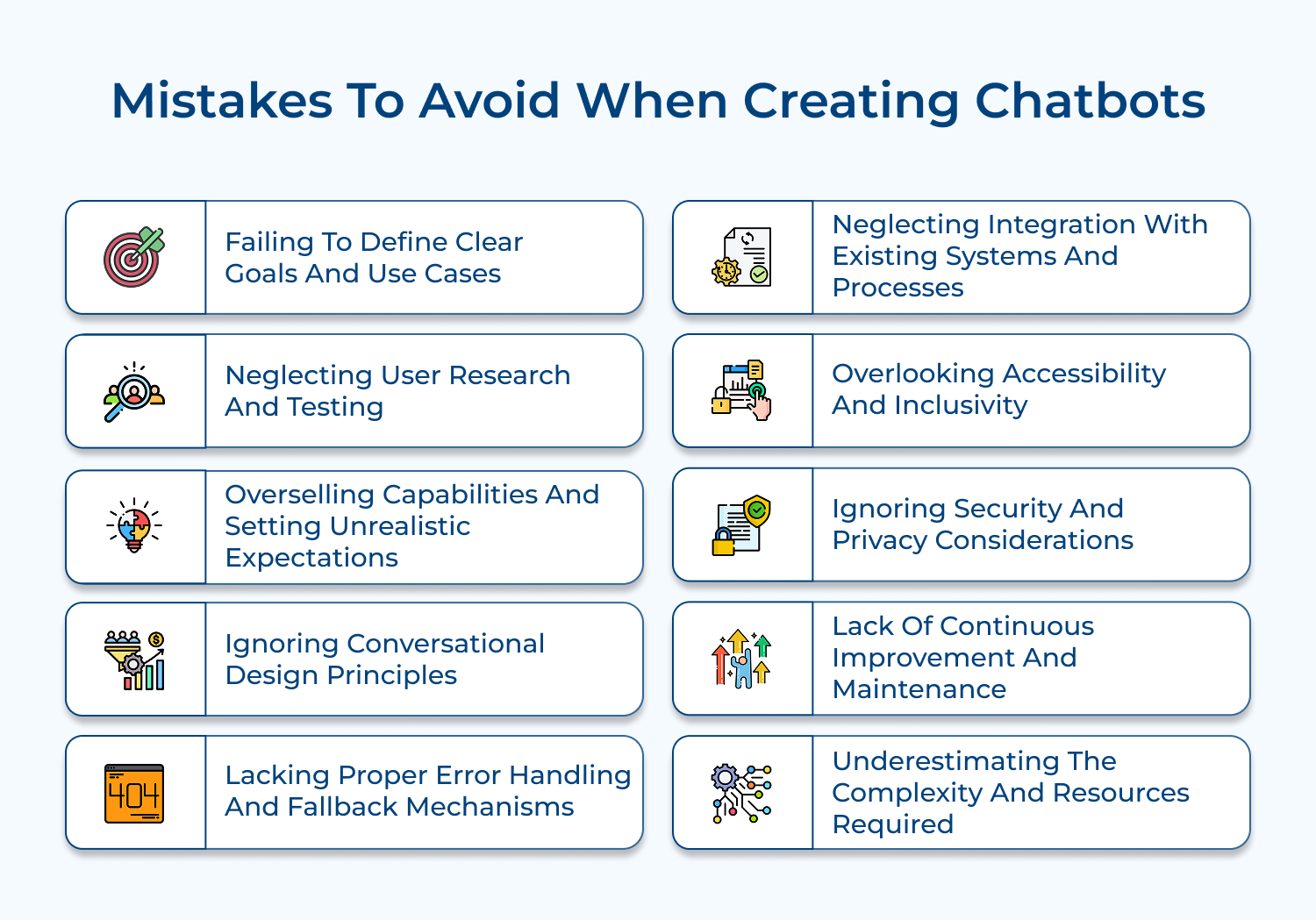
Developing a chatbot without clearly defined goals or use cases can lead to a disjointed and ineffective solution.
Organizations should identify the specific objectives they want to achieve, such as improving customer support, streamlining sales processes or enhancing user engagement. They should determine the specific use cases where a chatbot can provide value and address real user needs.
Chatbots are designed to interact with humans, making user research and testing crucial steps in the development process. Failing to understand user preferences, behavior patterns and language usage can result in a chatbot that fails to resonate with its target audience.
Conducting user interviews, surveys or usability testing can provide valuable insights to inform the chatbot’s design, conversational flow and language model.
It is important to manage user expectations by accurately representing the chatbot’s capabilities and limitations. Overselling the chatbot’s abilities can lead to frustration and disappointment when users encounter limitations or unexpected responses.
Be transparent about what the chatbot can or cannot do and provide clear guidelines for users on how to interact with it effectively.
Chatbots are designed to mimic human conversations, making conversational design principles essential for creating an engaging and natural user experience.
Failing to consider factors such as tone, personality, context awareness & natural language processing can result in robotic and stilted interactions that fail to meet user expectations.
Even the most sophisticated chatbots can encounter situations where they cannot provide a satisfactory response.
Failing to implement proper error handling or fallback mechanisms can lead to frustrating user experiences and a loss of trust in the chatbot. Provide clear error messages, and offer alternative solutions or escalation paths when the chatbot cannot resolve an issue.
Chatbots often need to interact with various systems & databases to retrieve and process information.
Failing to properly integrate the chatbot with existing systems and processes can result in incomplete or inaccurate responses, hindering the chatbot’s effectiveness, which usually leads to user dissatisfaction.
Chatbots should be designed to be accessible to users with diverse abilities and backgrounds. Failing to consider accessibility requirements, such as support for screen readers or alternative input methods, can exclude a significant portion of potential users and hinder the chatbot’s effectiveness.
Chatbots may handle sensitive user data or interact with critical systems, making security and privacy essential considerations. Failing to implement proper security measures, such as secure data handling, authentication, and access controls, can expose users to potential risks.
Chatbots are not static solutions; they require ongoing maintenance, updates and improvements to remain effective. Failing to allocate resources for continuous improvement, monitoring user feedback and updating the chatbot’s knowledge base can lead to stagnation or a deterioration of the user experience over time.
Developing an effective chatbot can be a complex and resource-intensive endeavor. Underestimating the effort required, including the need for specialized skills in areas like natural language processing, machine learning and conversational design, can lead to subpar results or wasted investments.
Chatbots are offering customers a convenient way to interact with businesses, get product recommendations and receive assistance throughout the shopping journey. But, if not implemented correctly, chatbot mistakes can harm an eCommerce business in several ways.
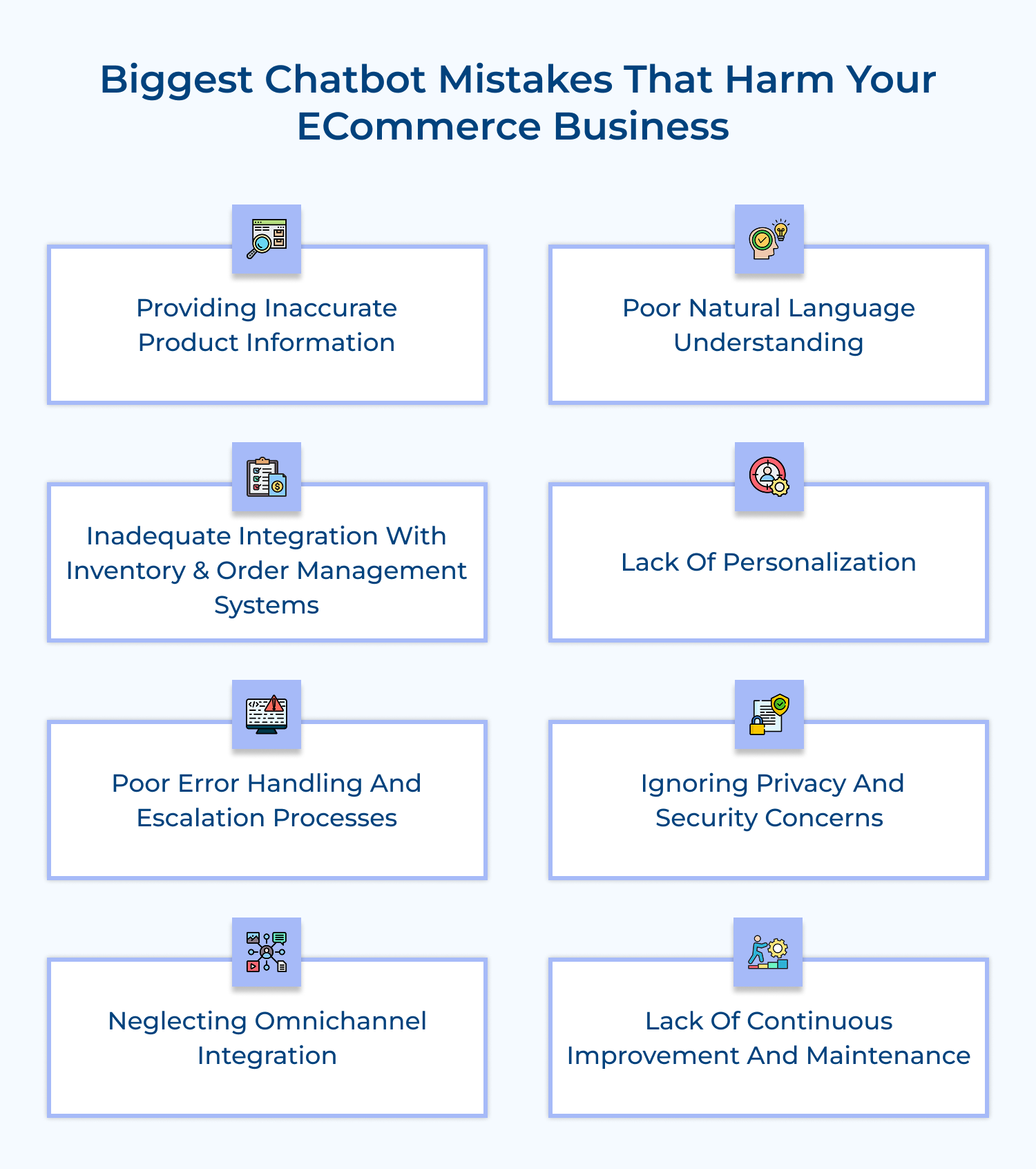
One of the most critical functions of an eCommerce chatbot is to provide accurate product information to customers. If the chatbot provides incorrect details about product specifications, pricing, availability, or shipping information, it can lead to frustration, mistrust and potential lost sales. Customers may abandon their purchases or seek alternatives from competitors.
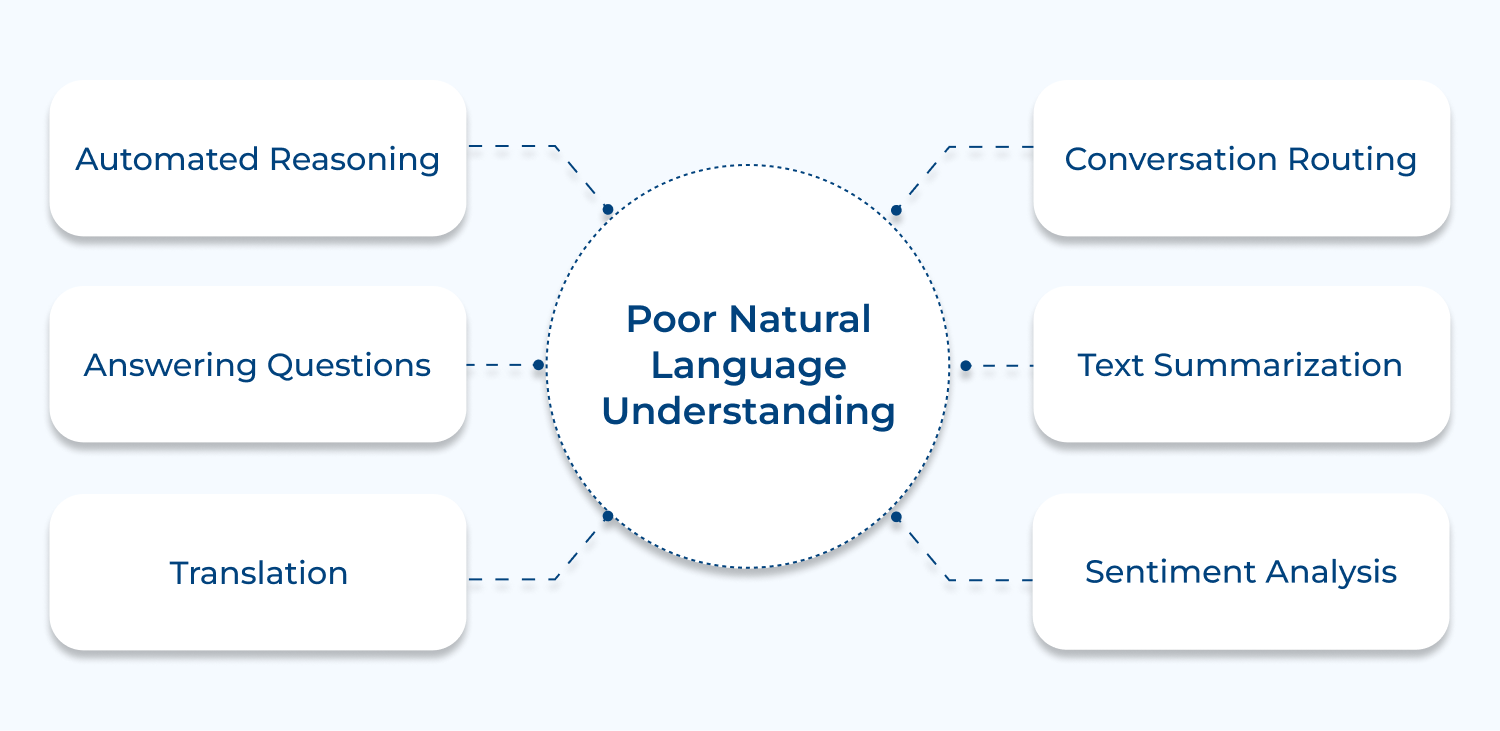
Chatbots rely on natural language processing (NLP) to understand and respond to customer queries effectively. If the chatbot struggles to comprehend the user’s intent or fails to recognize synonyms, slang or colloquial language, it can result in irrelevant or confusing responses, hindering the customer experience.
For an eCommerce chatbot to function optimally, it needs to be seamlessly integrated with the business’s inventory and order management systems. Failure to achieve this integration can lead to issues such as displaying incorrect stock levels, inability to process orders, or delays in order fulfillment, all of which can damage the customer experience and harm the business’s reputation.
Customers expect a personalized shopping experience, and chatbots have the potential to deliver this by leveraging customer data. But, if the chatbot fails to provide personalized recommendations, product suggestions, or tailored assistance, it can result in a generic and unsatisfying customer experience, potentially leading to lost sales.
Chatbots are not infallible, and there will be instances where they cannot resolve a customer’s query or encounter technical issues. If the chatbot lacks proper error handling and escalation processes, customers may become frustrated and unable to resolve their problems, leading to negative perceptions of the brand.
Chatbots often handle sensitive customer information, such as personal details, payment information, and order histories. Failure to implement robust security measures and adhere to data privacy regulations can result in data breaches, compromising customer trust and potentially leading to legal or financial consequences for the business.
Customers expect a seamless experience across multiple channels, including websites, mobile apps, social media, and chatbots. If the eCommerce chatbot operates in isolation without integration with other customer touchpoints, it can create an inconsistent customer experience, undermining the brand’s credibility and customer loyalty.
Chatbots require regular maintenance, updates and improvements to ensure they remain relevant, accurate, and aligned with evolving customer needs. Failing to allocate resources for continuous improvement or maintenance can lead to a degradation of the chatbot’s effectiveness over time, negatively impacting the customer experience and the business’s competitiveness.
Chatbots have become increasingly popular tools for businesses to enhance customer experience. But when chatbots fail to provide satisfactory assistance, it can have a significant impact on a business’s bottom line.
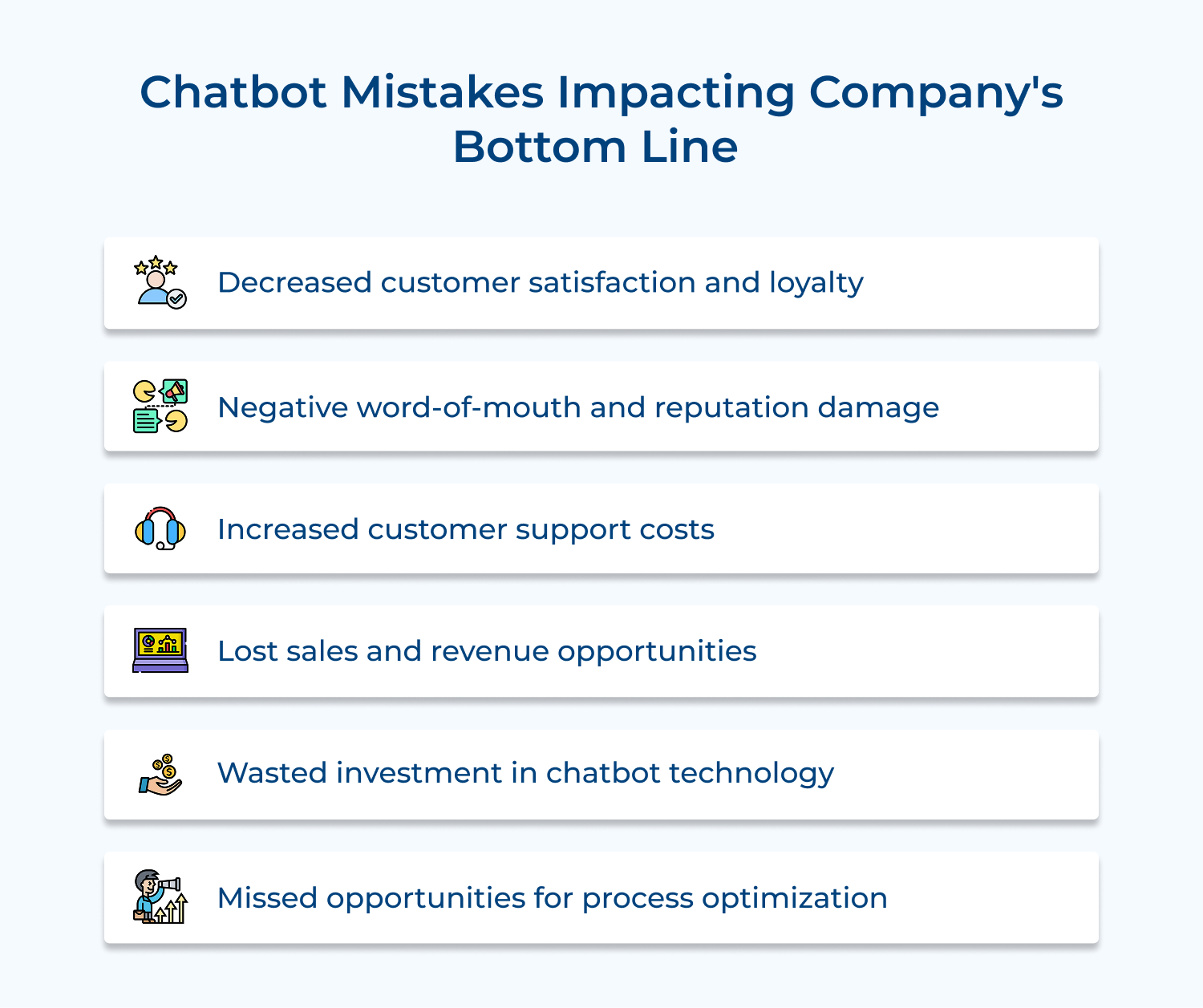
To mitigate the negative impact of chatbot mistakes on the bottom line, businesses should prioritize the following:
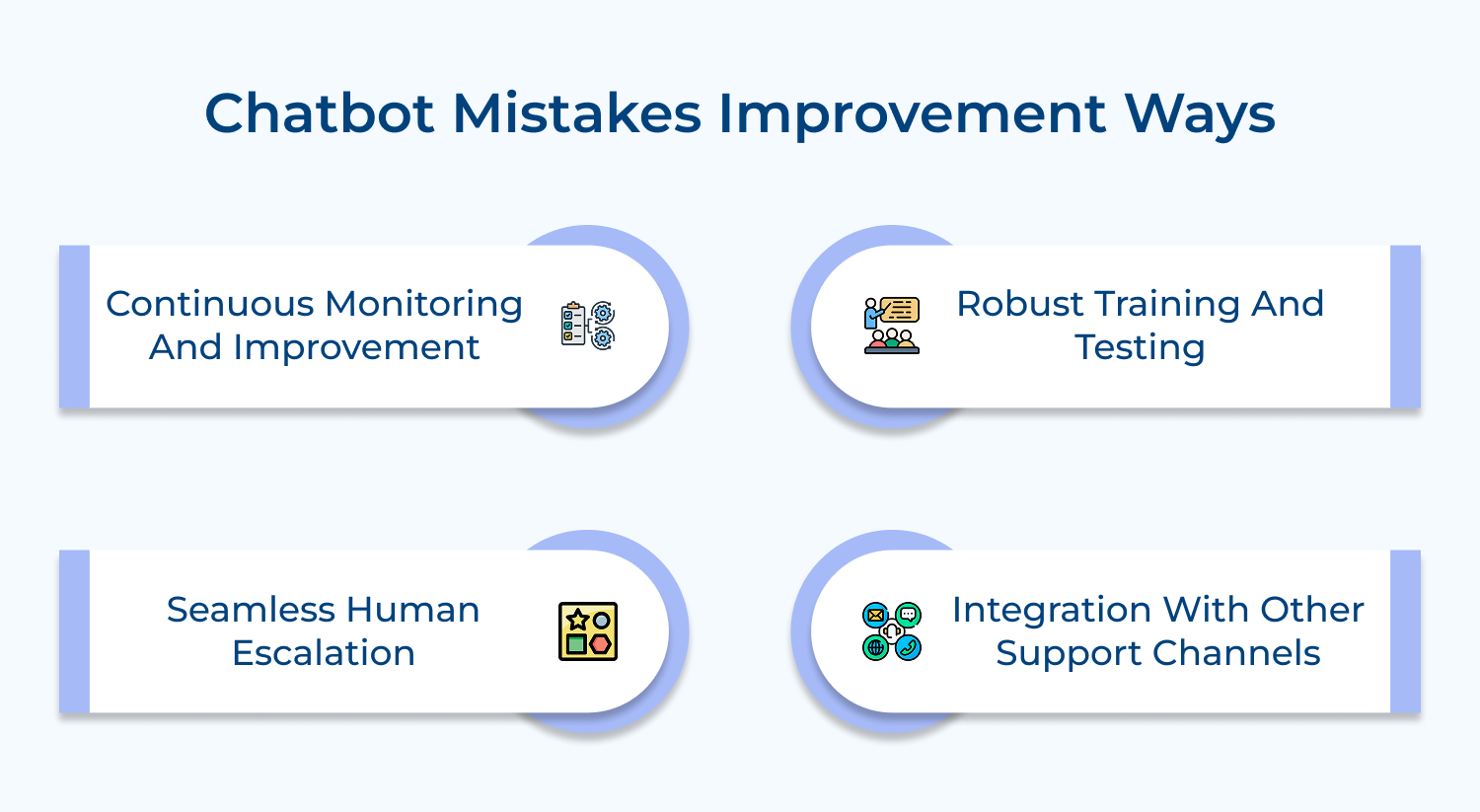
Addressing your chatbot mistakes is crucial in enhancing customer experience (CX). By rectifying errors in your chatbot interactions, you can improve customer communication and provide them with a more personalized experience.
Taking the time to review feedback, analyze data and make necessary adjustments will ultimately lead to a more seamless customer journey. Remember, investing in perfecting your chatbot capabilities will not only benefit your customers but also contribute to the overall success of your business.

What are the chatbot mistakes?
Some common chatbot mistakes include providing irrelevant responses to user queries, misunderstanding user intent, failing to recognize keywords or phrases and lacking the ability to engage in natural, human-like conversations. These mistakes can lead to frustration for users and ultimately harm the user experience.
How can you avoid unusual chatbot mistakes?
To avoid unusual chatbot mistakes, you can take several steps. First, ensure that your chatbot is properly trained with a wide range of responses to different user queries. Regularly monitor and update your chatbot’s performance by analyzing user interactions and feedback. Incorporating natural language processing (NLP) technology can also help improve the chatbot’s ability to understand and respond to user queries more accurately.
What is the biggest problem with chatbots?
One of the biggest problems with chatbots is their inability to fully understand and respond to complex or nuanced user queries. While chatbots can be programmed to recognize specific keywords or phrases, they may struggle with understanding the context or intent behind a user’s message. This can lead to miscommunication and frustration for users.
Can chatbots make mistakes?
Yes, chatbots can make mistakes. Chatbots are powered by artificial intelligence (AI) technology, which means they are constantly learning and adapting to user interactions. But, as with any technology, chatbots are not perfect and may make errors in understanding user queries or providing accurate responses. Regular monitoring and updating of the chatbot’s performance can help minimize these mistakes.
Why is the chatbot giving errors?
There are several reasons why a chatbot may give errors. One common reason is a lack of proper training or programming, leading to misunderstandings of user queries or providing irrelevant responses. Technical issues or errors in the chatbot’s programming can also cause errors in its performance. Regular maintenance and testing of the chatbot can help identify and resolve these issues to ensure optimal functionality.
 https://omni24.io/wp-content/uploads/2026/07/Customer-Data-Platform.png
1256
2400
Tushar Joshi
https://omni24.io/wp-content/uploads/2023/04/Omni-Logo-1.svg
Tushar Joshi2026-07-08 03:58:592026-07-08 03:58:59How a Customer Data Platform Unlocks Unified Customer Insights
https://omni24.io/wp-content/uploads/2026/07/Customer-Data-Platform.png
1256
2400
Tushar Joshi
https://omni24.io/wp-content/uploads/2023/04/Omni-Logo-1.svg
Tushar Joshi2026-07-08 03:58:592026-07-08 03:58:59How a Customer Data Platform Unlocks Unified Customer Insights https://omni24.io/wp-content/uploads/2026/07/Unified-Customer-View.png
1256
2400
Tushar Joshi
https://omni24.io/wp-content/uploads/2023/04/Omni-Logo-1.svg
Tushar Joshi2026-07-07 03:37:342026-07-07 03:37:34How a Unified Customer View Transforms Customer Experience
https://omni24.io/wp-content/uploads/2026/07/Unified-Customer-View.png
1256
2400
Tushar Joshi
https://omni24.io/wp-content/uploads/2023/04/Omni-Logo-1.svg
Tushar Joshi2026-07-07 03:37:342026-07-07 03:37:34How a Unified Customer View Transforms Customer Experience https://omni24.io/wp-content/uploads/2026/06/Omnichannel-CRM.png
1256
2400
Tushar Joshi
https://omni24.io/wp-content/uploads/2023/04/Omni-Logo-1.svg
Tushar Joshi2026-07-06 03:49:012026-07-06 04:00:22How to Implement Omnichannel CRM Strategy: 7 Key Steps
https://omni24.io/wp-content/uploads/2026/06/Omnichannel-CRM.png
1256
2400
Tushar Joshi
https://omni24.io/wp-content/uploads/2023/04/Omni-Logo-1.svg
Tushar Joshi2026-07-06 03:49:012026-07-06 04:00:22How to Implement Omnichannel CRM Strategy: 7 Key Steps
Whether it’s about acquire, engage or support – Omni24 covers all your customer engagement needs in one complete platform.

Copyright ©2026 Veemo All rights reserved.
CA, Los Angeles, Hall Ave, 19011