What is the Customer Effort Score (CES) & How to Measure it?
Customer Effort Score (CES) measures goal ease, directly boosting satisfaction, loyalty, relationships and retention through reduced effort.

Customer Effort Score (CES) measures goal ease, directly boosting satisfaction, loyalty, relationships and retention through reduced effort.
Customers expect seamless interactions and efficient service. The Customer Effort Score (CES) helps businesses measure how much effort customers have to put in to interact with a company, make a purchase, or resolve an issue.
Understanding the significance of the Customer Efforts Score can be a game-changer for businesses looking to improve customer satisfaction and loyalty.
A good CES score is often linked to customer satisfaction and retention. If 40% or more of your customers rate their experience between 6-7 on a 7-point scale, your business is likely performing well in terms of customer effort.
Let us explore why CES is important for businesses and how it can impact the overall customer experience.
Customer Effort Score (CES) is a key metric used by companies to measure the level of effort it takes for customers to interact with their products or services. It helps businesses understand how easy or difficult it is for customers to achieve their goals when engaging with their brand.
The metric is typically measured by asking customers to rate the ease of their interaction on a scale, usually from 1 (very difficult) to 7 (very easy). By tracking these responses, businesses can identify and eliminate obstacles in their customer service processes, improving overall customer satisfaction.
Key objectives:
Customer Effort Score (CES) is a key indicator of customer satisfaction and loyalty, as it evaluates the ease of the customer experience.
The formula to calculate Customer Effort Score is simple:
For example, let’s say you surveyed 100 customers about their experience with your customer service team. Out of those 100 customers, 70 found the experience easy or very easy.
CES = 70 / 100 = 0.7
To convert this into a percentage, simply multiply the result by 100:
CES = 0.7 x 100 = 70%
A higher Customer Effort Score indicates that customers are finding it easy to interact with your business and are likely to have a positive experience. A lower CES may suggest that customers are experiencing difficulty or frustration, which could lead to dissatisfaction and potential churn.
A high customer effort score indicates that customers are having a difficult time engaging with a company, which can lead to frustration and leads to a negative impact on customer retention. While a low customer effort score suggests that customers are having a seamless experience, which can lead to increased satisfaction and positive word-of-mouth referrals.
So, what is considered a good customer effort score? Typically, a good customer effort score falls within the range of 1-5, with 1 being the lowest effort and 5 being the highest effort. A score of 1-2 indicates that customers are having a positive experience with minimal effort required, while a score of 4-5 suggests that customers are facing challenges and obstacles that are hindering their experience.
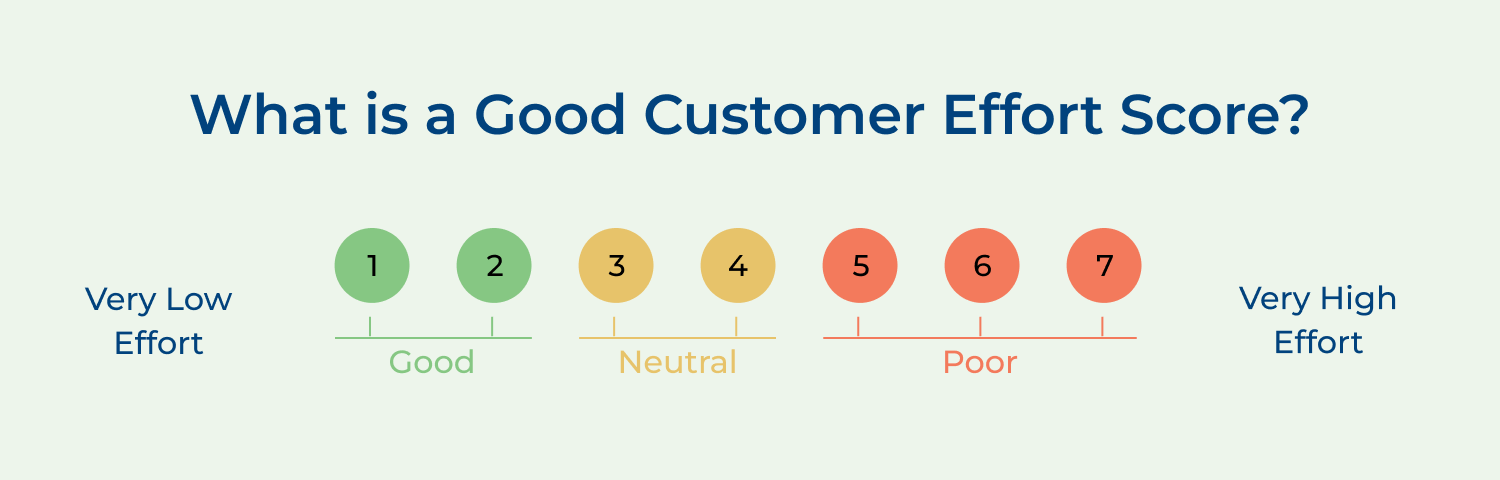
A good customer effort score is essential for measuring and improving the overall customer experience. By paying attention to this important metric and taking steps to reduce customer effort, businesses can create satisfied customers who are more likely to recommend their products/services to others.
Customer Effort Score (CES) surveys are an important tool for businesses to measure customer satisfaction. There are several different types of CES surveys that companies can use to gather Customer feedback.
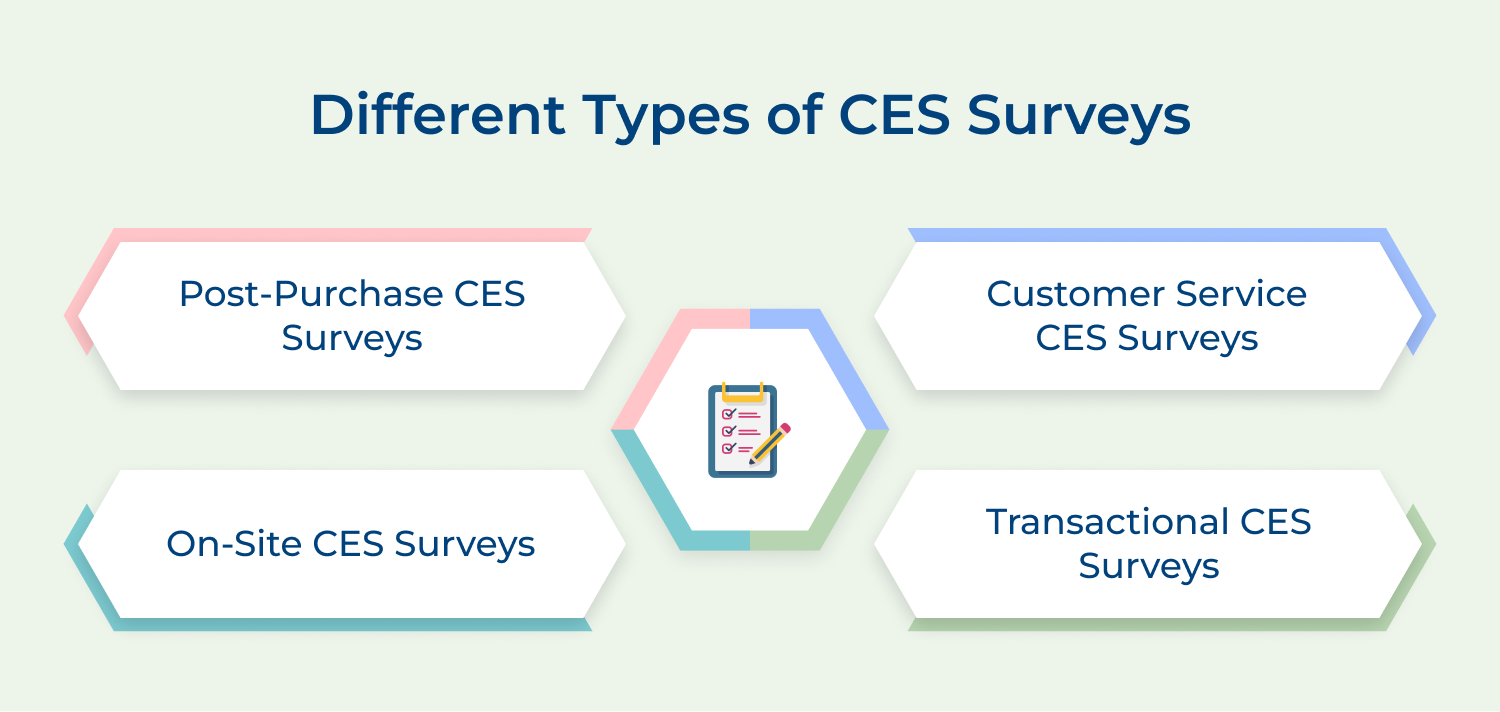
Post-purchase CES surveys are sent to customers after they have made a purchase or used a service. These surveys are designed to measure the customer’s level of effort in completing the transaction and to identify any pain points or areas for improvement. Post-purchase CES surveys can help businesses understand how easy or difficult it was for customers to make a purchase and can provide valuable insights for improving the overall shopping experience.
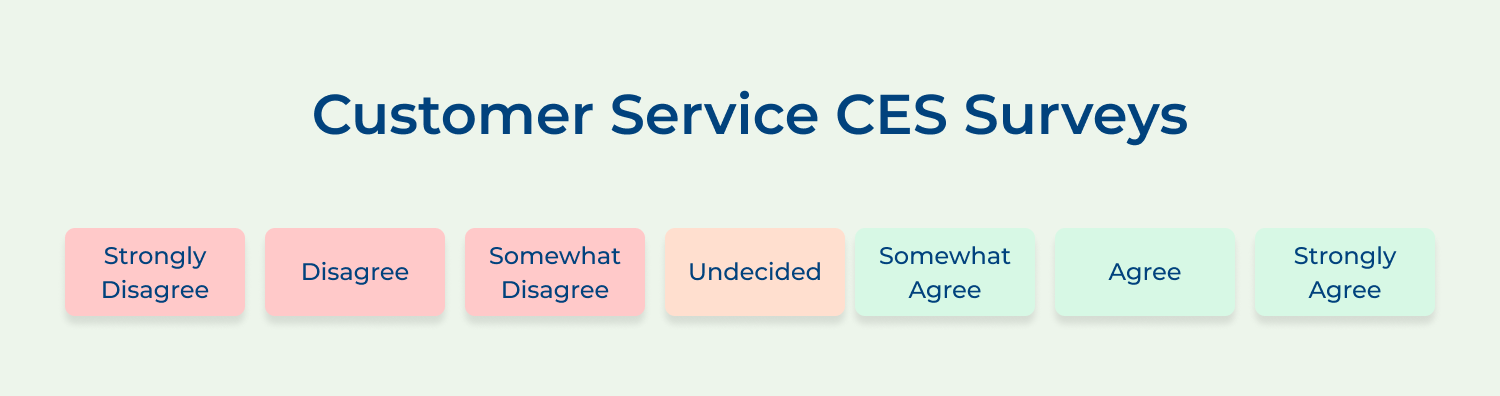
Customer service CES surveys are sent to customers after they have interacted with the company’s customer service team. These surveys are used to measure the effectiveness of the customer service experience and to identify any areas where the company can improve its support processes. Customer service CES surveys can help businesses gauge how much effort customers had to put in to resolve their issues and can highlight any areas where additional training or resources may be needed.
On-site CES surveys are presented to customers while they are actively engaging with a company’s website or app. These surveys pop up on the screen during the customer’s visit, asking them to rate the level of effort required to complete a specific task or find information. On-site CES surveys provide real-time feedback on the customer experience and can help businesses make immediate improvements to their digital platforms.
Transactional CES surveys are designed to gather feedback from customers immediately after a specific interaction or transaction with a company. This type of survey is typically sent out via email or SMS shortly after the customer has completed their purchase or interaction. Transactional CES surveys help businesses understand how effortless it was for customers to complete a specific task, such as making a purchase or resolving an issue.
Customer Effort Score provides valuable insights into the overall customer experience and can help businesses identify areas for improvement. But when should companies use Customer Effort Score?
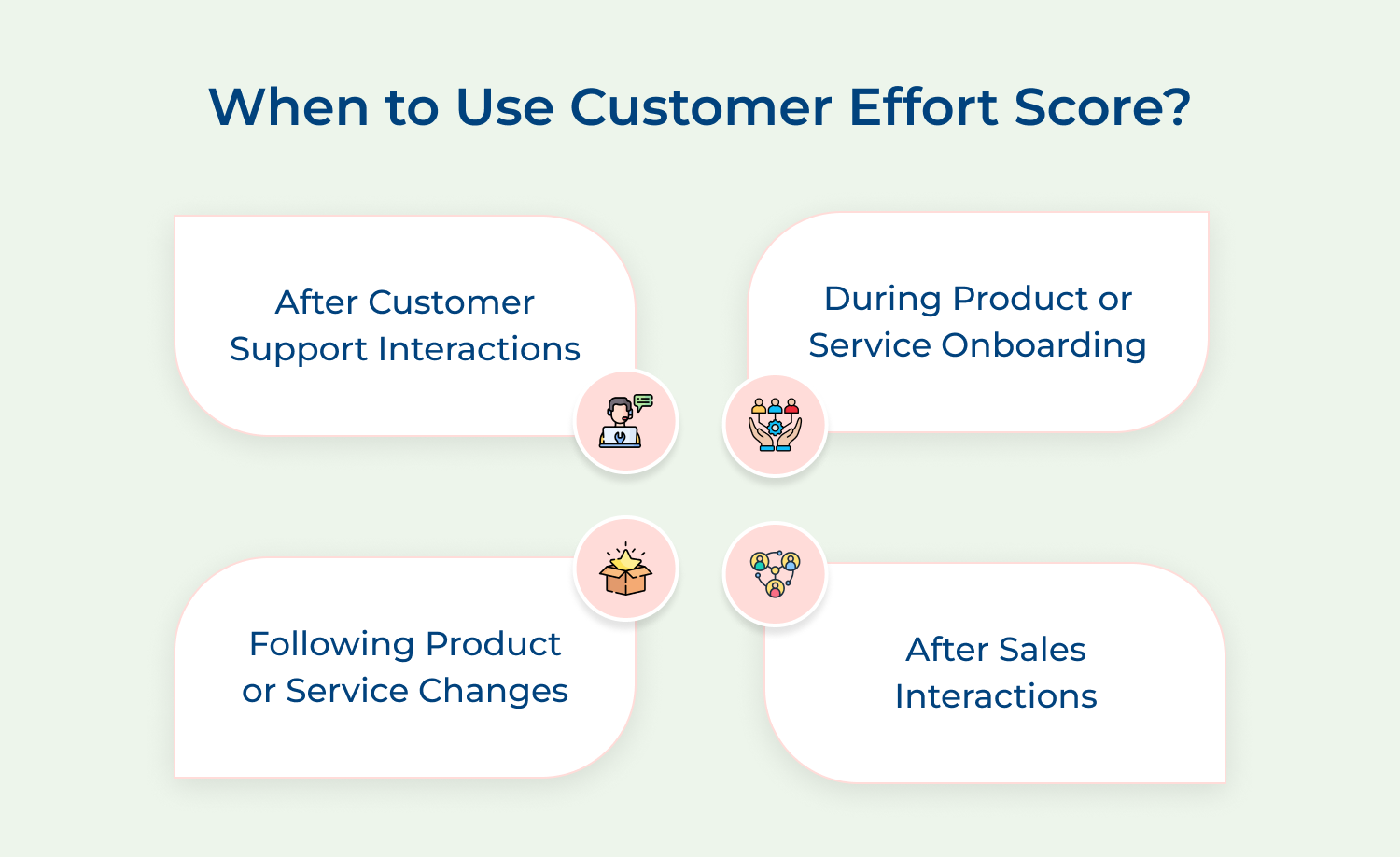
Customer Effort Score metric measures the ease of a customer’s experience when interacting with their products or services. By measuring CES, businesses can gain insights into how to improve loyalty.
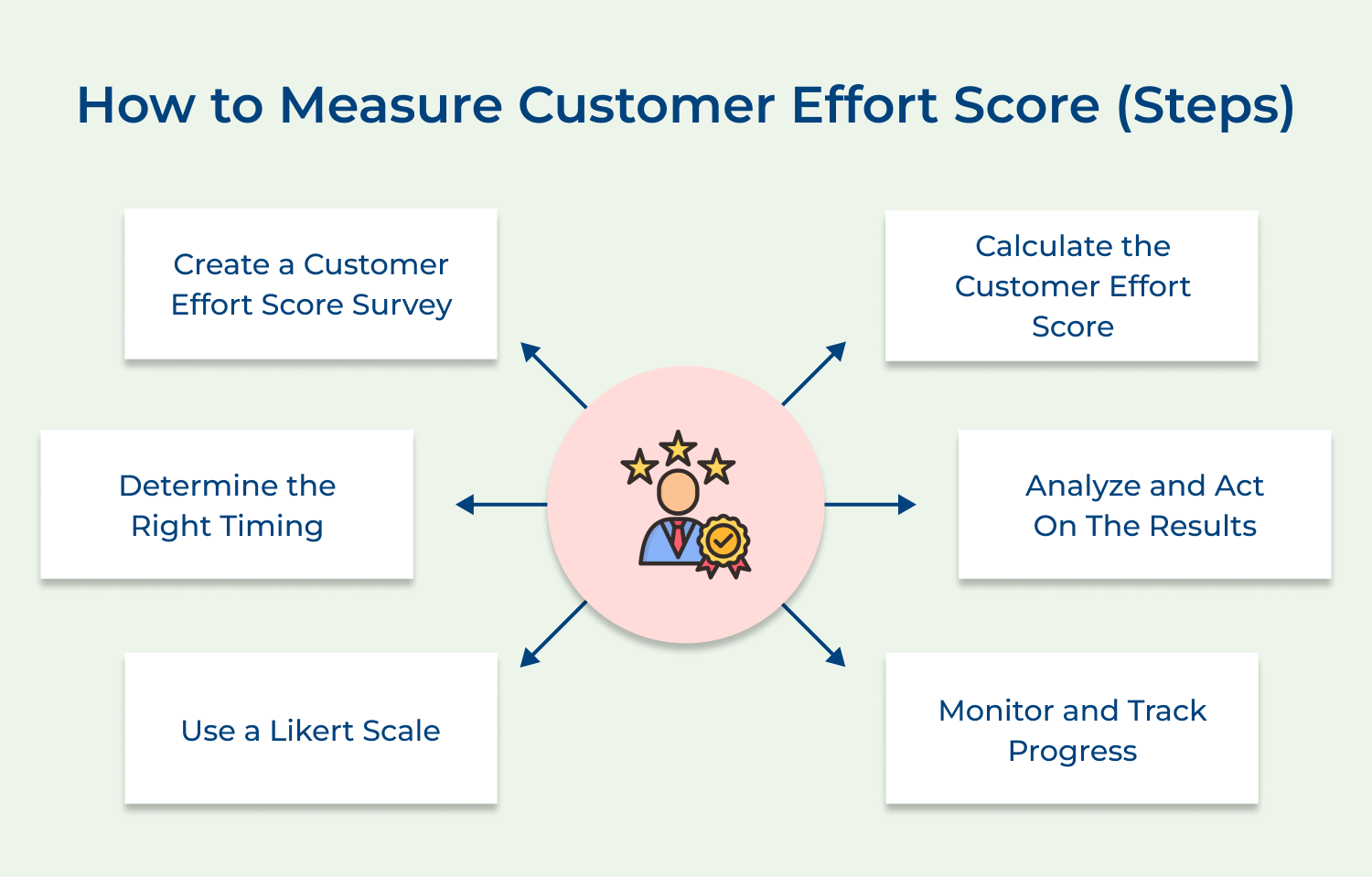
The first step in measuring CES is to create a survey that asks customers to rate the level of effort they had to put in to resolve an issue, make a purchase or complete a task. Keep the survey simple and concise with questions that are easy for customers.
Creating a Customer Effort Score survey allows you to gather quantitative data on how easy or difficult it is for customers to interact with your brand. By asking specific questions related to their experience, you can identify pain points and areas for improvement.
To get the most accurate measurement of CES, it’s important to ask customers for feedback immediately after they have interacted with your company. This could be after they have completed a purchase, contacted customer support, or used your product or service.
Timing is key when measuring Customer Effort Score. By sending out surveys immediately after a customer interaction, you can capture their experience while it’s fresh in their minds. This can lead to more accurate and honest feedback.
A Likert scale is a popular way to measure customer effort, as it allows customers to rate their experience on a scale of 1 to 5 or 1 to 7. Make sure to clearly define what each number on the scale represents, such as “1 = Very difficult” and “5 = Very easy.”
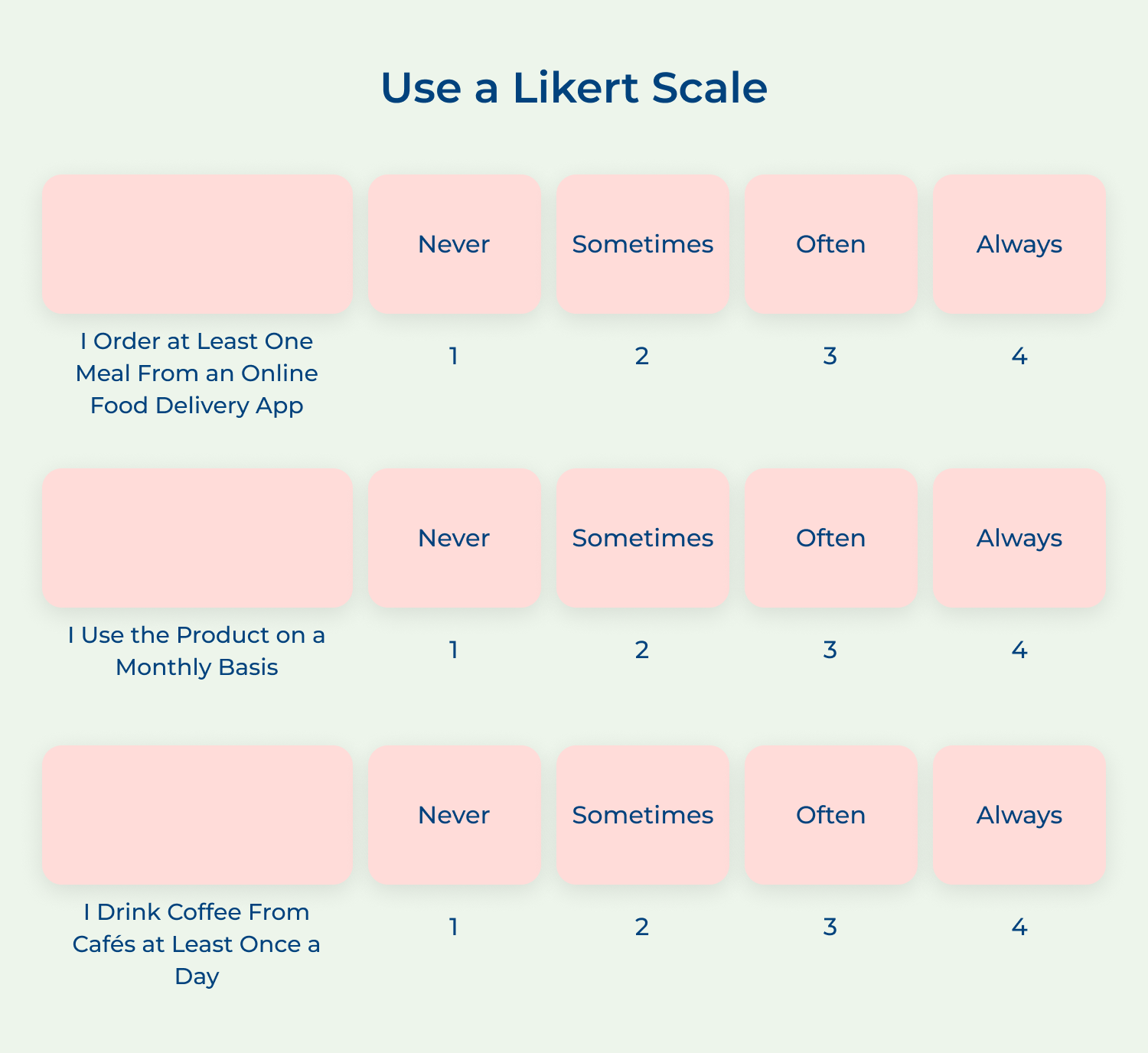
Using a Likert Scale in your survey allows customers to rate their effort level on a scale of agreement (e.g. strongly agree, agree, neutral, disagree, strongly disagree). This provides a clear and easy way for customers to communicate their level of effort.
To calculate the CES, simply average the responses from all customers who have completed the survey. The average score will give you a measure of the overall level of effort customers are experiencing when interacting with your company.
Calculating the Customer Effort Score involves averaging the responses from your survey on the Likert Scale. This numerical score gives you a quantifiable measure of customer effort, making it easier to track changes over time.
Once you have calculated the CES, it’s important to analyze the results and identify areas for improvement. Look for patterns or trends in the data, such as specific touchpoints or processes that are causing customers to exert more effort than necessary. Use this information to make changes that will simplify the customer experience and reduce friction.
Use the feedback and insights gathered from the survey to make improvements to your processes & services.
Measuring CES is an ongoing process, so it’s important to monitor and track the score over time. Keep collecting feedback from customers, analyzing the results and taking action to improve the customer experience.
Consistently measuring CES and making adjustments based on customer feedback, you can ensure that your company is continuously striving to make interactions with customers as seamless and effortless as possible.
Customer effort score (CES) and Net Promoter Score (NPS) are two popular customer experience metrics used by businesses to measure customer satisfaction and loyalty. While both metrics are valuable in evaluating customer feedback, they have key differences that set them apart.
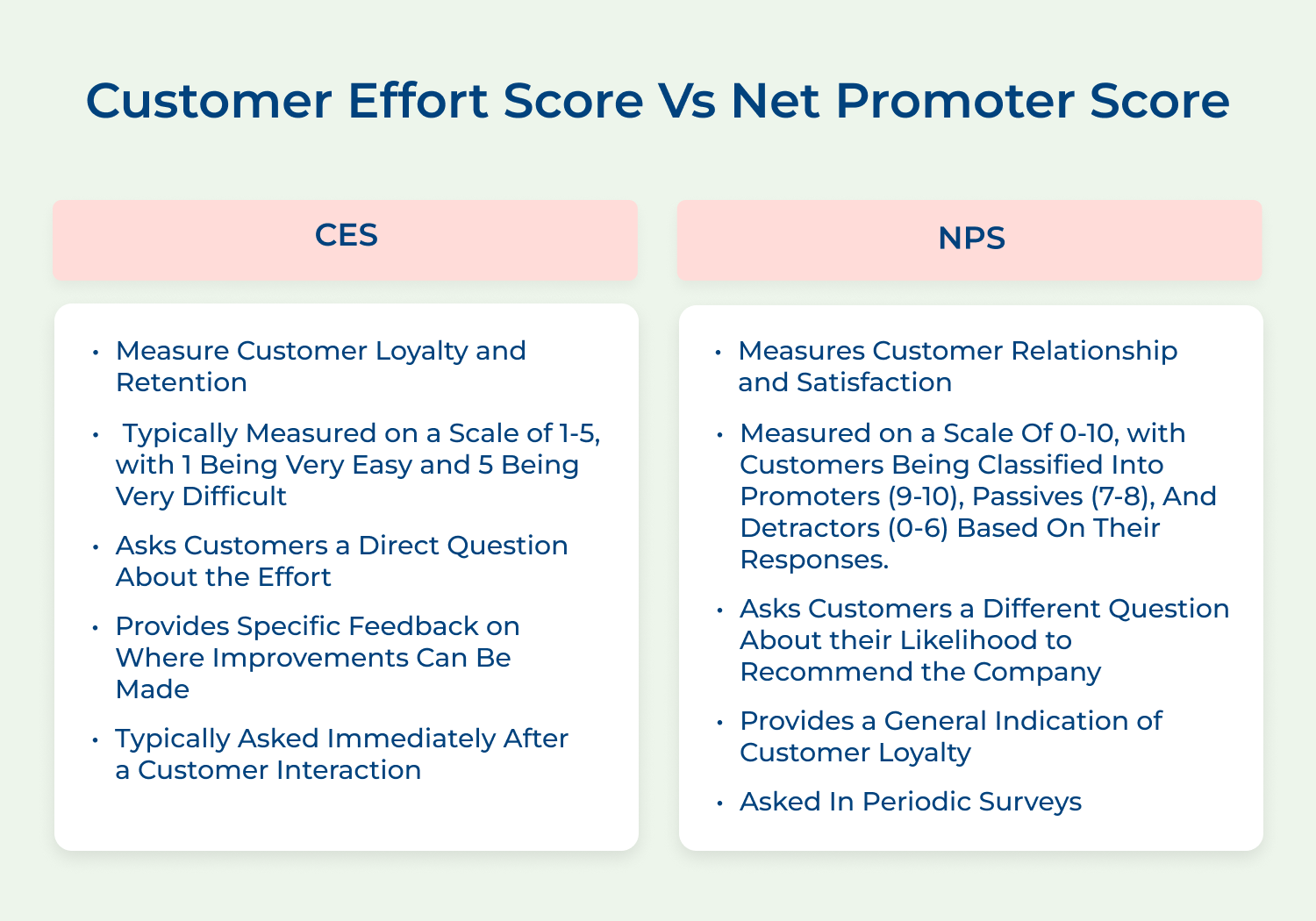
Measurement focus
Scale
Question format
Actionability
Timeframe
Customer Effort Score is a metric used by businesses to measure the ease with which customers. By asking the right questions, companies can gain valuable insights into the customer experience and identify areas for improvement.
How easy was it for you to find the information you were looking for?
This question can help businesses understand whether their website or customer service processes are user-friendly and intuitive.
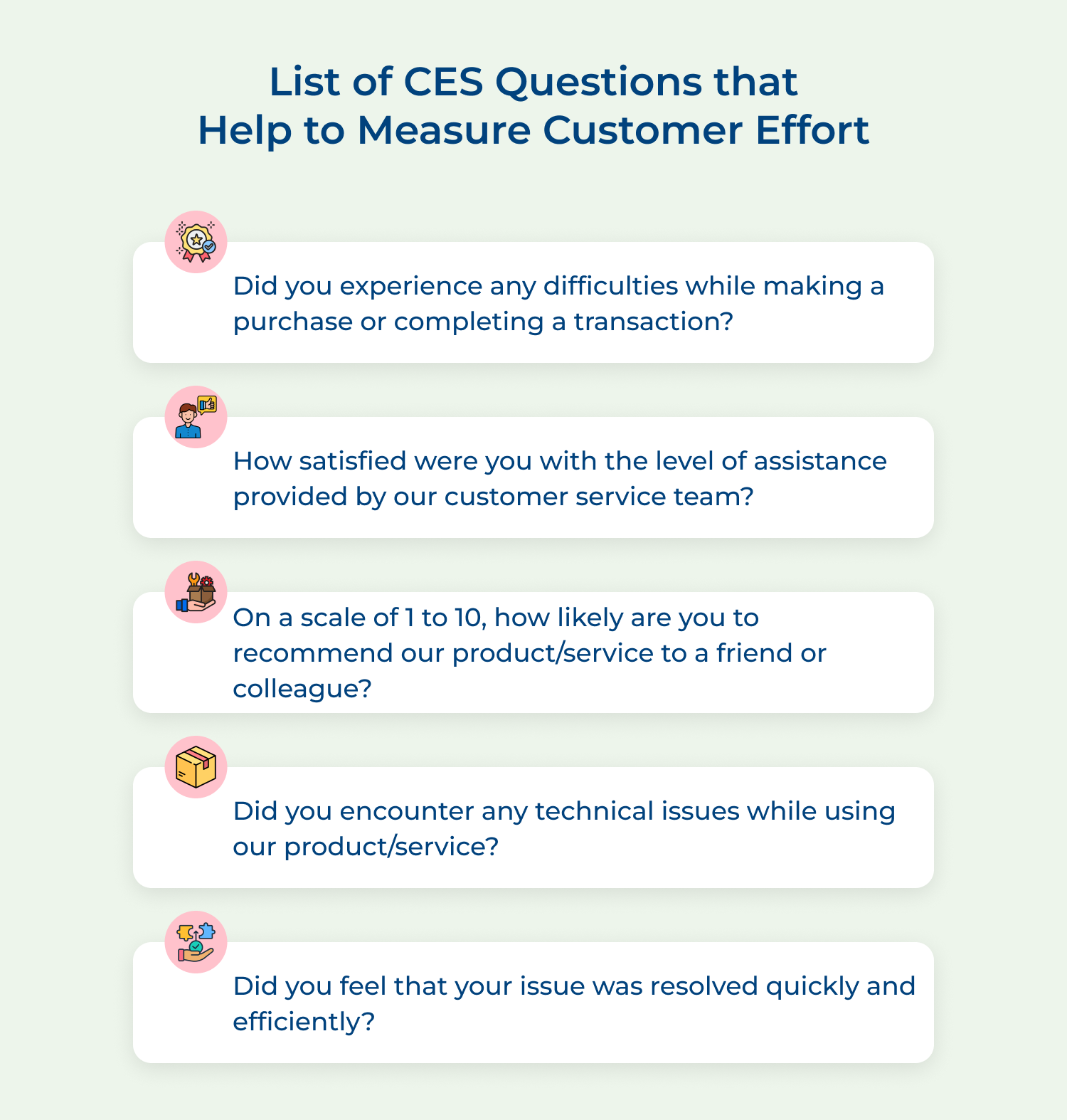
Did you experience any difficulties while making a purchase or completing a transaction?
This question can provide insights into any potential pain points in the purchasing process that may be hindering customer satisfaction.
How satisfied were you with the level of assistance provided by our customer service team?
This question can help companies assess the effectiveness of their customer support and identify areas where additional training may be needed.
On a scale of 1 to 10, how likely are you to recommend our product/service to a friend or colleague?
While this question is typically associated with Net Promoter Score (NPS), it can also be used to gauge customer effort. Customers who find a product or service easy to use are more likely to recommend it to others.
Did you encounter any technical issues while using our product/service?
This question can help companies identify any technical glitches that may be causing frustration for customers and impacting their overall experience.
How would you rate the overall ease of use of our website/mobile app?
This question can provide valuable feedback on the user interface and navigation of digital platforms, helping companies make necessary improvements.
Did you feel that your issue was resolved quickly and efficiently?
This question can help businesses evaluate the speed and effectiveness of their problem-solving processes, which can have a significant impact on customer satisfaction.
Companies should be aware of metrics and research methods to gain a comprehensive understanding of the customer journey. By balancing the pros and cons of CES, companies can effectively improve the customer experience.
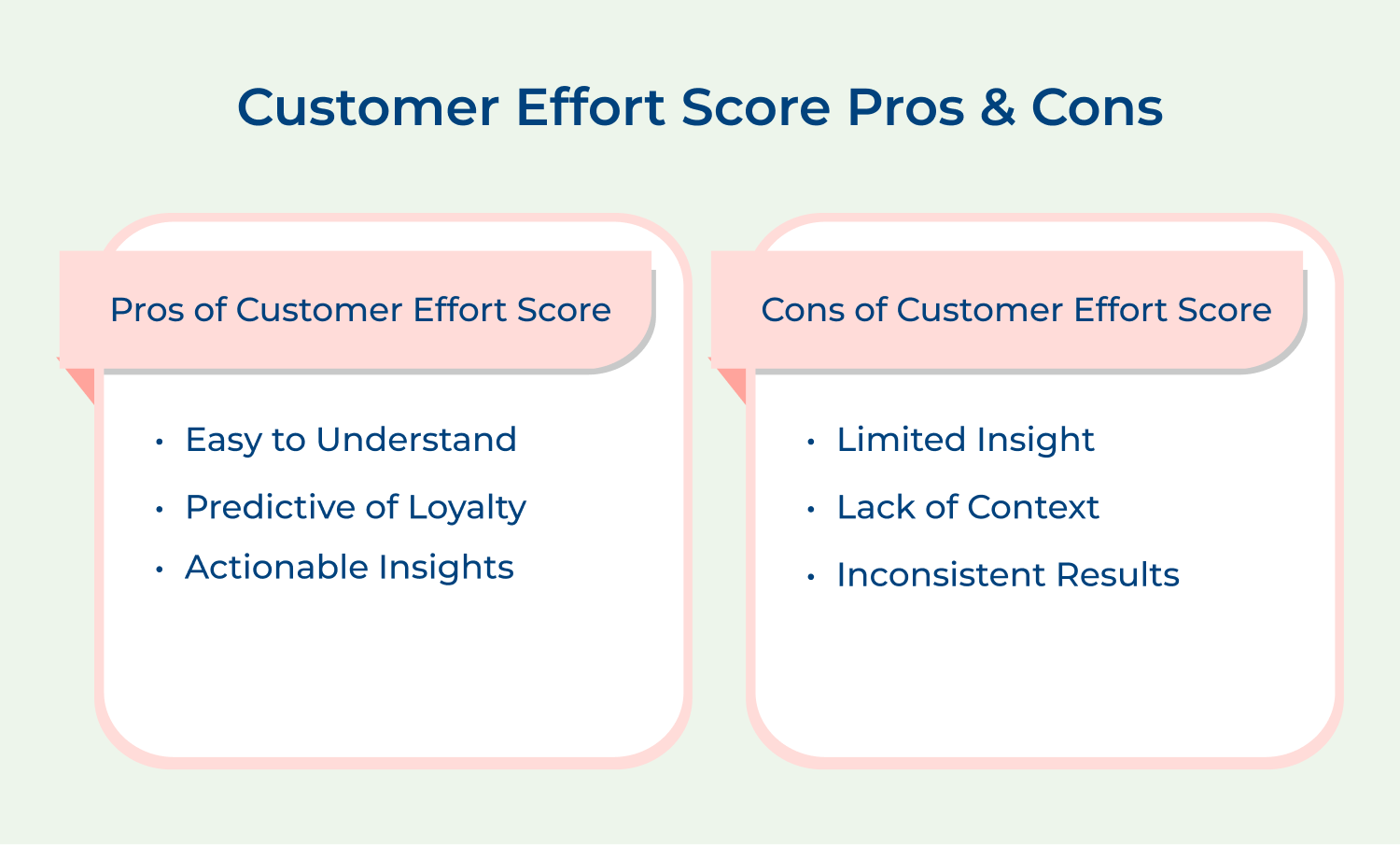
The lower the effort required by a customer to resolve an issue, the higher the CES score will be. A high CES score is important because it indicates that your customers are having a positive experience with your business.
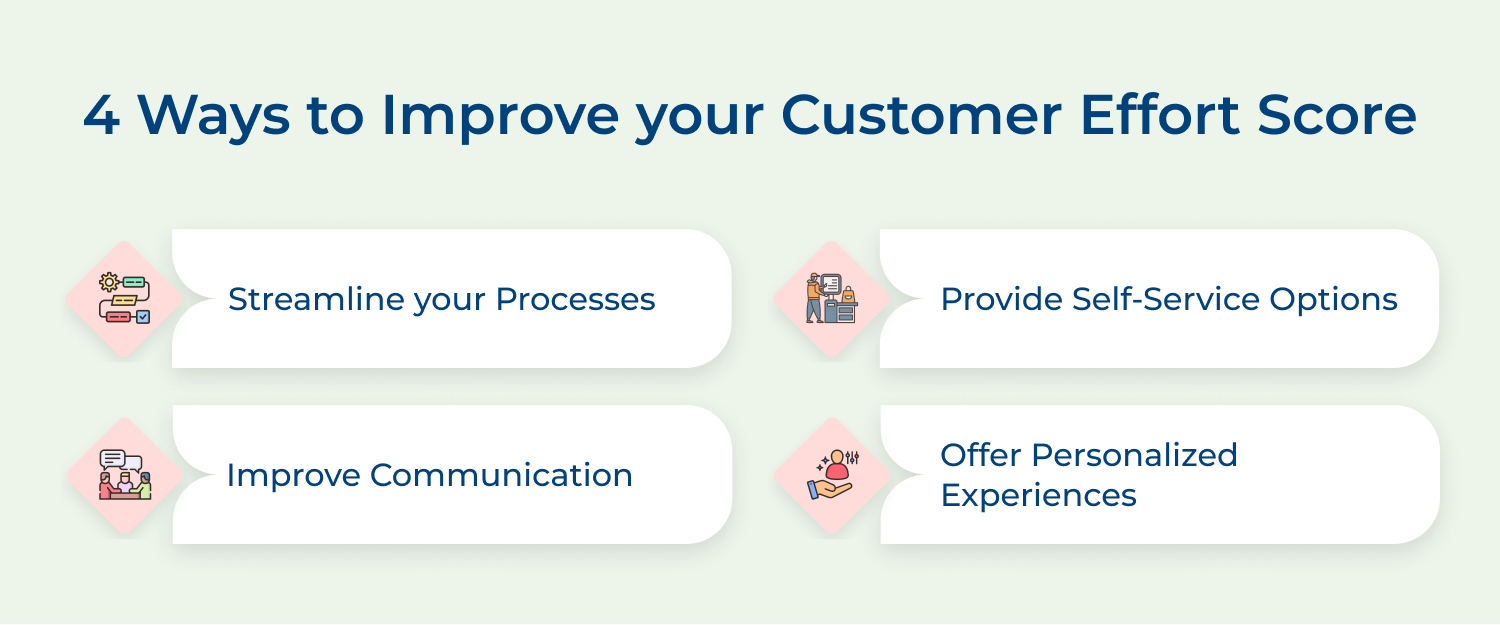
Using Customer Effort Score (CES) is a powerful tool for gaining valuable insights from customers. By measuring the ease with which customers can interact with your brand, you can identify pain points and areas for improvement in your customer experience. This feedback can help you make strategic decisions to increase customer satisfaction, loyalty and retention.
Implementing CES surveys and analyzing the results, you can better understand your customer’s needs and preferences, leading to improved products and services. Focusing on reducing customer effort can lead to increased customer loyalty and growth for your business.

What is a good customer effort score?
A good customer effort score is typically considered to be a score of 5 or lower on a scale of 1 to 10. This means that the customer found it easy to interact with your company and complete their desired task with minimal effort. A lower score indicates a higher level of satisfaction and loyalty from the customer.
What is the customer efficiency score?
The customer efficiency score measures how well a company is able to provide a seamless and efficient customer experience. It looks at how easily customers are able to complete their desired task, whether it’s making a purchase, getting assistance, or providing feedback. A high customer efficiency score indicates that the company is efficient in meeting customer needs and providing a positive experience.
What is the customer effort score in CSAT?
The customer effort score (CES) is a metric used to measure how much effort a customer had to put into an interaction with a company. It is often included as part of a customer satisfaction (CSAT) survey to gauge how easy or difficult it was for the customer to complete their desired task. A high CES can indicate that improvements are needed in the customer experience to reduce customer effort and increase satisfaction.
 https://omni24.io/wp-content/uploads/2026/09/Social-commerce-scaled.png
1340
2560
Webvision Solution
https://omni24.io/wp-content/uploads/2023/04/Omni-Logo-1.svg
Webvision Solution2026-10-23 12:18:272026-10-23 12:18:27What is Social Commerce and Why Does It Matter?
https://omni24.io/wp-content/uploads/2026/09/Social-commerce-scaled.png
1340
2560
Webvision Solution
https://omni24.io/wp-content/uploads/2023/04/Omni-Logo-1.svg
Webvision Solution2026-10-23 12:18:272026-10-23 12:18:27What is Social Commerce and Why Does It Matter? https://omni24.io/wp-content/uploads/2026/08/AI-Customer-Service-Agents.png
1256
2400
Webvision Solution
https://omni24.io/wp-content/uploads/2023/04/Omni-Logo-1.svg
Webvision Solution2026-09-21 04:48:512026-09-21 04:48:51How to Build an AI Customer Service Agents: 8 Key Steps
https://omni24.io/wp-content/uploads/2026/08/AI-Customer-Service-Agents.png
1256
2400
Webvision Solution
https://omni24.io/wp-content/uploads/2023/04/Omni-Logo-1.svg
Webvision Solution2026-09-21 04:48:512026-09-21 04:48:51How to Build an AI Customer Service Agents: 8 Key Steps https://omni24.io/wp-content/uploads/2026/08/Omnichannel-Conversational-AI.png
1256
2400
Tushar Joshi
https://omni24.io/wp-content/uploads/2023/04/Omni-Logo-1.svg
Tushar Joshi2026-09-16 03:51:072026-09-16 03:51:07How to Build Omnichannel Conversational AI Strategy
https://omni24.io/wp-content/uploads/2026/08/Omnichannel-Conversational-AI.png
1256
2400
Tushar Joshi
https://omni24.io/wp-content/uploads/2023/04/Omni-Logo-1.svg
Tushar Joshi2026-09-16 03:51:072026-09-16 03:51:07How to Build Omnichannel Conversational AI Strategy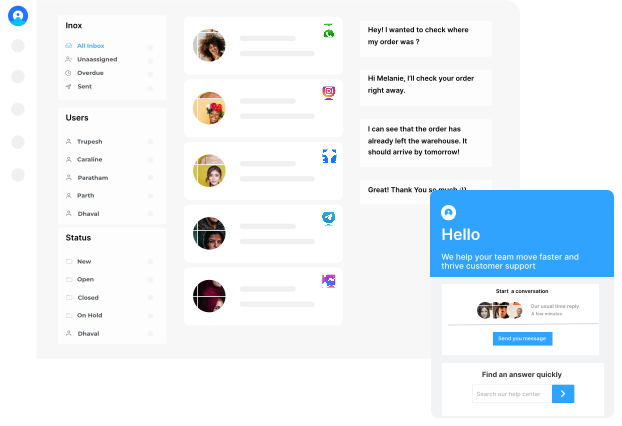
Whether it’s about acquire, engage or support – Omni24 covers all your customer engagement needs in one complete platform.

Copyright ©2026 Veemo All rights reserved.
CA, Los Angeles, Hall Ave, 19011