A Complete Guide on Customer Engagement Technology
Customer engagement technology uses chatbots and CRMs to personalize interactions and strengthen multi-channel relationships.

Customer engagement technology uses chatbots and CRMs to personalize interactions and strengthen multi-channel relationships.
Customer engagement technology plays a vital role in the success of businesses. With the increasing use of smartphones and social media, customers expect personalized interactions.
But what exactly is the impact of customer engagement technology on businesses?
71% of leaders plan to increase their investment in AI chatbots for customer service, reflecting a growing trend towards leveraging technology for enhanced customer interactions.
The implementation of customer engagement technology can have a transformative effect on businesses, leading to increased customer satisfaction, loyalty, and higher revenue.
Let us explore the various ways in which customer engagement technology is shaping the future of customer-business relationships.
Client engagement technology is a set of tools & platforms that businesses use to interact with their customers, build relationships, drive brand loyalty and revenue. These technologies encompass a wide range of channels, including social media, email marketing, live chat, mobile apps and customer relationship management (CRM) systems.
Customer engagement technology helps businesses talk to their customers in the best possible way. It includes things like messaging apps, computer systems that track customer information and smart tools that can answer clients questions quickly. The main goal is to make customers feel heard and valued, which can help businesses keep their customers happy.
Key objectives:
The rise of social media, mobile apps, and other digital platforms, businesses are able to connect with their customers in ways that were not possible before.
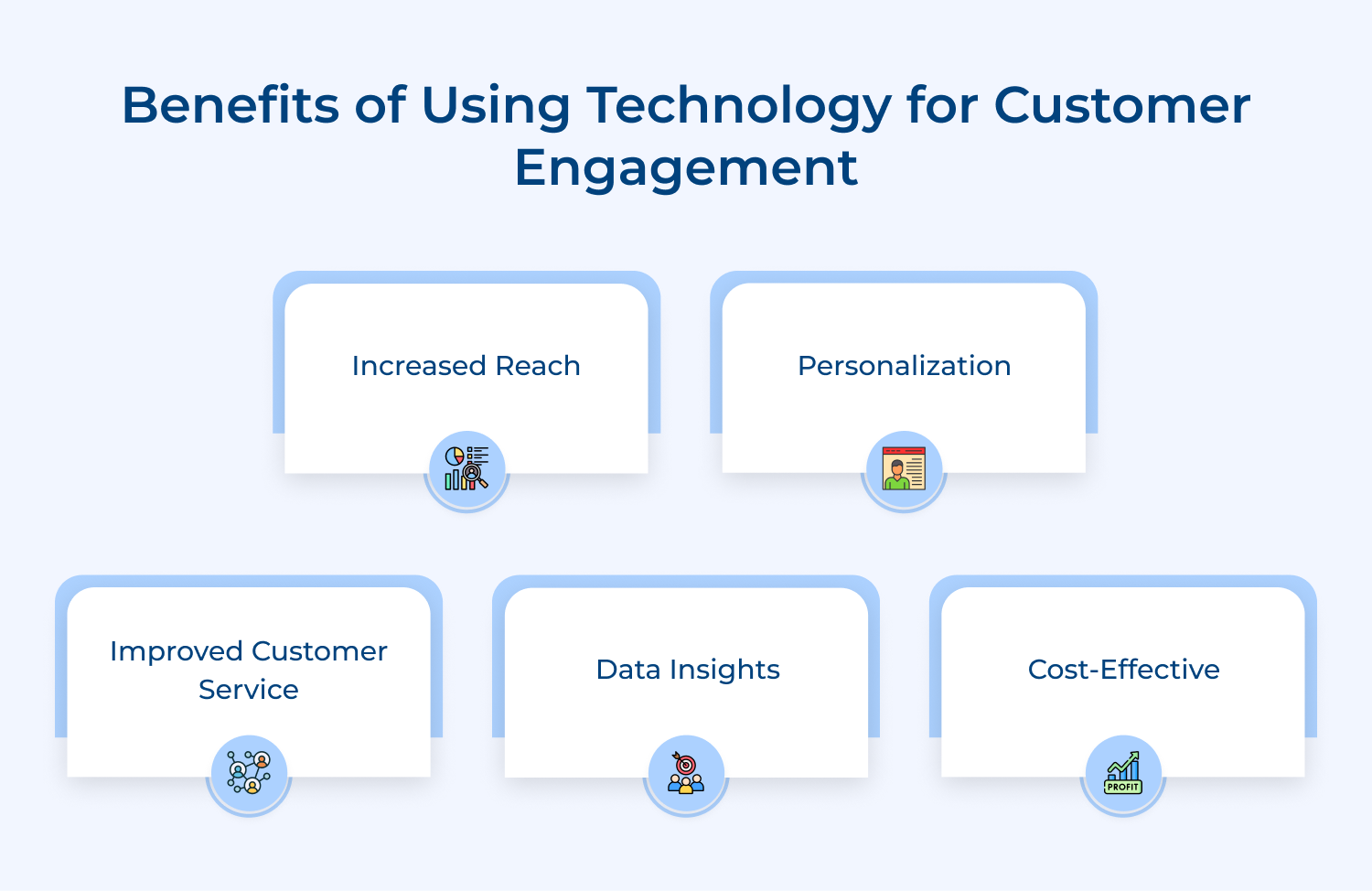
Customer engagement is a key factor in building strong relationships. There are many technologies available that can help improve customer engagement and customer experience (CX).
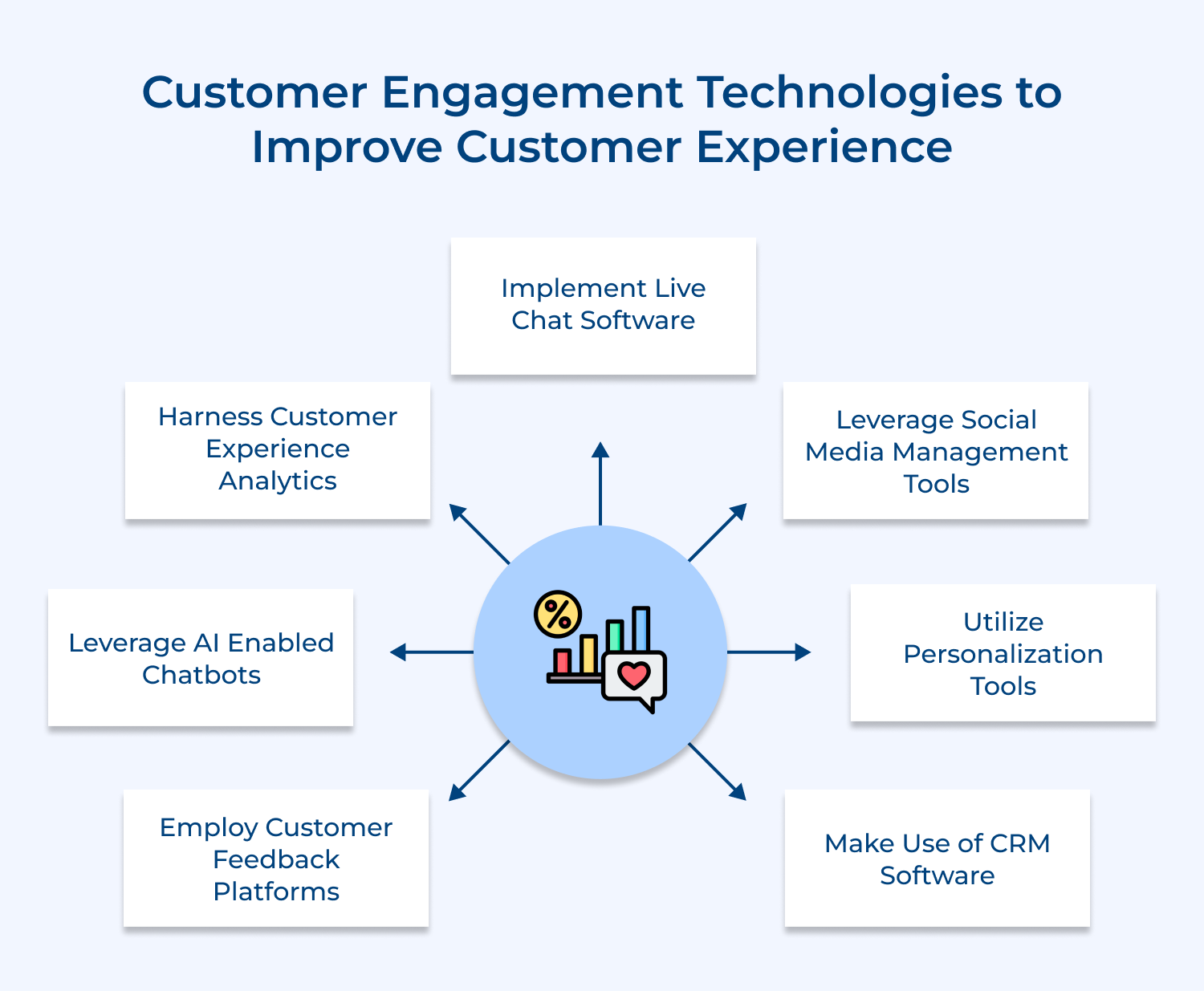
Live chat software allows customers to communicate with your brand in real-time, providing instant support and assistance. The technology can help answer customer questions quickly, leading to higher satisfaction levels and increased engagement.
Pro tips:
Social media is a powerful tool for engaging with customers and building relationships. Social media management tools can help you schedule posts, monitor conversations and analyze performance metrics to improve your social media engagement strategy.
Pro tips:
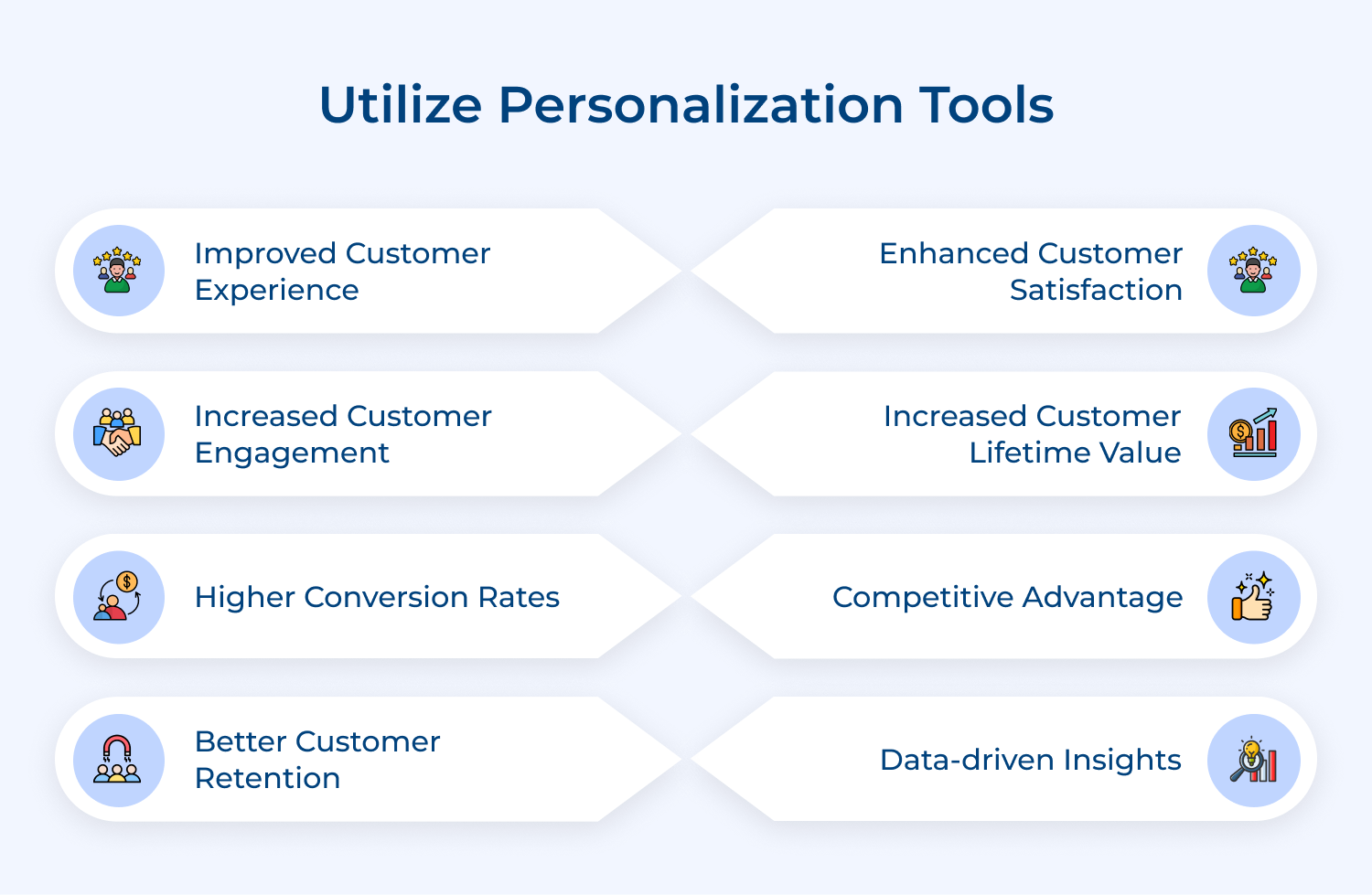
Personalization is key to enhancing customer engagement. Personalization tools allow you to create tailored experiences for each customer based on their preferences, behaviors and past interactions with your brand. It can help increase customer loyalty and drive repeat business.
Pro tips:
Customer Relationship Management (CRM) software helps you track and manage customer interactions throughout the customer lifecycle. CRM software can help you identify opportunities for engagement, automate personalized communications and track customer feedback to improve CX.
Pro tips:
Listening to customer feedback is essential for understanding their needs and preferences. Customer feedback platforms allow you to act on customer feedback to improve your products, services and overall customer experience.
Pro tips:
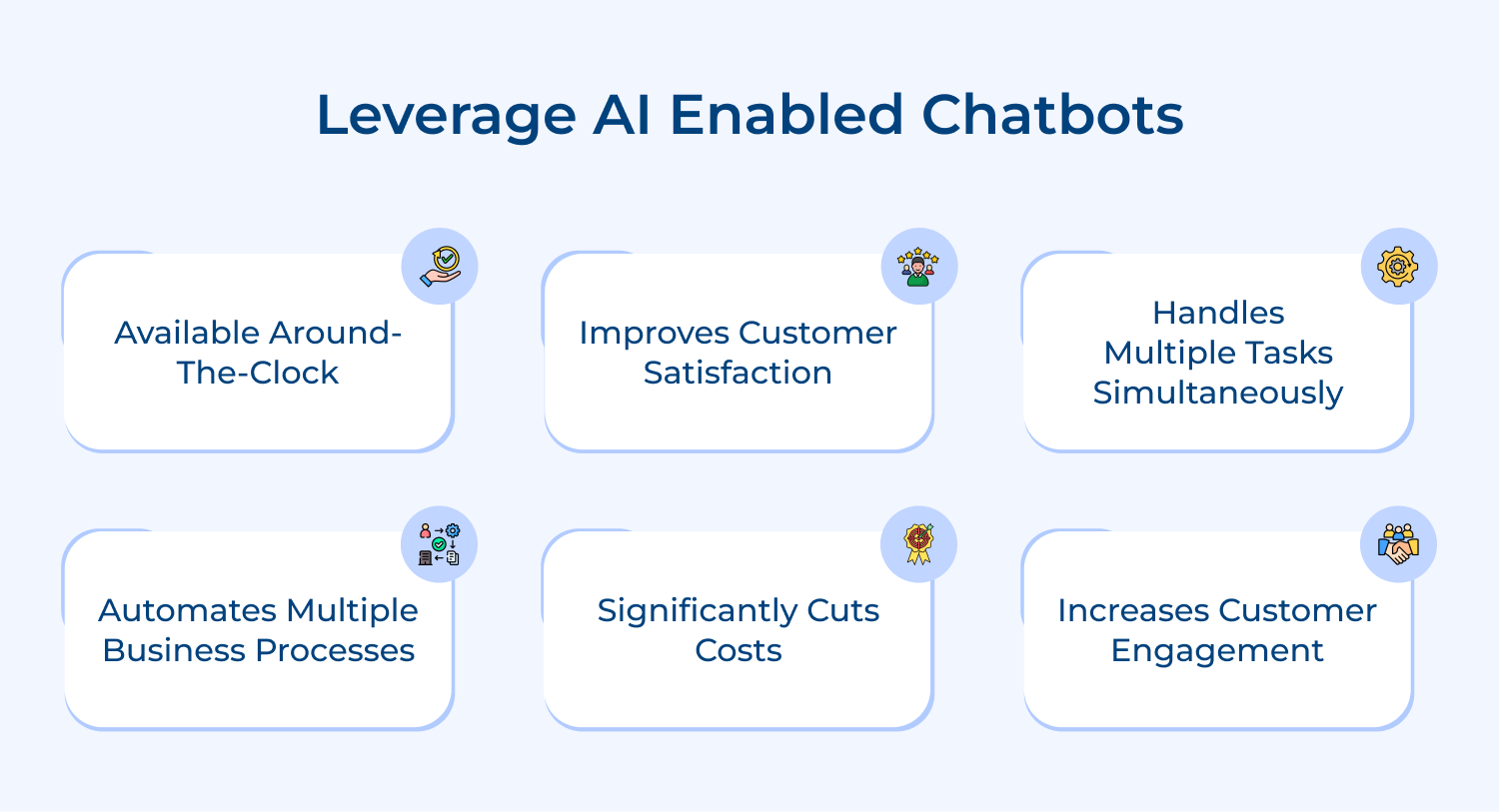
AI chatbots are a great way to provide instant support to customers 24/7. Chatbots can answer frequently asked questions, provide product recommendations and even assist with transactions. The technology can help reduce response times and improve customer satisfaction.
Pro tips:
Customer experience analytics tools help you track and measure customer interactions across all touchpoints. Data analytics tools help businesses track and analyze customer behavior, preferences. By leveraging data insights, businesses can make informed decisions, optimize marketing campaigns and personalize the customer experience for better results.
Pro tips:
Customer engagement technology is crucial for businesses for build long-lasting relationships. By implementing best practices, businesses can increase customer engagement and loyalty.
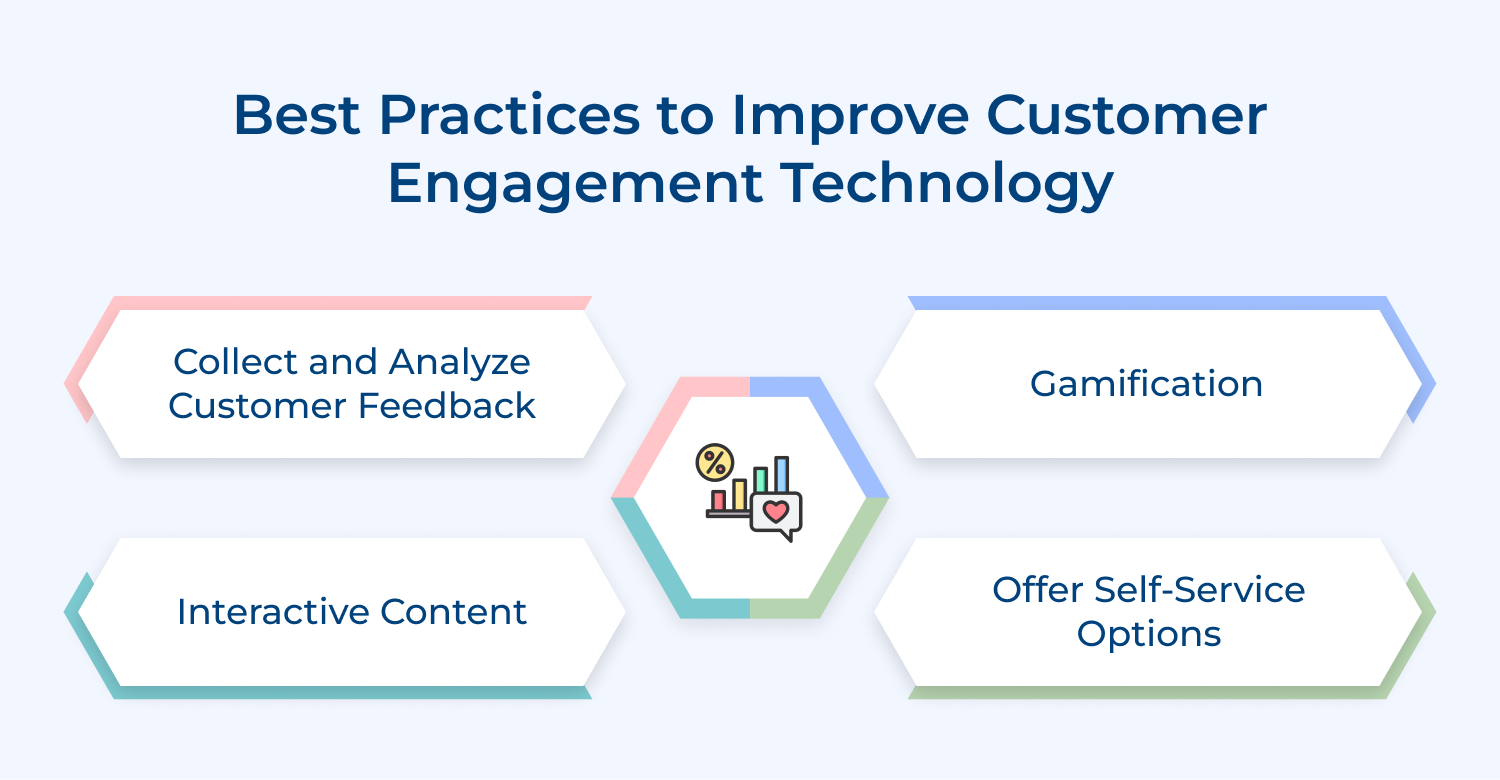
Client engagement technology has revolutionized the way companies interact with their customers. By utilizing innovative tools, businesses can build stronger relationships.
Starbucks is a prime example of a company that has leveraged customer engagement technology to enhance the customer experience. The coffee giant has a mobile app that allows customers to order for their drinks ahead of time, earn rewards and receive personalized offers. This app has been instrumental in increasing customer loyalty and driving repeat business.
Sephora, a beauty retailer, has implemented augmented reality technology in their mobile app to allow customers to virtually try on makeup products. This innovative feature not only enhances the shopping experience but also encourages customers to make more informed purchasing decisions. Sephora’s use of customer engagement technology has helped them stand out in a competitive market.
Amazon, the e-commerce giant, has excelled in using customer engagement technology to personalize the shopping experience. Through advanced algorithms and machine learning, Amazon recommends products to customers based on their past purchases, browsing history, and preferences. This level of personalization has made Amazon a go-to destination for online shopping.
Nike has integrated technology into its retail stores to create a seamless omni-channel shopping experience. Customers can use Nike’s mobile app to reserve products, receive personalized recommendations and access exclusive content. By leveraging customer engagement technology, Nike has effectively bridged the gap between online and offline shopping.
Domino’s Pizza has embraced technology to streamline the ordering process and enhance customer engagement. Customers can order pizza through Domino’s mobile app, website, chatbot, or even voice assistant. Domino’s also offers real-time order tracking and personalized promotions to keep customers coming back for more.
Implementing consumer engagement technology is essential for businesses looking to increase customer loyalty. By leveraging tools such as social media, email marketing and personalized messaging, companies can connect with their customers on a deeper level, leading to better relationships.
Through targeted campaigns and interactive experiences, businesses can create a sense of community and exclusivity that keeps customers coming back for more. Investing in consumer engagement technology is not only a smart business move, but it also shows customers that their loyalty is valued, ultimately leading to a more successful and sustainable business.

How can you improve customer engagement through technology?
There are several ways to improve customer engagement through technology. One way is by implementing a customer relationship management (CRM) system that allows you to track customer interactions and personalize communication. Another way is by using social media platforms to engage with customers in real-time and gather feedback.
How to boost customer engagement using technology?
To boost customer engagement using technology, businesses can leverage tools such as email marketing automation, personalized content recommendations and interactive surveys. By utilizing data analytics, businesses can gain insights into customer behavior and preferences, allowing them to tailor their marketing strategies accordingly. Providing a seamless omnichannel experience, where customers can interact with your brand across multiple platforms, can also enhance engagement.
What are the 6 key elements of customer engagement?
The six key elements of customer engagement include personalization, empowerment, responsiveness, proactivity, convenience and community. Personalization involves tailoring interactions and communication to individual customer preferences. Empowerment involves giving customers the tools and resources to make informed decisions. Responsiveness means addressing customer queries and concerns in a timely manner. Proactivity involves anticipating customer needs and providing solutions before they are requested. Convenience refers to making the customer experience accessible.
How does customer engagement technology help to boost business?
Customer engagement technology can help boost business by improving customer satisfaction, increasing customer loyalty and driving revenue growth. By utilizing technology to personalize communication and provide seamless customer experiences, businesses can build stronger relationships with their customers. It, in turn, can lead to repeat business.
What is an example customer engagement model?
An example of a customer engagement model is the RACE framework, which stands for Reach, Act, Convert and Engage. In this model, businesses focus on reaching a wide audience through various channels, encouraging potential customers to take action, converting leads into sales, and continuously engaging with customers to build long-term relationships.
 https://omni24.io/wp-content/uploads/2026/09/Social-commerce-scaled.png
1340
2560
Webvision Solution
https://omni24.io/wp-content/uploads/2023/04/Omni-Logo-1.svg
Webvision Solution2026-10-23 12:18:272026-10-23 12:18:27What is Social Commerce and Why Does It Matter?
https://omni24.io/wp-content/uploads/2026/09/Social-commerce-scaled.png
1340
2560
Webvision Solution
https://omni24.io/wp-content/uploads/2023/04/Omni-Logo-1.svg
Webvision Solution2026-10-23 12:18:272026-10-23 12:18:27What is Social Commerce and Why Does It Matter? https://omni24.io/wp-content/uploads/2026/08/AI-Customer-Service-Agents.png
1256
2400
Webvision Solution
https://omni24.io/wp-content/uploads/2023/04/Omni-Logo-1.svg
Webvision Solution2026-09-21 04:48:512026-09-21 04:48:51How to Build an AI Customer Service Agents: 8 Key Steps
https://omni24.io/wp-content/uploads/2026/08/AI-Customer-Service-Agents.png
1256
2400
Webvision Solution
https://omni24.io/wp-content/uploads/2023/04/Omni-Logo-1.svg
Webvision Solution2026-09-21 04:48:512026-09-21 04:48:51How to Build an AI Customer Service Agents: 8 Key Steps https://omni24.io/wp-content/uploads/2026/08/Omnichannel-Conversational-AI.png
1256
2400
Tushar Joshi
https://omni24.io/wp-content/uploads/2023/04/Omni-Logo-1.svg
Tushar Joshi2026-09-16 03:51:072026-09-16 03:51:07How to Build Omnichannel Conversational AI Strategy
https://omni24.io/wp-content/uploads/2026/08/Omnichannel-Conversational-AI.png
1256
2400
Tushar Joshi
https://omni24.io/wp-content/uploads/2023/04/Omni-Logo-1.svg
Tushar Joshi2026-09-16 03:51:072026-09-16 03:51:07How to Build Omnichannel Conversational AI Strategy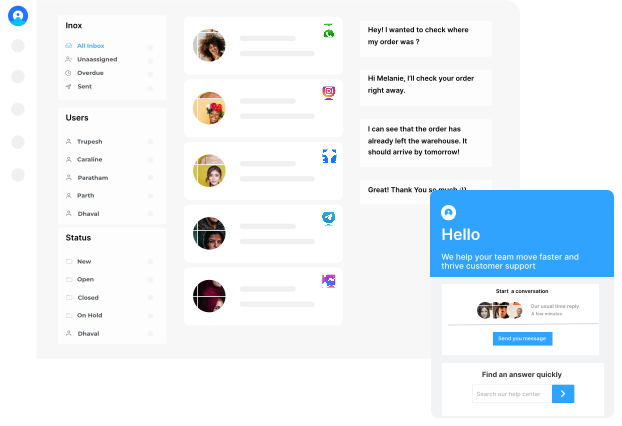
Whether it’s about acquire, engage or support – Omni24 covers all your customer engagement needs in one complete platform.

Copyright ©2026 Veemo All rights reserved.
CA, Los Angeles, Hall Ave, 19011