How to Create an Effective Customer Feedback Loop?
Use customer feedback loop to collect, analyze and act on input for growth. Omni24 delivers real-time insights through live chat.

Use customer feedback loop to collect, analyze and act on input for growth. Omni24 delivers real-time insights through live chat.
If you’re staying attuned to your customers needs, then you’re already slaying the business game. Online customer review / feedback are trusted 84% of time, just as much as a personal recommendation.
The customer feedback loop is a powerful strategy that transforms customer insights into tangible innovations. The process may seem cyclical and repetitive, but it ensures a long term business growth.
Systematically collecting, analyzing and acting on customer input empowers you to create a dynamic ecosystem of continuous improvement. Let’s explore its intricacies and how it benefits both, business as well as customers alike!
A Customer Feedback Loop is a systematic process of collecting, analyzing and acting on customer input to improve products, services as well as overall customer experience. The cyclical approach involves gathering feedback through various channels, such as surveys, reviews and direct communications, then interpreting this data to identify areas for improvement.
The insights gained are then used to implement changes, which in turn generate new feedback, continuing the cycle. The iterative process allows businesses to stay closely aligned with customer needs and expectations. Thus, creating continuous improvement and customer-centric decision-making. By closing the loop, companies can build stronger relationships with customers, enhance loyalty and drive business growth.
key objectives:
The customer feedback loop is a cyclical process that helps businesses continuously improve based on customer input. Here are the key stages of this essential process:
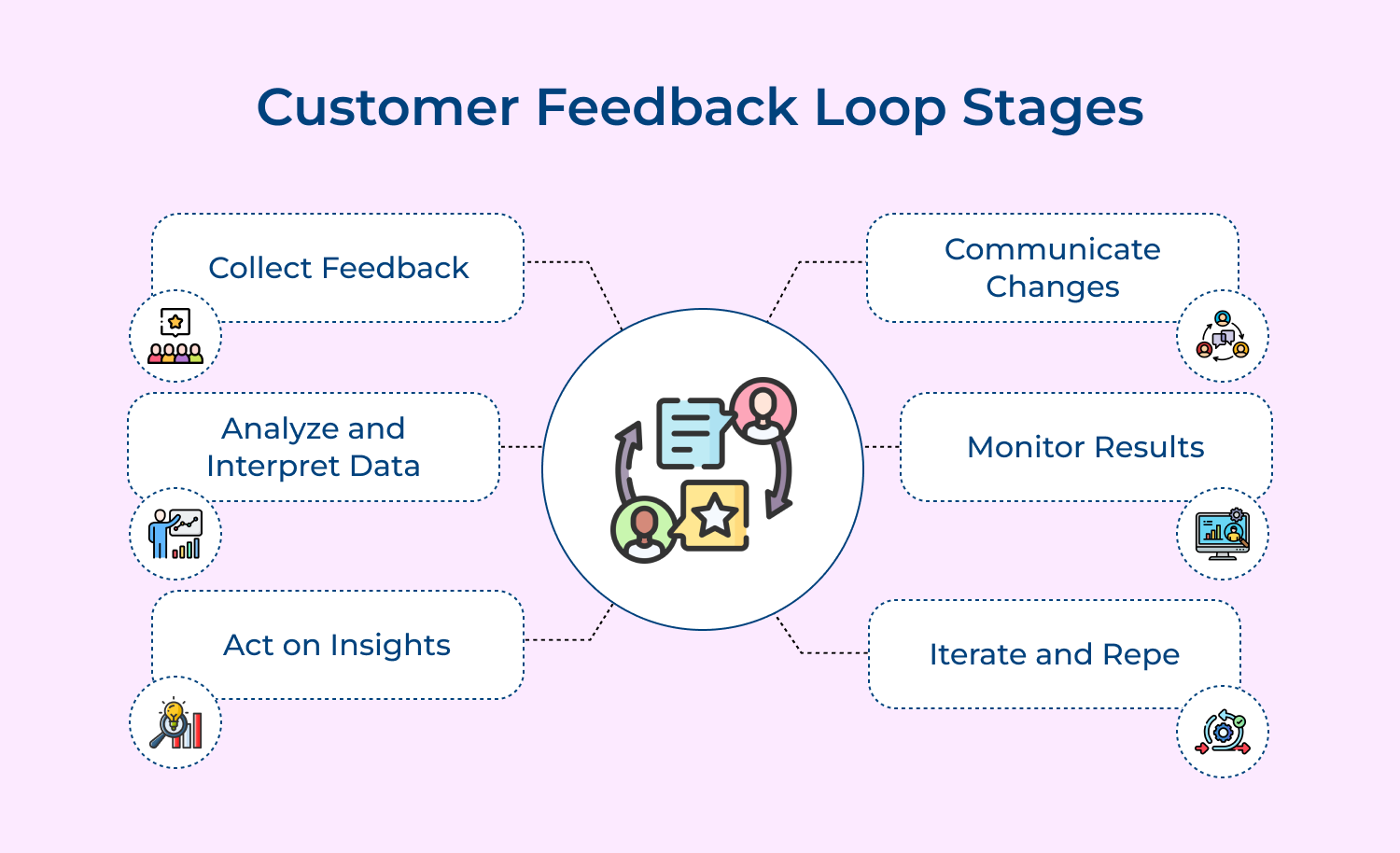
One positive experience will make 93% of the customers to make a repeat purchase! Let’s now learn to create an effective feedback loop that helps us show how satisfied customers are.
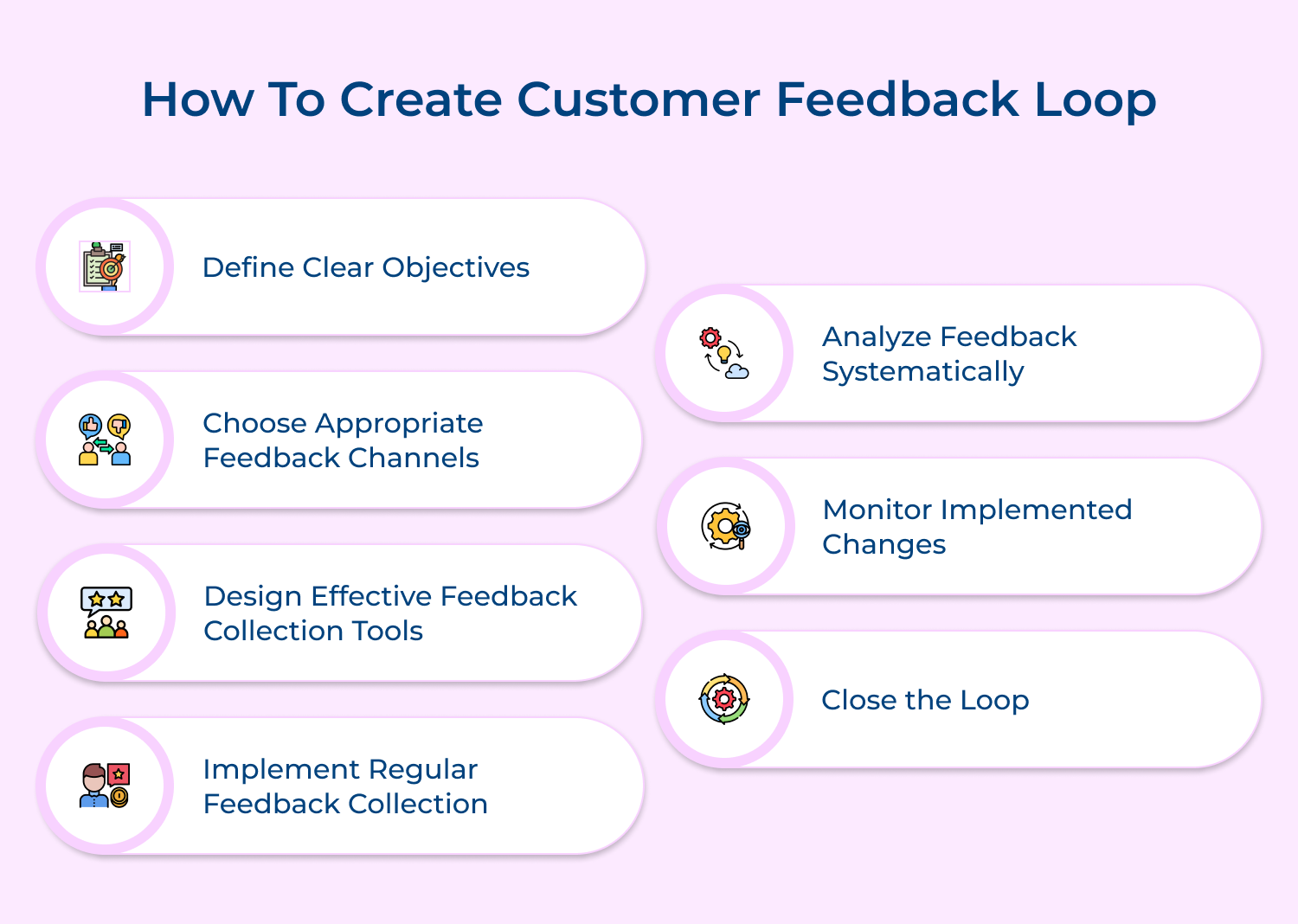
Start by identifying specific goals for your feedback loop. These objectives should align with your overall business strategy and customer experience goals. Determine what insights you need to gather and how they will be used to improve your products, services or processes. Clear objectives help focus your efforts and ensure that the feedback you collect is actionable as well as valuable for your business growth.
Pro Tips:
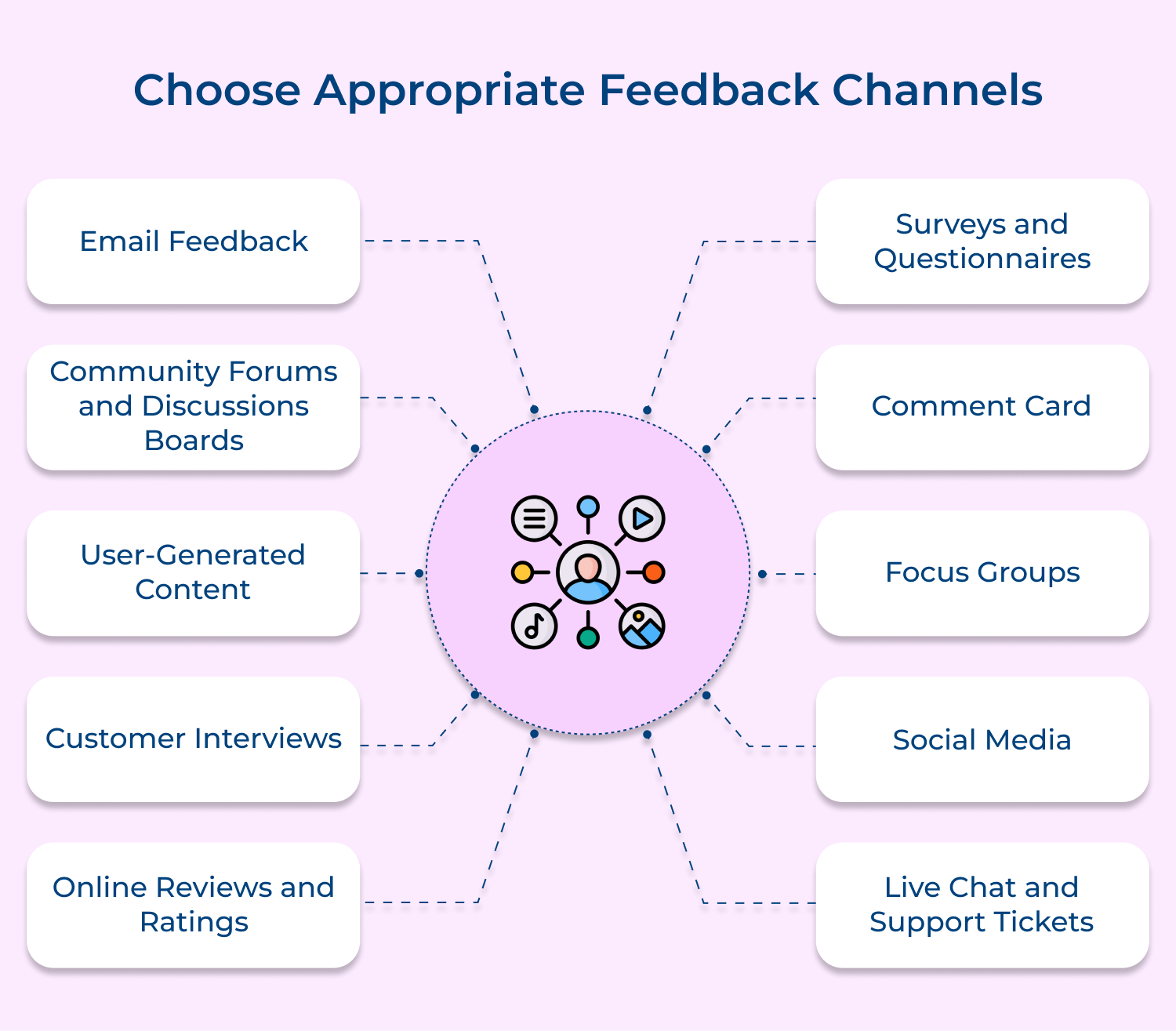
Select feedback collection methods that suit your customer base and business type. Consider factors like customer demographics, preferred communication channel and the nature of your product/service. Use a mix of channels to gather diverse insights. Options include surveys, interviews, social media monitoring, in-app feedback and customer support interactions. The right combination ensures comprehensive and representative feedback.
Pro Tips:
Create clear, concise questions that elicit useful responses. Use a mix of quantitative (e.g., rating scales) and qualitative (open-ended) questions to gather both measurable data as well as detailed insights. Ensure your feedback tools are user-friendly and accessible across different devices. The design should encourage honest, thoughtful responses while respecting customers’ time and effort.
Pro Tips:
Establish a consistent schedule for gathering feedback, considering key touchpoints in the customer journey. Automate feedback requests where possible, such as post-purchase emails or after customer support interactions. Regular collection ensures you capture ongoing trends and changes in customer sentiment, allowing for timely responses to emerging issues or opportunities.
Pro Tips:
Use analytics tools to process and interpret the collected data. Look for patterns, trends and recurring themes in both quantitative as well as qualitative feedback. Combine different data sources to get a comprehensive view of customer sentiment and experiences. Systematic analysis helps identify priority areas for improvement and informs data-driven decision-making across the organization.
Pro Tips:
After making improvements based on feedback, closely track their impact. Use relevant metrics to measure the effectiveness of implemented changes. Continue gathering feedback to assess customer response to the improvements. The continuous monitoring helps validate the success of your actions and identifies any need for further adjustments. It ensures that changes genuinely address customer needs and improve overall satisfaction.
Pro Tips:
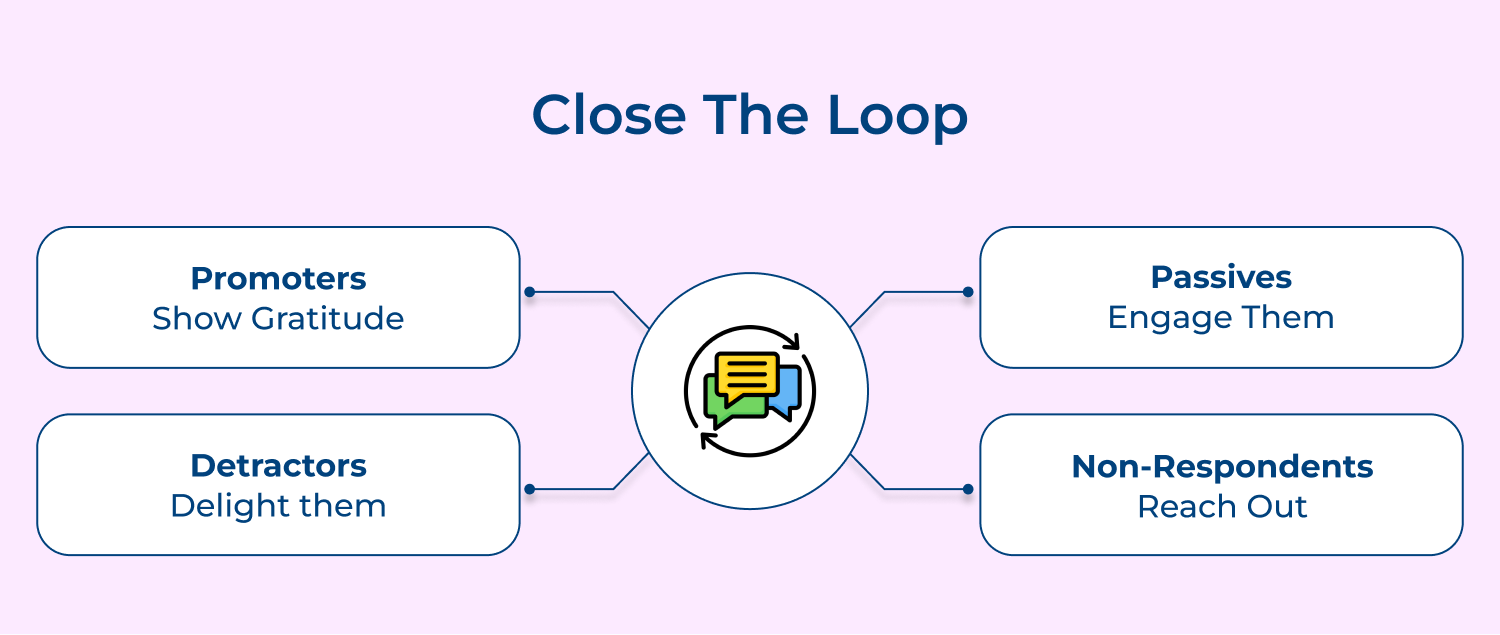
Follow up with customers who provided feedback to inform them how their input was used. Thank them for their contributions and share specific improvements made in response to their feedback. The communication demonstrates that you value their input and take action on it. Closing the loop encourages ongoing dialogue and feedback, creating stronger customer relationships as well as loyalty.
Pro Tips:
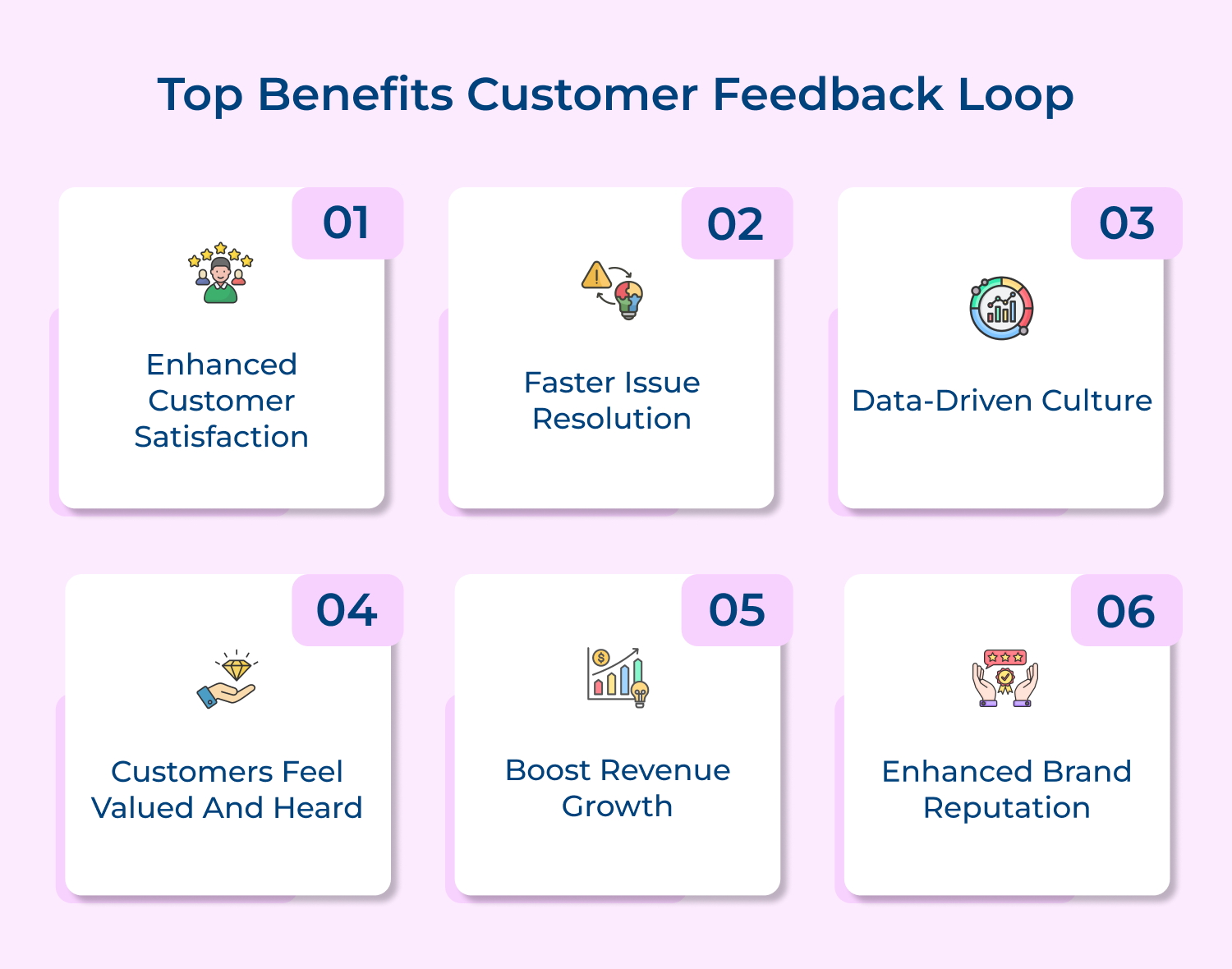
The Customer Feedback Loop offers numerous advantages for both businesses as well as customers. It builds improvement, satisfaction and growth.
Posting reviews for local businesses are one of the most common customer contacts for 72% of American consumers. Here are seven effective methods to collect insights from your customers:
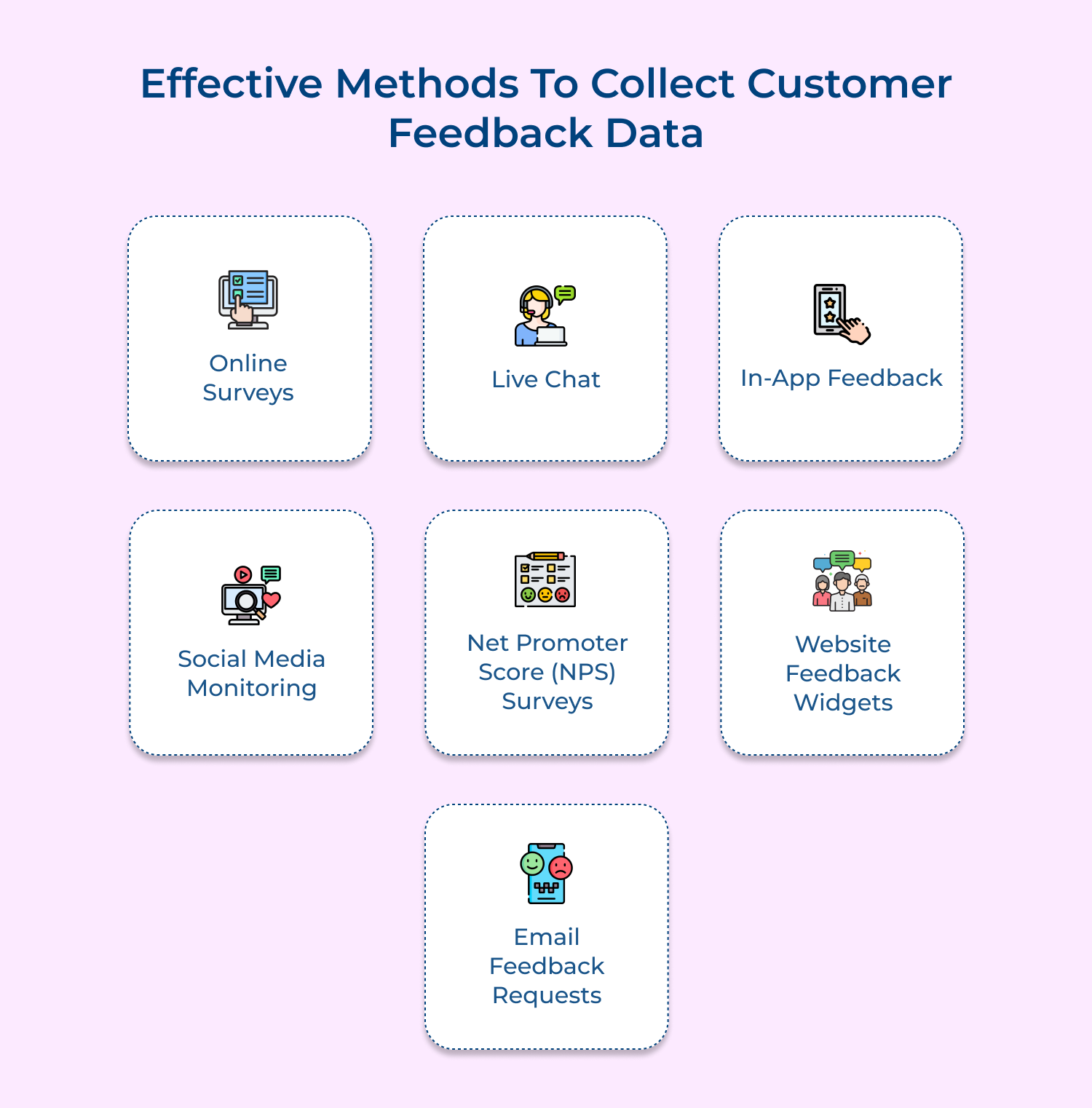
Online surveys are versatile tools for collecting structured feedback. Using platforms like SurveyMonkey or Google Forms, businesses can create customized questionnaires to gather specific insights. These surveys can be distributed via email, embedded on websites or shared on social media platforms.
The survey offers the advantage of reaching a large audience quickly and cost-effectively. Online surveys can be designed with various question types, including multiple-choice, rating scales and open-ended questions, allowing for both quantitative as well as qualitative data collection.
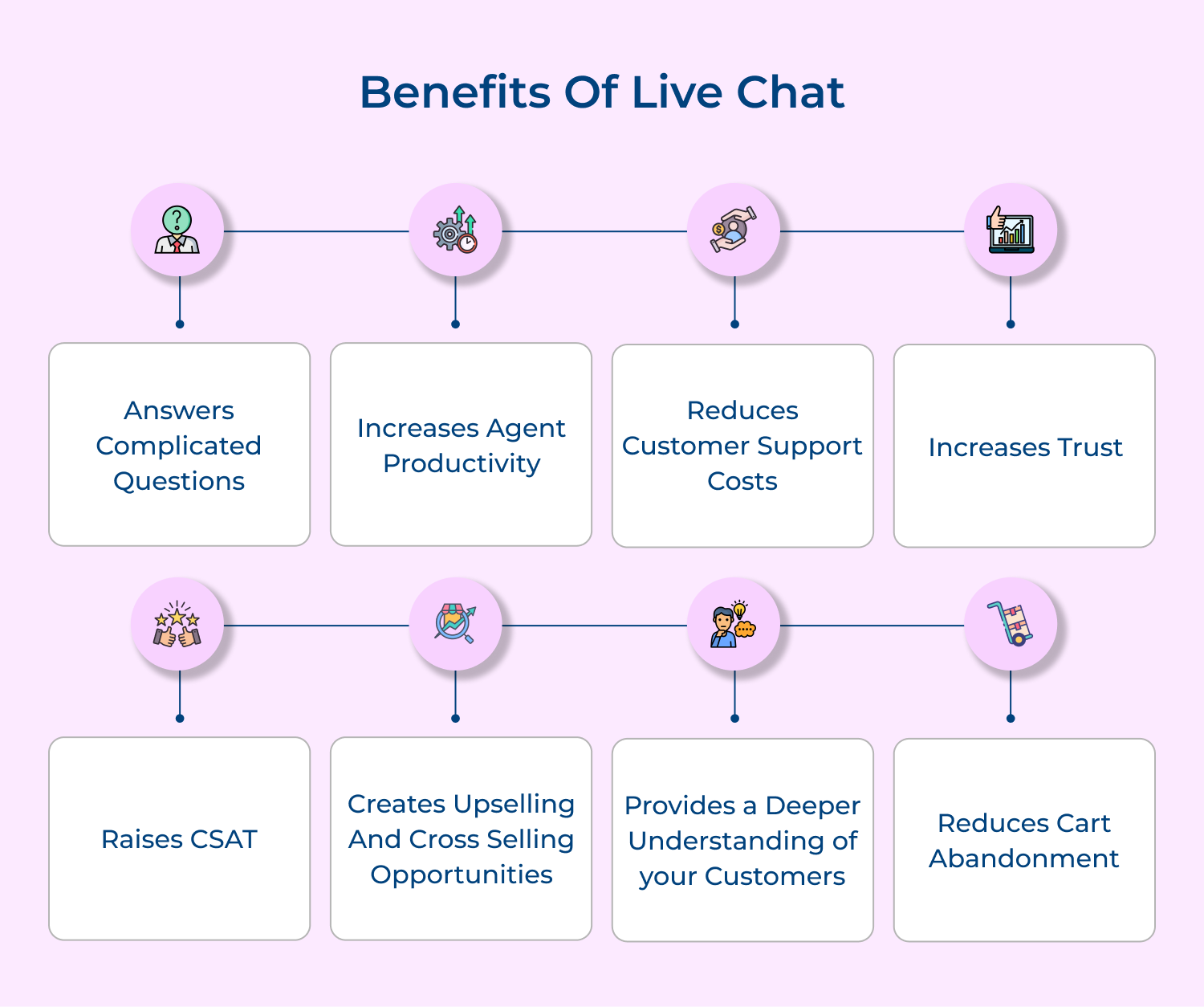
Live chat provides a real-time communication channel for customers to provide feedback or seek assistance. The tools like Omni24.io allows businesses to gather immediate insights during customer interactions. Live chat can be implemented on websites or within applications, offering instant support and feedback collection.
The live chat method is particularly effective for addressing customer concerns promptly and gathering contextual feedback about specific features. The conversational nature of live chat often leads to more detailed and nuanced feedback compared to structured surveys.
In-app feedback mechanisms are embedded directly within a product, allowing users to provide input during their interaction. It could include rating prompts, feedback forms or feature request options integrated into the user interface.
In-app feedback is highly contextual, capturing user sentiments at the moment of experience. It typically yields high response rates as it’s convenient for users. Care must be taken to ensure these feedback mechanisms don’t disrupt the user experience or interfere with the primary functions of the app.
Social media monitoring involves tracking brand mentions, comments and discussions across platforms like Twitter, Facebook, Instagram etc. The method provides unfiltered, organic feedback from customers who are sharing their experiences publicly.
Social listening tools can be used to analyze sentiment and identify trends in customer opinions. While this method offers real-time insights, it may not be representative of your entire customer base and can sometimes be skewed by vocal minorities.
NPS surveys ask customers a simple question: “How likely are you to recommend our product/service to a friend or colleague?” on a scale of 0-10. The NPS method provides a standardized metric for customer satisfaction and loyalty.
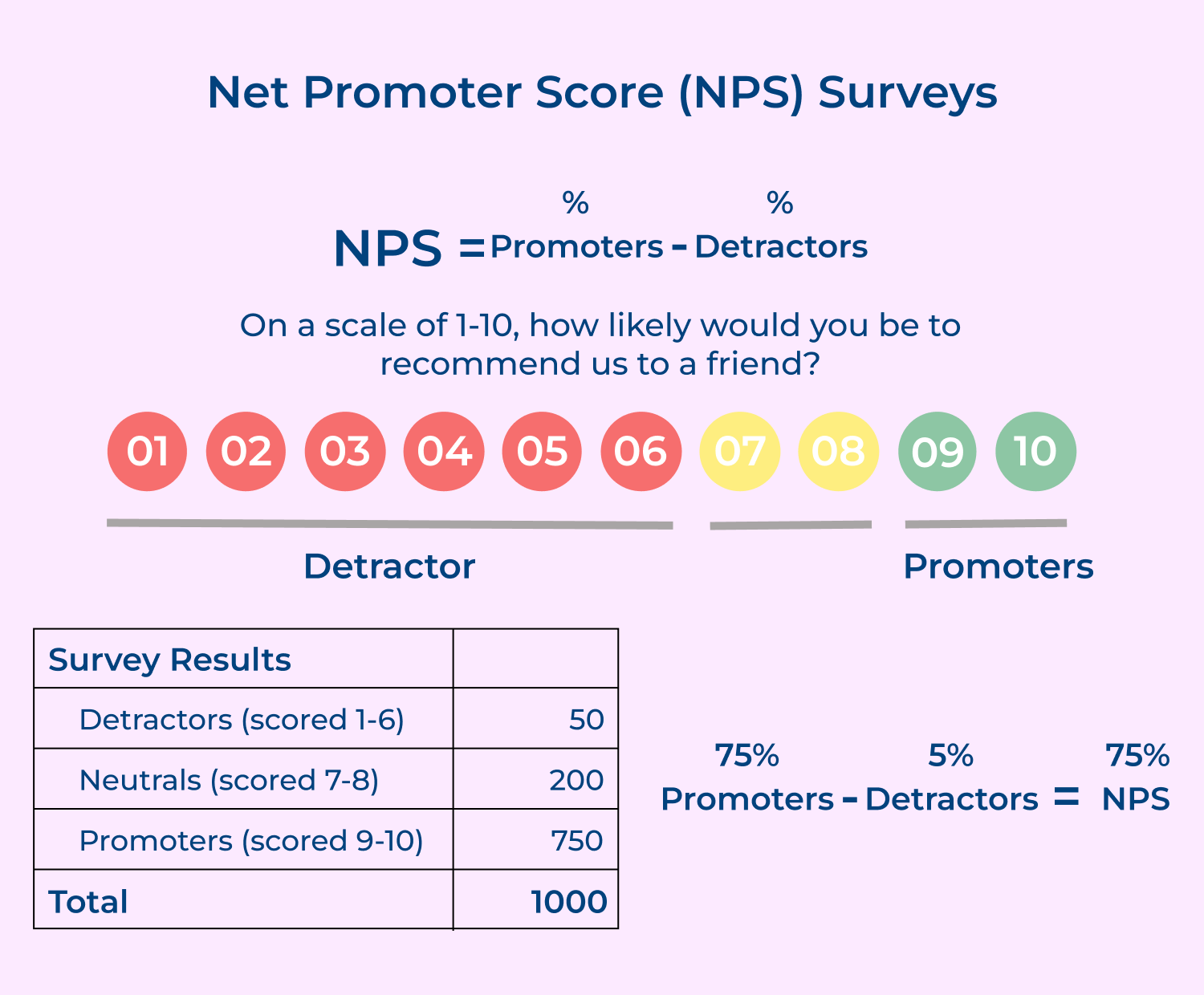
NPS is easy to implement and allows for benchmarking against industry standards. While it doesn’t provide detailed feedback on its own, it can be combined with follow-up questions to gather more in-depth insights into the reasons behind the scores.
Website feedback widgets are small, unobtrusive elements added to web pages that allow visitors to provide instant feedback. These can include rating systems, quick surveys, or comment boxes. They’re particularly useful for gathering feedback on specific web pages or features.
Website widgets capture feedback at the point of interaction, providing context-specific insights. But, they may not capture feedback from all website visitors, as some users might overlook or choose not to interact with these elements.
Email feedback requests involve sending targeted messages to customers asking for their input on specific interactions or experiences. These can be automated based on customer actions or milestones, such as after a purchase or customer service interaction.
Email requests can be personalized and allow for detailed feedback collection through embedded surveys or by encouraging replies. While this method can reach customers directly, it may suffer from low response rates due to email fatigue or messages being overlooked in busy inboxes.
An efficient Customer Feedback Loop requires strategic planning and execution. Here are the best practices to optimize your feedback process and drive meaningful improvements:
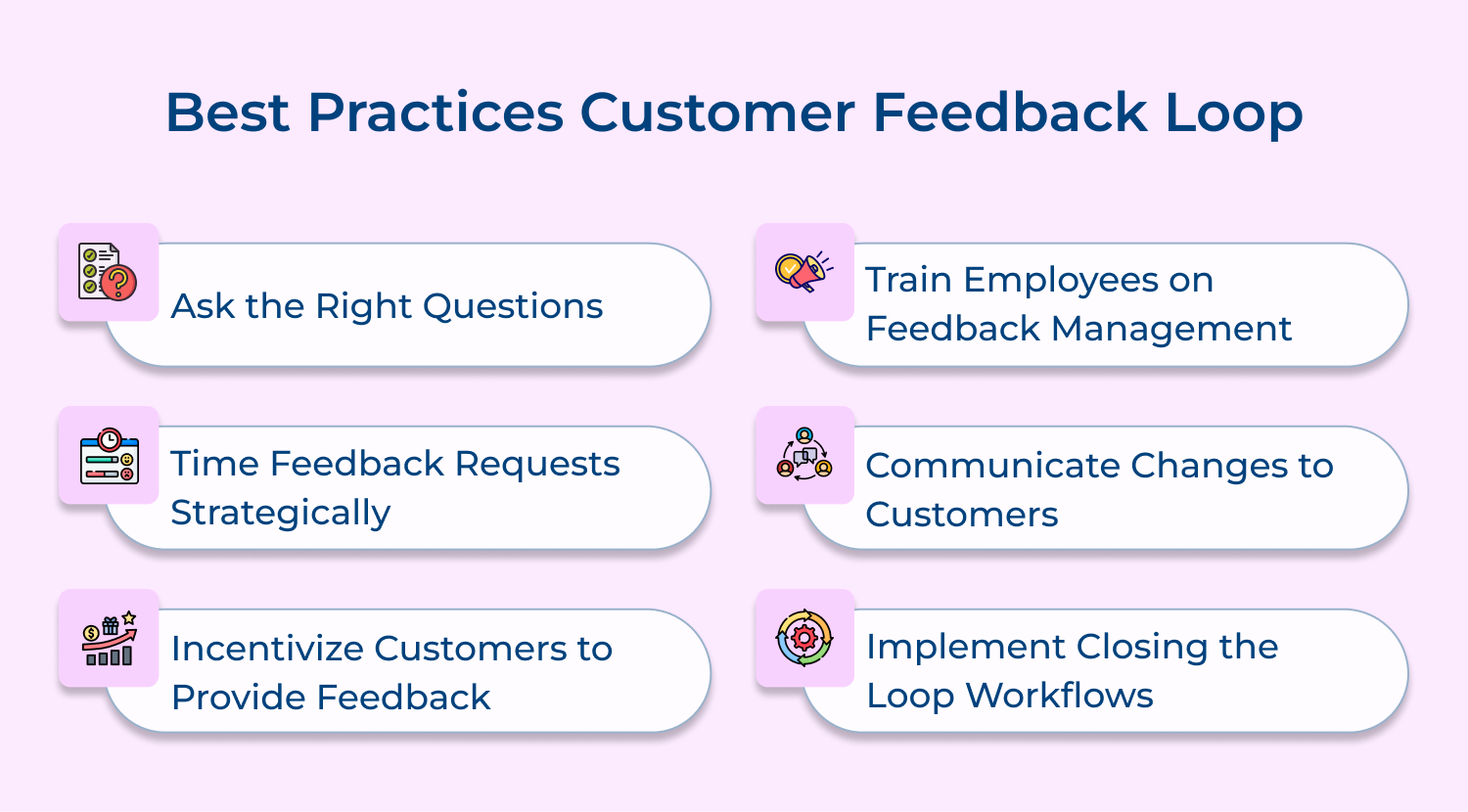
Ask the Right Questions
Craft questions that elicit specific, actionable insights. Focus on areas where customer input can drive real improvements. Use a mix of closed-ended questions for quantitative data and open-ended questions for qualitative insights.
Avoid leading questions that might bias responses. Tailor questions to different stages of the customer journey and specific touchpoints to gather contextualized feedback that can inform targeted improvements.
Time Feedback Requests Strategically
Choose optimal moments to request feedback, such as immediately after a purchase, following a customer service interaction, or after using a product for a specific period. Consider the customer’s emotional state and likelihood of providing thoughtful responses.
Try not to overwhelm customers with too frequent requests. Use triggers based on customer actions or milestones to time feedback requests appropriately, ensuring relevance and increasing response rates.
Incentivize Customers to Provide Feedback
Offer meaningful incentives to encourage participation in feedback surveys or interviews. It could include discounts on future purchases, entry into prize draws, or exclusive access to new features.
Ensure incentives are appropriate and don’t bias responses. Clearly communicate the value of their feedback to the improvement process. Be transparent about how the incentive system works to maintain trust as well as encourage honest responses.
Train Employees on Feedback Management
Provide comprehensive training to employees on the importance of customer feedback and how to handle it effectively. It includes teaching active listening skills, empathy and how to interpret as well as act on feedback.
Ensure all customer-facing staff understand the feedback collection process and can guide customers through it if needed. Create guidelines for responding to both positive and negative feedback professionally along with constructively.
Communicate Changes to Customers
Actively inform customers about improvements made based on their feedback. Use various channels such as email newsletters, social media posts, or in-app notifications to highlight changes.
Be specific about which customer insights led to particular improvements. The transparency demonstrates that you value customer input and act on it, encouraging ongoing engagement with your feedback processes while also building trust in your brand.
Implement Closing the Loop Workflows
Establish systematic processes for following up with customers who provide feedback. It involves acknowledging their input, explaining how it will be used and later informing them of any resulting changes.
Automate parts of this process where possible, but ensure responses feel personalized. Closing the loop encourages ongoing dialogue, shows customers their voice matters and can turn critics into advocates.
Understanding positive/negative customer feedback loops helps businesses effectively manage and respond to customer input, improving overall service as well as satisfaction.
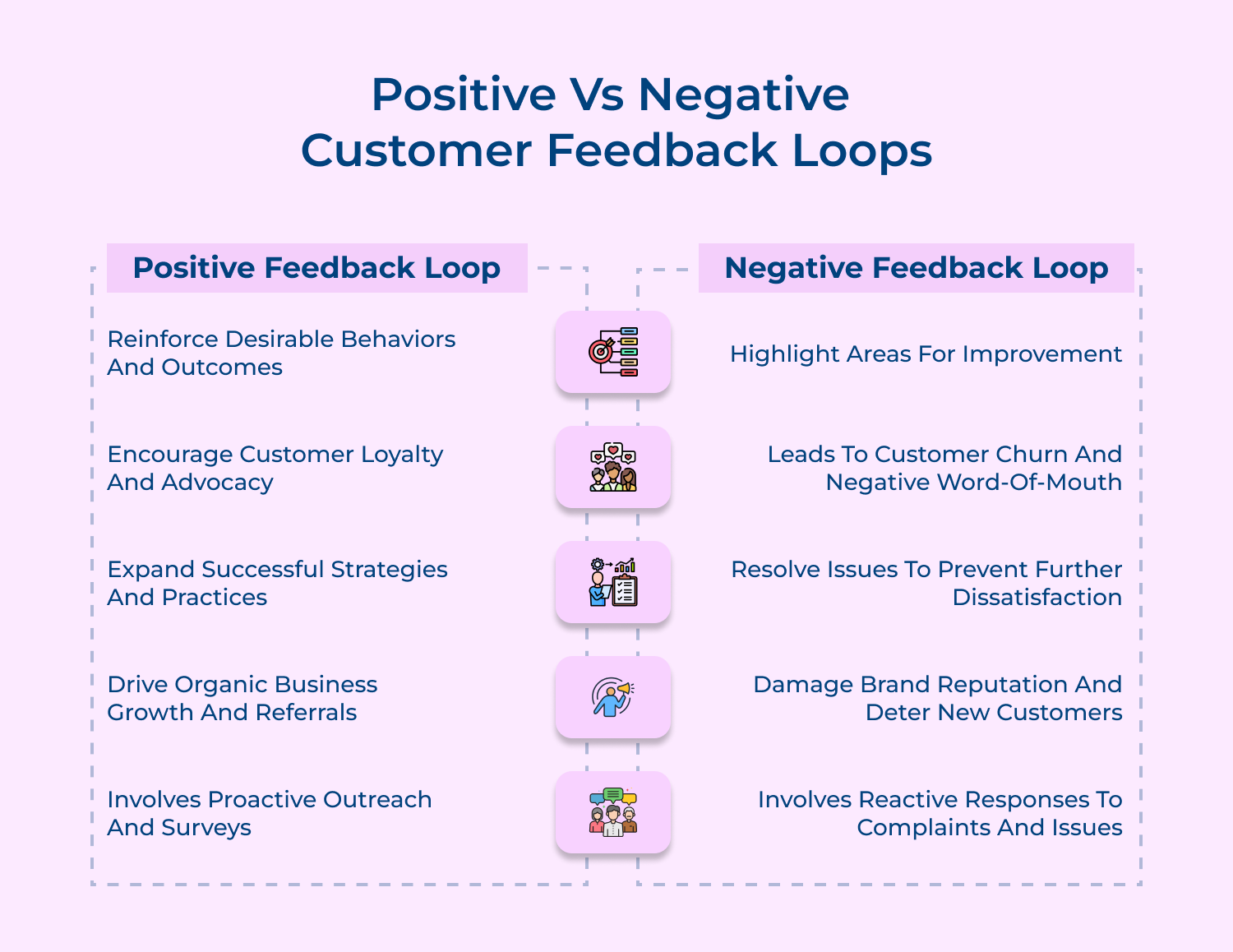
Purpose
Positive feedback loops aim to reinforce and build upon successful practices, thereby enhancing customer satisfaction along with their loyalty. Conversely, negative feedback loops focus on identifying and addressing issues to prevent recurrence while improving customer experience. While both are crucial, positive loops celebrate successes and encourage continued excellence, whereas negative loops drive corrective actions.
Customer Reaction
In a positive feedback loop, customers feel valued and appreciated, which increases their loyalty as well as likelihood of recommending the business. In contrast, negative feedback loops often result in customer frustration or dissatisfaction, which can harm retention and customer perception. Addressing negative feedback is critical to recovering trust.
Business Response
Businesses are encouraged to continue or expand upon successful practices that customers have praised when it’s a positive feedback loop. This could involve scaling up effective strategies or introducing new features. On the other hand, a negative feedback loop necessitates addressing specific issues raised by customers, developing solutions to resolve these problems, and improving overall service quality.
Impact on Brand
A positive feedback loop contributes to a strong brand reputation by reinforcing good practices and generating favorable word-of-mouth. This enhances the brand’s image and attracts new customers. Negative feedback loops can damage the brand’s reputation if not managed effectively, leading to negative reviews as well as reduced customer trust.
Focus Areas
Positive feedback loops emphasize recognizing while also replicating strengths and successful customer experiences to enhance satisfaction. Negative feedback loops concentrate on identifying weaknesses or failures and addressing them to prevent future issues. The focus in negative feedback is on problem resolution and improvement, while positive feedback focuses on affirmation along with growth.
Feedback Channels
Positive feedback often comes through proactive channels such as satisfaction surveys, customer interviews and reviews. It involves seeking out customer opinions to build on success. Negative feedback typically comes through reactive channels like complaints, service issues, or online reviews, where customers voice dissatisfaction, requiring prompt attention.
Effective customer feedback loops drive continuous improvement and customer-centricity. The examples showcase good practices across diverse industries.
Tesla’s Over-the-Air Updates
Tesla, the electric vehicle innovator, uses over-the-air software updates to continuously improve its cars based on customer feedback and driving data. The company monitors vehicle diagnostics, safety metrics and owner suggestions to identify areas for enhancement. Customers wake up to find their cars updated with new features, bug fixes and performance improvements, creating a delightful feedback loop.
Airbnb’s Host and Guest Reviews
Airbnb’s review system allows hosts and guests to provide feedback on their experiences. This feedback helps Airbnb enforce quality standards and improve its platform. Hosts can refine their listings based on guest input, while guests benefit from enhanced transparency and improved accommodation quality, leading to a better overall user experience.
Uber’s In-App Ratings and Reviews
Uber relies on a two-way rating system where drivers and riders rate each other after every trip. This instant feedback helps ensure quality, safety and accountability. Low ratings trigger performance reviews and improvement plans. Uber also solicits in-app feedback on new features and services, allowing for rapid iteration based on real-world user insights.
JetBlue’s Social Media Listening
The popular US airline, JetBlue is known for its proactive social media presence. The company constantly monitors Twitter, Facebook, along with other channels for customer mentions, promptly responding to complaints, questions and kudos. This real-time feedback loop helps resolve issues, recover service failures and strengthen customer relationships. JetBlue’s social responsiveness has become a key brand differentiator.
The Customer Feedback Loop serves as a continuous improvement engine that transforms customer voices into actionable business insights. This systematic approach creates a cycle where feedback collection leads to analysis, implementation of changes and communication back to customers.
Mastering this iterative process requires genuine commitment to customer-centricity and strategic execution. Organizations that embrace this approach gain competitive advantages through enhanced agility, improved customer satisfaction and sustainable growth driven by responsive adaptation to evolving market needs.

How do I get customer feedback for ecommerce?
For ecommerce, focus on key touchpoints in the customer journey. Use post-purchase surveys to gather feedback on the buying experience. Implement product review systems on your website. Use exit-intent popups to understand why visitors leave without purchasing. Leverage email campaigns for follow-up surveys on product satisfaction. Consider using tools like Hotjar for heatmaps and user recordings to understand how customers interact with your site. Always incentivize feedback to increase response rates.
What are the essential components of a customer feedback loop?
A customer feedback loop typically consists of four essential components: collection, analysis, action and follow-up. Collection involves gathering feedback through various channels. Analysis involves interpreting the data to derive actionable insights. Action refers to implementing changes based on these insights. Follow-up involves communicating the changes back to customers and measuring their impact. Each component is crucial for maintaining a continuous cycle of improvement based on customer input.
How can you set up a customer feedback loop for your business?
To set up a customer feedback loop, start by defining clear objectives aligned with your business goals. Choose appropriate feedback channels that suit your customer base. Design effective feedback collection tools, ensuring they’re user-friendly. Implement a regular schedule for feedback collection. Establish a system for analyzing feedback and prioritizing actions. Create processes for implementing changes based on insights. Finally, develop a strategy for communicating these changes back to customers and measuring their impact.
How can a business close the customer feedback loop effectively?
To close the customer feedback loop effectively, promptly acknowledge receipt of feedback and thank customers for their input. Analyze the feedback and determine actionable steps. Implement changes based on the insights gained. Communicate these changes back to customers, explaining how their feedback influenced decisions. Follow up with customers to gauge their satisfaction on the implemented changes. Continuously monitor the impact of these changes and be prepared to make further adjustments as needed.
 https://omni24.io/wp-content/uploads/2026/09/Social-commerce-scaled.png
1340
2560
Webvision Solution
https://omni24.io/wp-content/uploads/2023/04/Omni-Logo-1.svg
Webvision Solution2026-10-23 12:18:272026-10-23 12:18:27What is Social Commerce and Why Does It Matter?
https://omni24.io/wp-content/uploads/2026/09/Social-commerce-scaled.png
1340
2560
Webvision Solution
https://omni24.io/wp-content/uploads/2023/04/Omni-Logo-1.svg
Webvision Solution2026-10-23 12:18:272026-10-23 12:18:27What is Social Commerce and Why Does It Matter? https://omni24.io/wp-content/uploads/2026/08/AI-Customer-Service-Agents.png
1256
2400
Webvision Solution
https://omni24.io/wp-content/uploads/2023/04/Omni-Logo-1.svg
Webvision Solution2026-09-21 04:48:512026-09-21 04:48:51How to Build an AI Customer Service Agents: 8 Key Steps
https://omni24.io/wp-content/uploads/2026/08/AI-Customer-Service-Agents.png
1256
2400
Webvision Solution
https://omni24.io/wp-content/uploads/2023/04/Omni-Logo-1.svg
Webvision Solution2026-09-21 04:48:512026-09-21 04:48:51How to Build an AI Customer Service Agents: 8 Key Steps https://omni24.io/wp-content/uploads/2026/08/Omnichannel-Conversational-AI.png
1256
2400
Tushar Joshi
https://omni24.io/wp-content/uploads/2023/04/Omni-Logo-1.svg
Tushar Joshi2026-09-16 03:51:072026-09-16 03:51:07How to Build Omnichannel Conversational AI Strategy
https://omni24.io/wp-content/uploads/2026/08/Omnichannel-Conversational-AI.png
1256
2400
Tushar Joshi
https://omni24.io/wp-content/uploads/2023/04/Omni-Logo-1.svg
Tushar Joshi2026-09-16 03:51:072026-09-16 03:51:07How to Build Omnichannel Conversational AI Strategy
Whether it’s about acquire, engage or support – Omni24 covers all your customer engagement needs in one complete platform.

Copyright ©2026 Veemo All rights reserved.
CA, Los Angeles, Hall Ave, 19011