How to Create Customer Feedback Systems Step-by-Step Guide
A customer feedback system analyzes input to drive improvements, boost satisfaction, build trust and engage customers effectively.

A customer feedback system analyzes input to drive improvements, boost satisfaction, build trust and engage customers effectively.
Have you ever wondered why some businesses thrive while others struggle to stay afloat? The answer often lies in the way they engage with their customers.
Customer feedback is a crucial tool that can help businesses improve their products and services, as well as build stronger relationships with their clients. With social media and online reviews shaping public opinion, businesses need to prioritize customer feedback in order to stay ahead of the competition.
A significant 64% of customers expect companies to respond in real-time, indicating the necessity for businesses to actively engage with customer feedback. Ignoring feedback can lead to missed opportunities for growth and development. Hence, a customer feedback system is a must-have feature for businesses.
Let us explore the importance of a customer feedback system and how it can benefit businesses of all sizes.
Customer feedback systems are crucial for any business looking to improve customer satisfaction and drive growth. A customer feedback system is a structured process that allows businesses to collect, analyze, and act upon feedback from their customers.
By evaluating customer insights, businesses can make data-driven decisions to improve their offerings and customer experience. These systems transform customer perspectives into actionable strategies and build stronger customer relationships.
Key Objectives:
A well-designed customer feedback system can provide valuable insights and help companies make informed decisions to enhance customer satisfaction and drive growth.
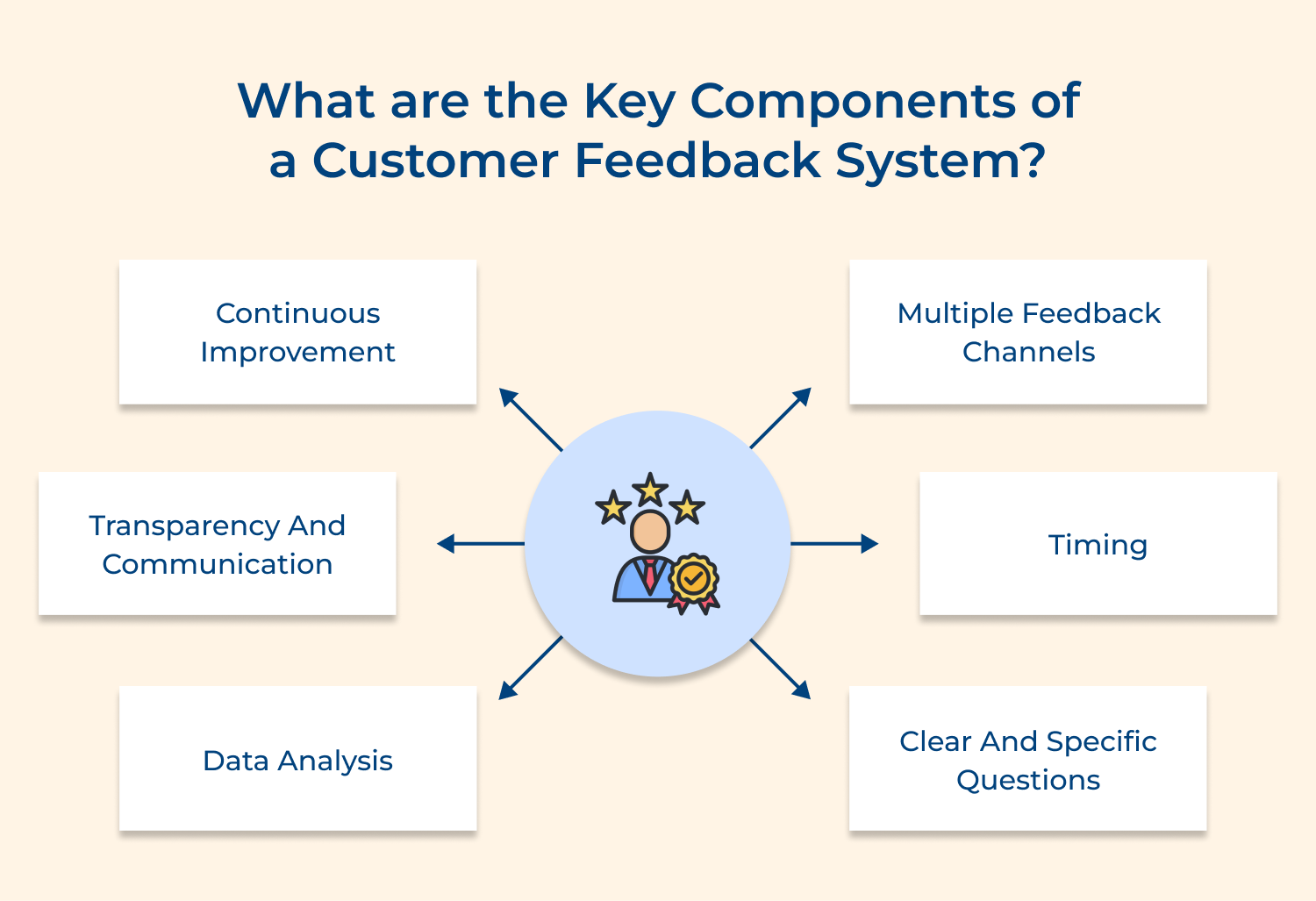
Customer feedback provides valuable insights into customer preferences and satisfaction levels. Here are some key points highlighting the importance of a customer feedback system for both businesses and customers:
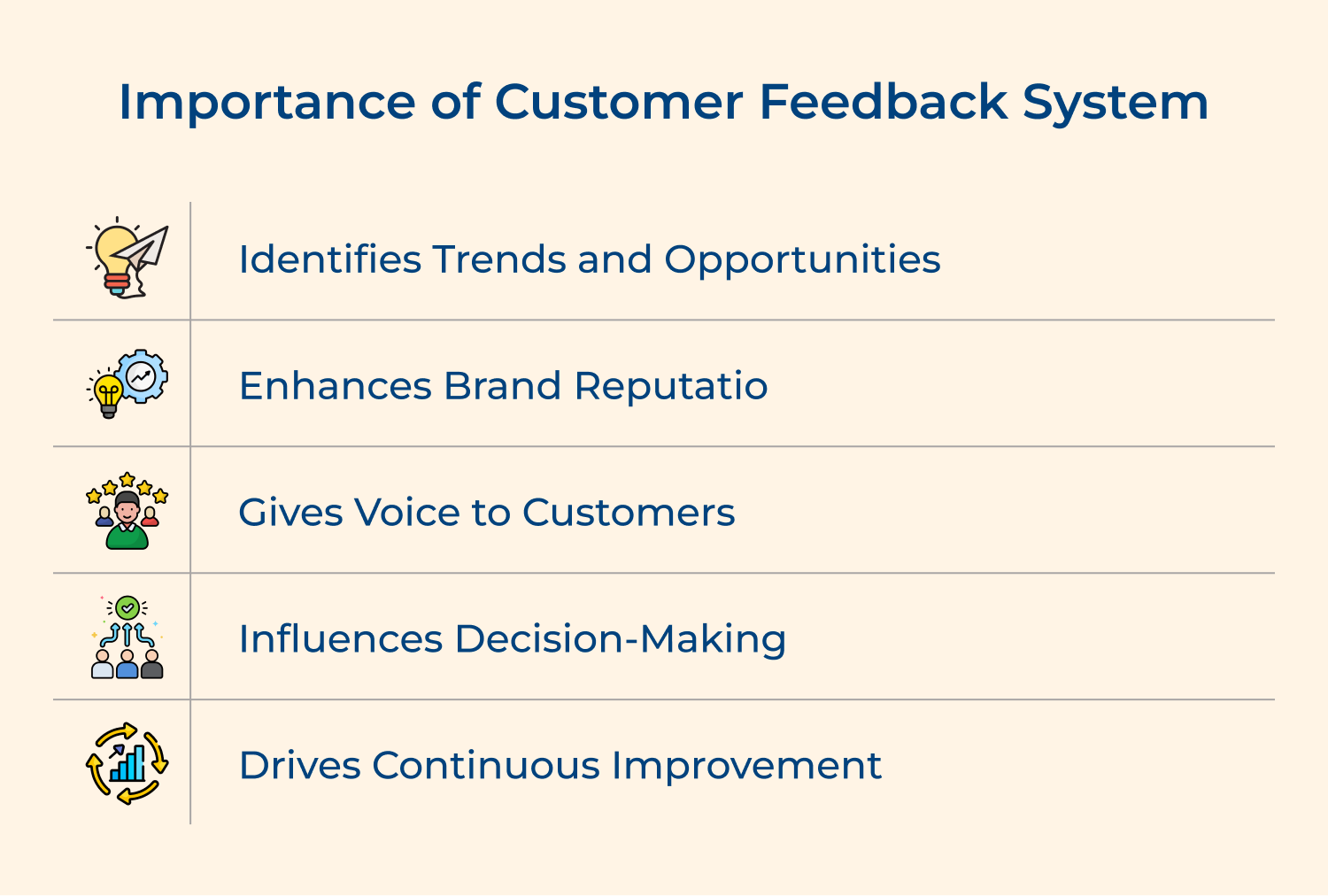
Customer feedback helps you understand what your customers think about your products or services. By analyzing customer feedback, you can make informed decisions to improve your offerings and enhance customer satisfaction.
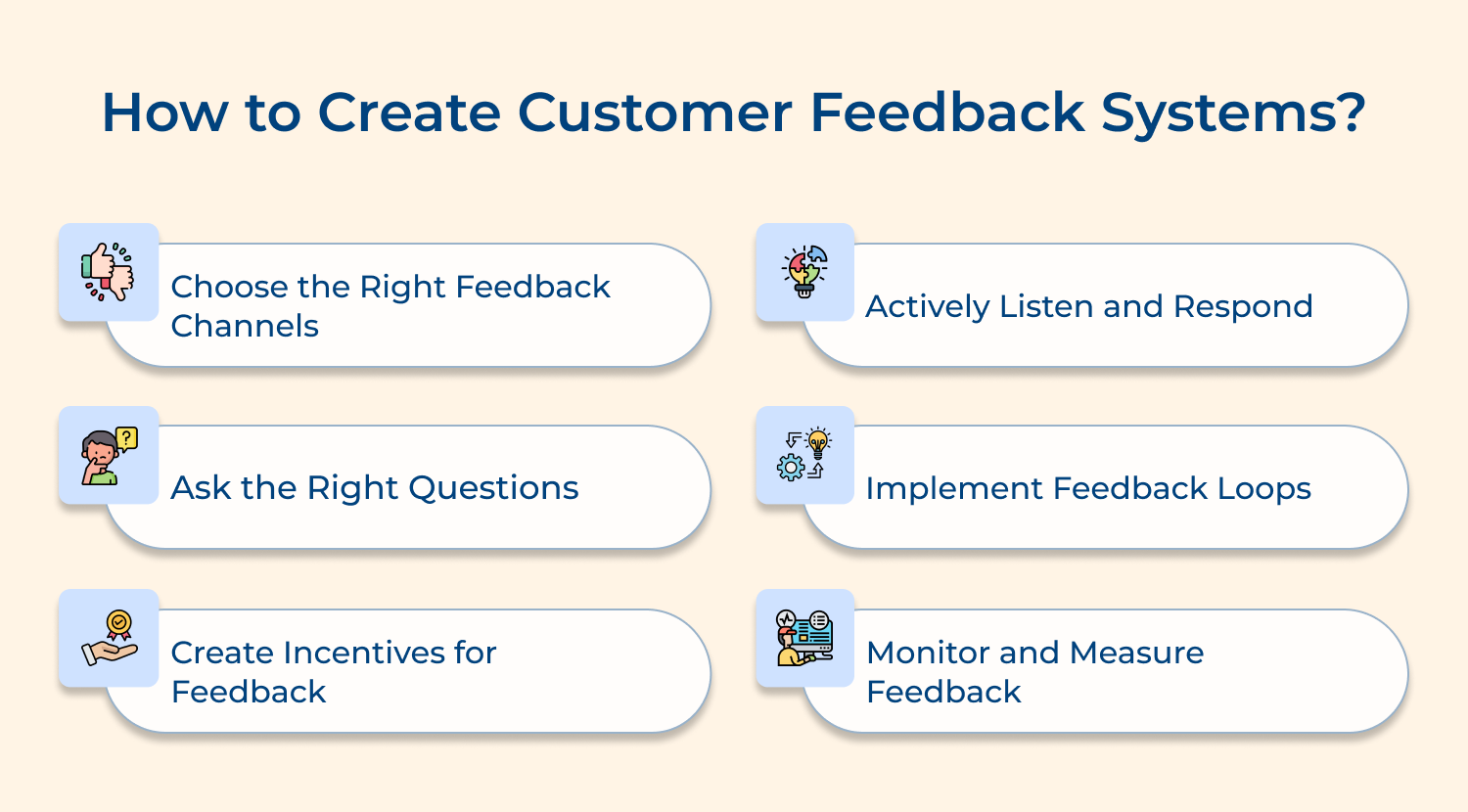
There are various channels through which you can collect customer feedback, such as surveys, feedback forms, social media, email, and phone calls. Choose the channels that are most relevant to your business and target audience. For example, if you have a strong social media presence, you may want to use social media platforms to gather feedback.
Few advantages:
When designing feedback surveys or forms, make sure to ask relevant and specific questions. Avoid asking vague or leading questions that may bias the responses. Focus on gathering actionable feedback that can help you improve your products or services.
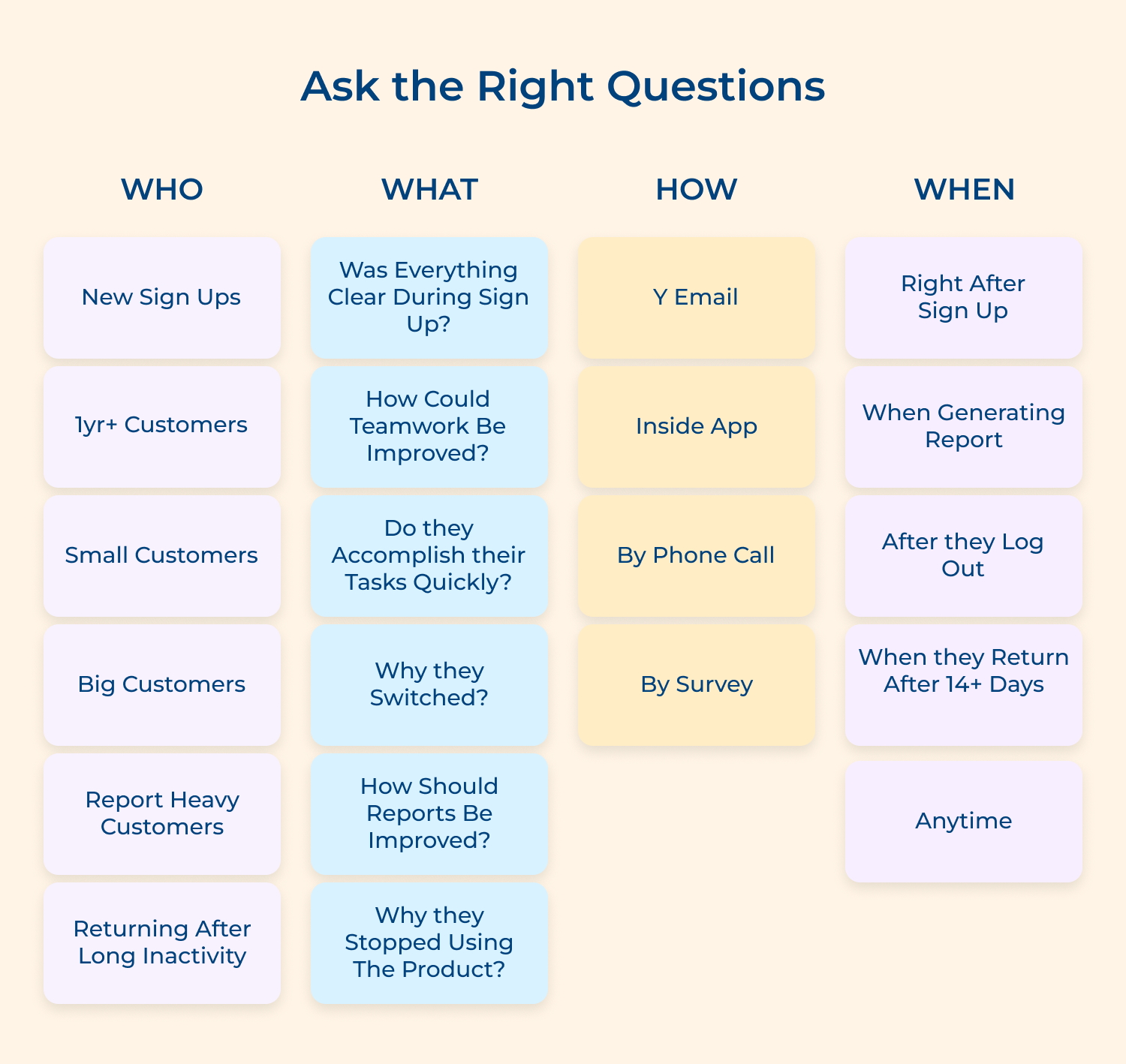
Benefits to consider:
Customers are more likely to provide feedback if they receive something in return. Consider offering incentives such as discounts, coupons, or freebies to encourage customers to share their thoughts. This will increase the response rate and provide you with valuable feedback.
Beneficial aspects:
Once you have collected feedback, it’s important to actively listen to what your customers have to say. Analyze the feedback, identify common themes or issues and take action to address them. Respond to customers promptly and let them know that their feedback is valued.
Few advantages:
Customer feedback should not be a one-time activity. Implement feedback loops to ensure continuous improvement. Regularly gather feedback, analyze the data, make changes based on the feedback, and then gather feedback again to see if the changes have been effective.
Beneficial aspects:
Track key metrics related to customer feedback, such as Net Promoter Score (NPS), customer satisfaction scores, and customer retention rates. Monitor these metrics regularly to assess the effectiveness of your feedback systems and make adjustments as needed.
Few advantages:
Customer feedback helps identify areas for improvement, and leads to increased customer loyalty. One effective way to gather and utilize customer feedback is through the implementation of a Customer Feedback Loop, also known as ACAF (Ask, Collect, Analyze, and Feedback).
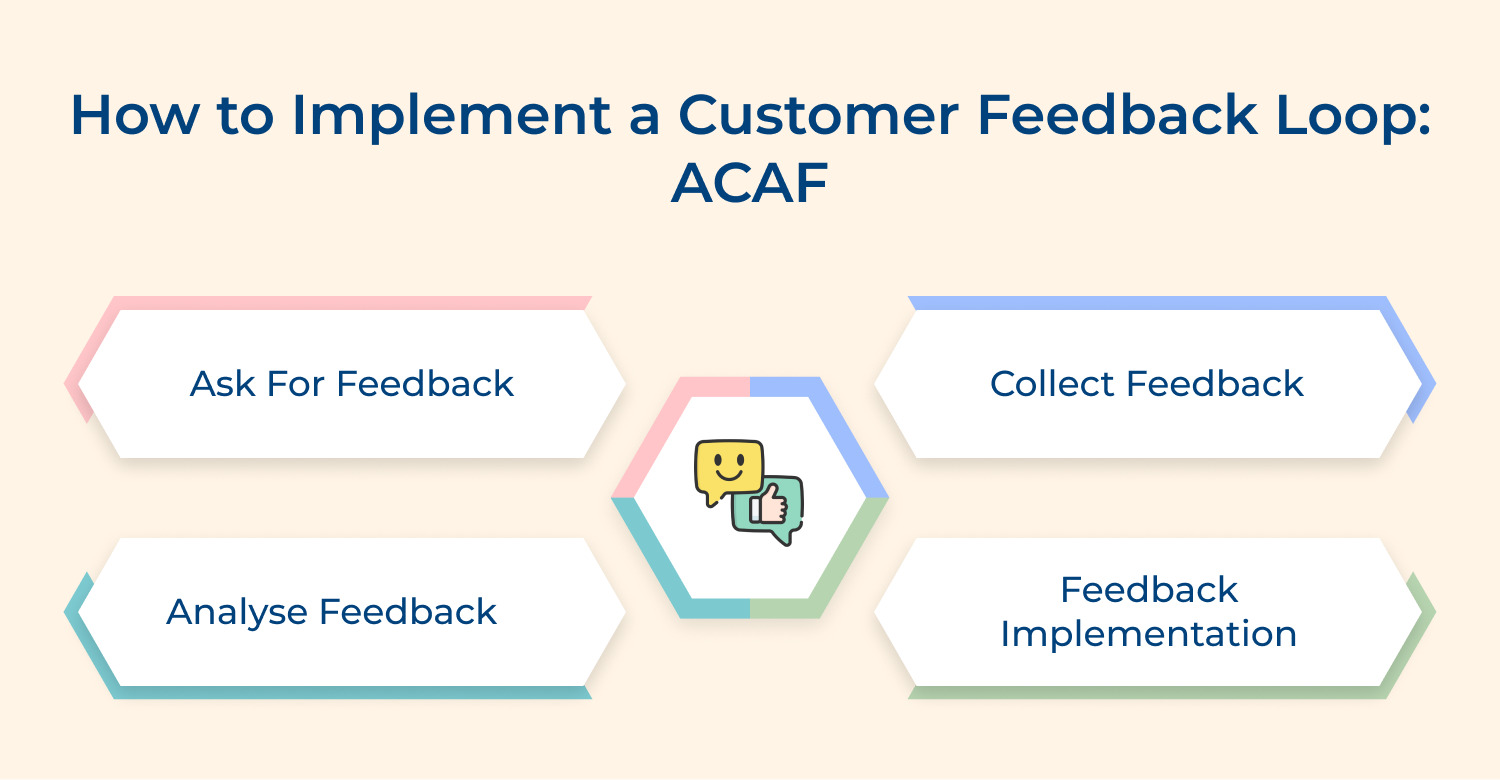
The first step in implementing a Customer Feedback Loop is to ask for feedback from your customers. This can be done through surveys, questionnaires, comment cards, or even through social media platforms. Make sure to ask specific and targeted questions that will provide you with actionable insights.
Once you have asked for feedback, it is important to collect it in a systematic way. This can be done through various channels such as online surveys, email campaigns or in-person feedback forms. Make sure to collect feedback from a diverse group of customers to get a well-rounded view of your products and services.
After you have collected feedback, the next step is to analyze it carefully. Look for patterns, trends, and common themes in the feedback to identify areas for improvement. Consider using data analysis tools to help you organize and analyze the feedback more efficiently.
The final step in the Customer Feedback Loop is to implement the feedback you have received. This might involve making changes to your products or services, improving customer service processes, or even changing your marketing strategies based on customer responses. Make sure to communicate with your customers about the changes you have made based on their feedback to show them that their opinions are valued.
Customer feedback is essential for businesses to understand their customers’ needs. There are a plethora of tools available to help businesses analyze customer feedback. Here are some of the best customer feedback tools to consider:
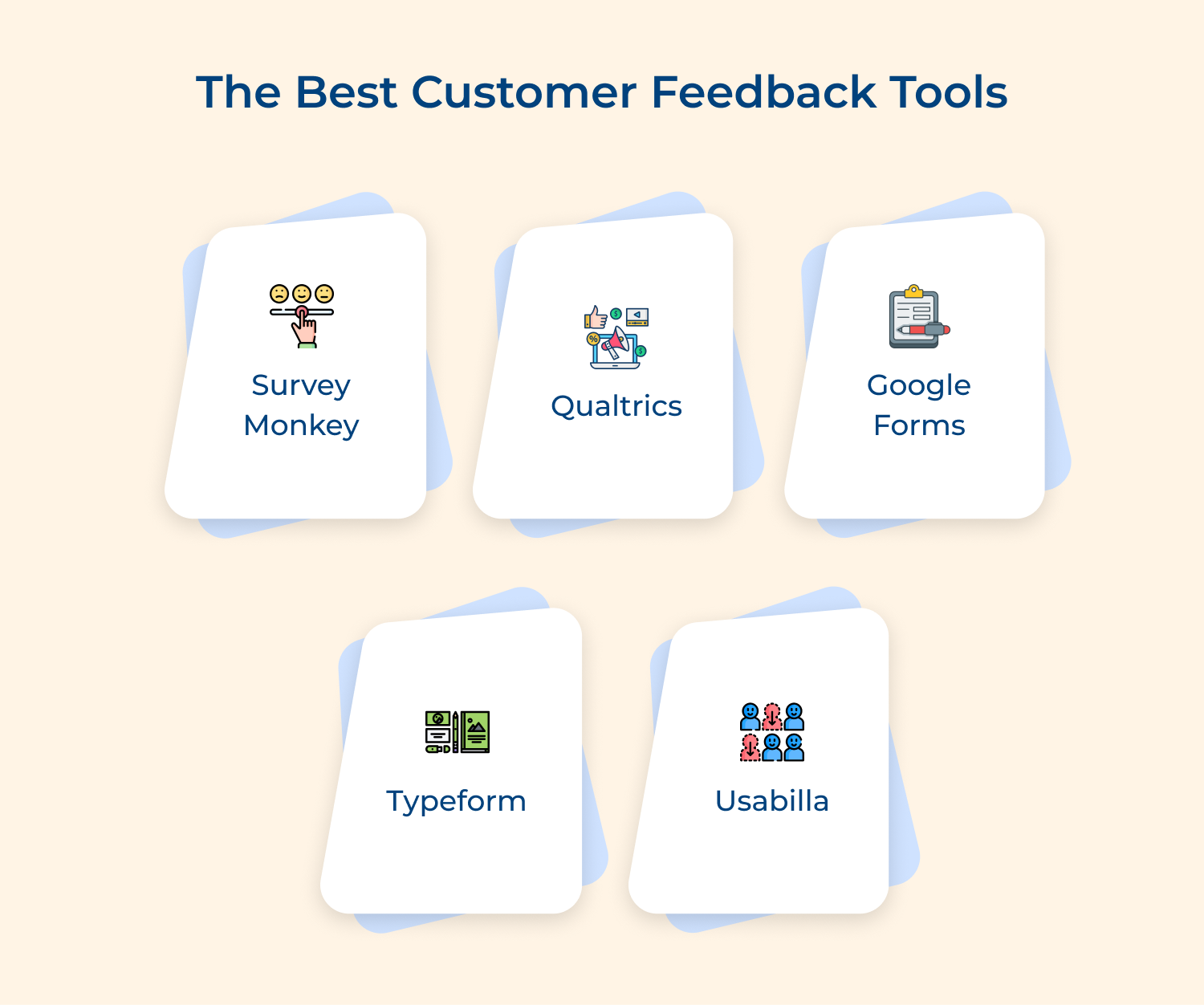
1. SurveyMonkey
SurveyMonkey is a popular online survey tool that allows businesses to create customized surveys to gather feedback from customers. It offers a variety of question types, customizable templates and analytics tools to help businesses make sense of the data.
2. Qualtrics
Qualtrics is a comprehensive customer feedback platform that offers a wide range of survey and feedback tools. Businesses can create surveys, collect feedback through multiple channels and analyze the data to gain insights into customer preferences.
3. Google Forms
Google Forms is a free tool that allows businesses to create surveys and collect feedback from customers. It is easy to use and offers basic analytics tools to help businesses understand the data.
4. Typeform
Typeform is a user-friendly survey tool that allows businesses to create interactive and engaging surveys to collect feedback from customers. It offers a variety of question types, as well as customization options to match a business’s branding.
5. Usabilla
Usabilla is a feedback tool that allows businesses to collect feedback from customers through website surveys and feedback buttons. It offers real-time analytics and insights to help businesses understand how customers are interacting with their website.
Building a customer feedback system is crucial for your company’s growth. By listening to your customers, you can identify areas for improvement, make informed decisions and build stronger relationships with your target audience. Implementing a feedback system shows your customers that their opinions matter and can lead to increased customer satisfaction.
Through regular feedback collection, you can ensure that your products and services meet the needs and expectations of your customers. By continuously striving to adapt based on customer feedback, you can position your company for long-term success and growth in the competitive market.

What is the customer feedback rating system?
A customer feedback rating system is a method used by businesses to measure customer satisfaction and gather feedback on products or services. This system typically involves customers providing ratings or reviews on their experiences with a company, which are then used to evaluate performance and make improvements.
What is the customer feedback process?
The customer feedback process typically involves collecting feedback from customers through surveys, reviews and other channels. This feedback is then analyzed to identify trends, strengths and areas for improvement. Businesses can use this information to make data-driven decisions and enhance the customer experience.
What is the customer feedback mechanism?
The customer feedback mechanism refers to the tools and channels used to collect feedback from customers. This can include online surveys, social media platforms, comment cards and customer service interactions. Businesses should have multiple feedback mechanisms in place to ensure they are capturing feedback effectively.
Why is having a Customer Feedback System important for businesses?
Having a customer feedback system is important for businesses because it allows them to understand their customers’ needs and preferences. By listening to feedback, businesses can improve their products or services, resolve issues quickly and build stronger relationships with customers. Ultimately, a customer feedback system can help businesses increase customer loyalty and drive business growth.
How can a Customer Feedback System help improve customer satisfaction?
A Customer Feedback System can help improve customer satisfaction by identifying areas for improvement and implementing changes based on customer feedback. By actively listening to customers and addressing their concerns, businesses can enhance the overall customer experience.
 https://omni24.io/wp-content/uploads/2026/09/Social-commerce-scaled.png
1340
2560
Webvision Solution
https://omni24.io/wp-content/uploads/2023/04/Omni-Logo-1.svg
Webvision Solution2026-10-23 12:18:272026-10-23 12:18:27What is Social Commerce and Why Does It Matter?
https://omni24.io/wp-content/uploads/2026/09/Social-commerce-scaled.png
1340
2560
Webvision Solution
https://omni24.io/wp-content/uploads/2023/04/Omni-Logo-1.svg
Webvision Solution2026-10-23 12:18:272026-10-23 12:18:27What is Social Commerce and Why Does It Matter? https://omni24.io/wp-content/uploads/2026/08/AI-Customer-Service-Agents.png
1256
2400
Webvision Solution
https://omni24.io/wp-content/uploads/2023/04/Omni-Logo-1.svg
Webvision Solution2026-09-21 04:48:512026-09-21 04:48:51How to Build an AI Customer Service Agents: 8 Key Steps
https://omni24.io/wp-content/uploads/2026/08/AI-Customer-Service-Agents.png
1256
2400
Webvision Solution
https://omni24.io/wp-content/uploads/2023/04/Omni-Logo-1.svg
Webvision Solution2026-09-21 04:48:512026-09-21 04:48:51How to Build an AI Customer Service Agents: 8 Key Steps https://omni24.io/wp-content/uploads/2026/08/Omnichannel-Conversational-AI.png
1256
2400
Tushar Joshi
https://omni24.io/wp-content/uploads/2023/04/Omni-Logo-1.svg
Tushar Joshi2026-09-16 03:51:072026-09-16 03:51:07How to Build Omnichannel Conversational AI Strategy
https://omni24.io/wp-content/uploads/2026/08/Omnichannel-Conversational-AI.png
1256
2400
Tushar Joshi
https://omni24.io/wp-content/uploads/2023/04/Omni-Logo-1.svg
Tushar Joshi2026-09-16 03:51:072026-09-16 03:51:07How to Build Omnichannel Conversational AI Strategy
Whether it’s about acquire, engage or support – Omni24 covers all your customer engagement needs in one complete platform.

Copyright ©2026 Veemo All rights reserved.
CA, Los Angeles, Hall Ave, 19011