What is Customer Service Levels? Benefits and Tips
Prioritizing satisfaction and customer service levels in your business model enhance client retention, revenue, growth and success.

Prioritizing satisfaction and customer service levels in your business model enhance client retention, revenue, growth and success.
Modern businesses are focusing on providing exceptional customer service to stand out from the crowd. But, not all companies are successful in delivering a satisfactory customer service level. Many individuals have encountered frustrating encounters with customer service representatives that have left them feeling frustrated and dissatisfied.
As a result, more than 73% of consumers switch to a competitor after a bad customer service experience.
A high-quality customer service level is vital for any business to grow. It is the direct representation of a company’s commitment to its customers. From effective communication to personalized assistance, every client interaction can either strengthen or damage a company’s reputation.
Let us explore the key elements that contribute to superior customer service levels to ensure customer satisfaction.
Customer service levels refer to the standard of service a company provides to its customers. It involves all the interactions that customers have with a company during the entire customer journey. These interactions can include pre-purchase inquiries, the actual purchase process, and post-purchase support. A high level of customer service ensures that customers feel valued and satisfied, leading to a positive brand image.
The key aspects of customer service levels are as follows:
The level of customer service can greatly impact a company’s reputation and customer satisfaction index. It refers to all kinds of support assistance provided to customers before, during and after purchasing a product or service.
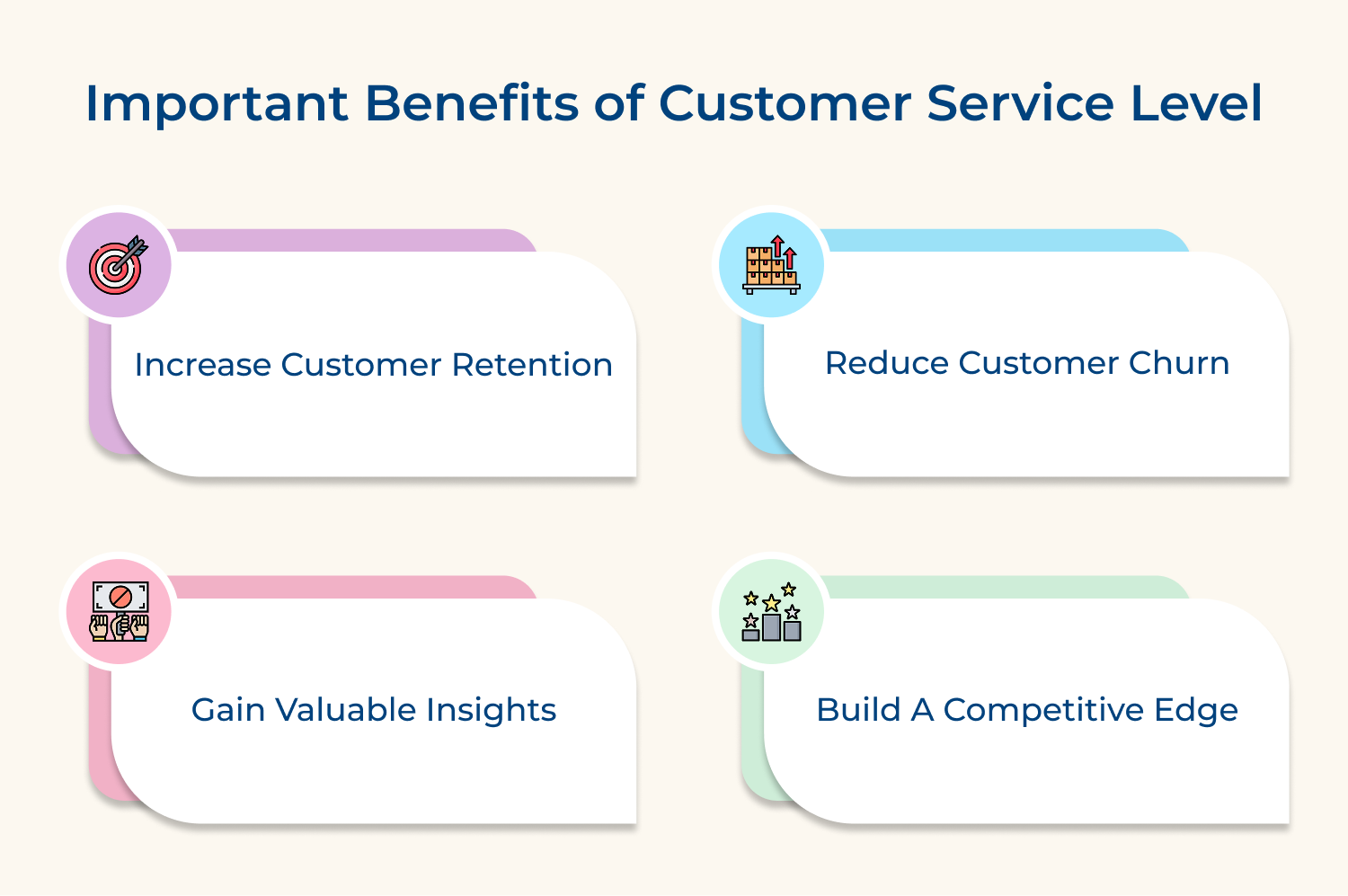
Increase Customer Retention
When customers feel valued, they are more likely to remain loyal to a brand and continue purchasing its products/ services. It leads to repeat business and higher customer lifetime value (CLTV). Eventually, it strengthens customer relationships, which is vital for overall business sustainability.
Reduce Customer Churn
Excellent customer service can help minimize customer churn, which refers to customers leaving or ceasing to do business with a company. Addressing customer concerns promptly helps companies to prevent dissatisfaction and retain valuable customers.
Gain Valuable Insights
Engaging with clients via the customer service process provides opportunities to gather feedback. The support reps can identify patterns, preferences, and pain points, allowing the company to make informed business decisions. Also further improve its products/ services continuously.
Build a Competitive Edge
Customers often choose companies that prioritize their needs and provide support aligning with their expectations. Delivering excellent customer service helps a business can stand out from its competitors and lure more customers. It will lead to an increase in market share and revenue.
A positive customer experience significantly enhances brand reputation, increases customer loyalty, and drives business growth. Understanding the levels of customer service and how to deliver them effectively can make a big difference in your business success.
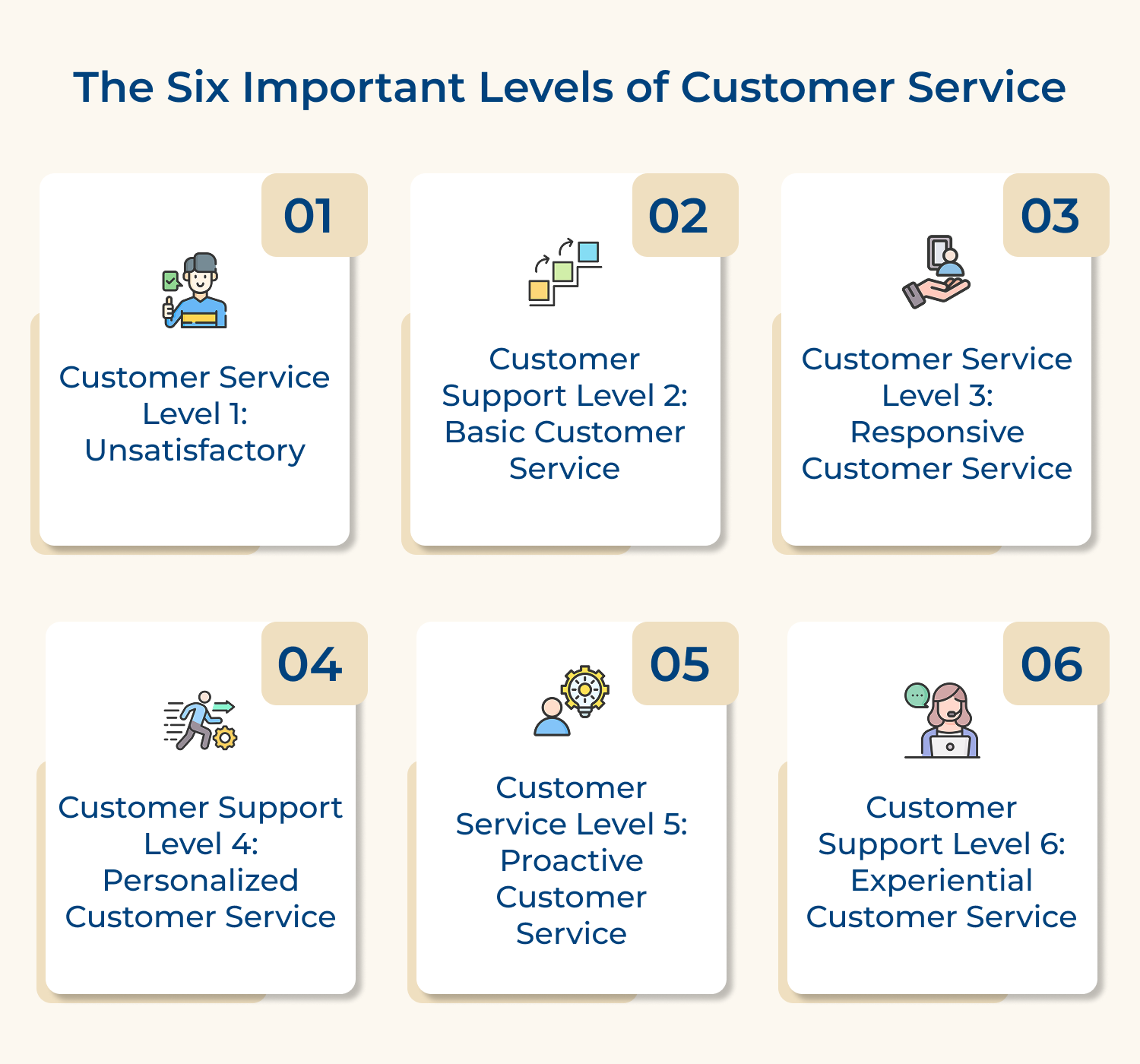
Unsatisfactory customer service refers to a bad or even worse experience where the customer’s expectations are not adequately met. When the service standard is below expected, customers decide to leave feeling frustrated and unimportant.
For example, if a customer calls a helpline and is put on hold for an extended period without any resolution, it would be considered unsatisfactory customer service.
The basic customer service level involves meeting the minimum requirements of customer interaction. It includes key attributes such as polite behavior, proper handling of customer inquiries and prompt responses. This level sets the tone for the customer experience and establishes a foundation for further engagement.
For example, if a customer visits a store and enquires about the price of a product and the support executive provides accurate price details, it would be considered as basic customer service.
The responsive customer service level refers to proactively addressing customer queries and complaints. It emphasizes the importance of prompt problem-solving and timely follow-ups. Businesses at this level prioritize effective communication, actively listen to customer feedback, and take appropriate actions to resolve issues.
For example, if a customer contacts a company’s support team via email and receives a timely response, it would be considered responsive customer service.
Personalized customer service takes the customer experience to an upper level. It focuses on understanding customer preferences, anticipating their needs, and tailoring interactions accordingly.
The level of service involves building a relationship with customers, remembering their preferences, and providing customized solutions. Personalized service makes customers feel valued and appreciated.
For example, if a hotel staff member greets a returning guest by name and offers them their preferred room type without them having to request it, it would be considered personalized customer service.
Proactive customer service aims to exceed customer expectations by anticipating their needs and solving problems even before the customers realize they exist. The level of service requires a deep understanding of the customer journey and actively seeking opportunities to improve it.
The proactive service level also involves personalized recommendations, anticipating potential issues and offering proactive solutions.
For example, if a healthcare provider sends reminders to patients about upcoming appointments or offers tips on managing their health, it would be considered proactive customer service.
The experiential customer service level goes beyond meeting expectations and creates memorable experiences. It requires innovation and creativity in designing delightful customer interactions. Experiential service focuses on emotional connections and aims to create moments that customers will remember forever. It involves surprising customers through personalized gestures and creating a lasting impression.
For example, if a restaurant offers personalized menu recommendations based on dietary preferences and surprises customers with a complimentary dessert on their birthday, it would be considered experiential customer service.
Providing excellent customer service is crucial for retaining existing customers and attracting new ones. But how do you measure the level of customer service your business is providing?
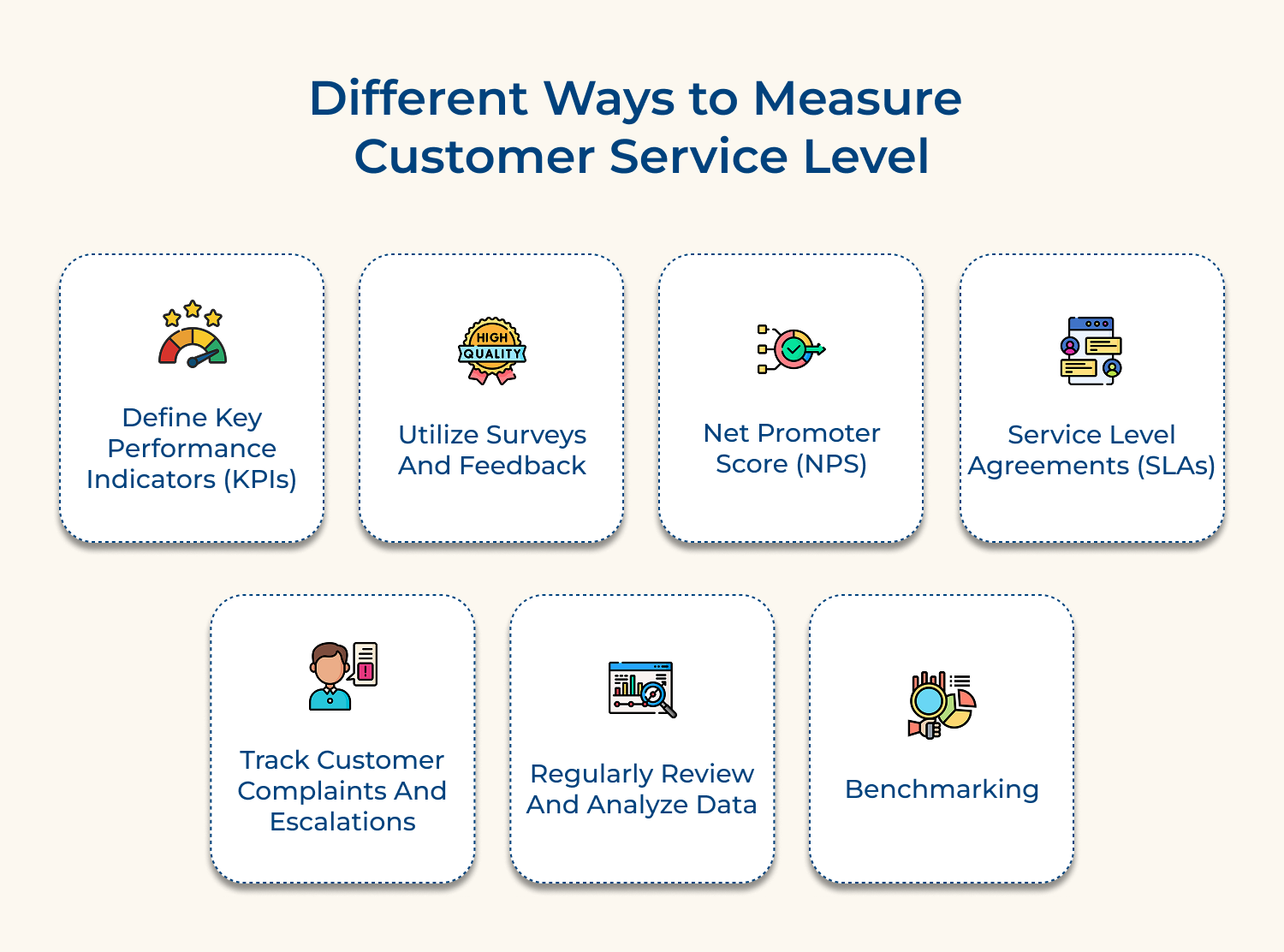
Before you can measure customer service level, it is important to determine which metrics are most relevant to your business. These metrics can vary depending on your industry and specific goals. Some common KPIs for measuring customer service include average response time, customer satisfaction scores, resolution time, and customer retention rate.
One of the most straightforward ways to measure customer support level is by directly asking your customers for feedback. Surveys or feedback forms provide a structured way for customers to express their satisfaction levels and share their experiences.
Keep the surveys short and specific, asking relevant questions that will give you the information you need to assess customer service performance. Consider implementing a system for customers to provide real-time feedback, such as a chatbot or a comment box on your website.
NPS is a widely used metric for measuring customer loyalty and satisfaction. It asks customers a simple question: “On a scale of 0-10, how likely are you to recommend our company/product/service to a friend or colleague?”
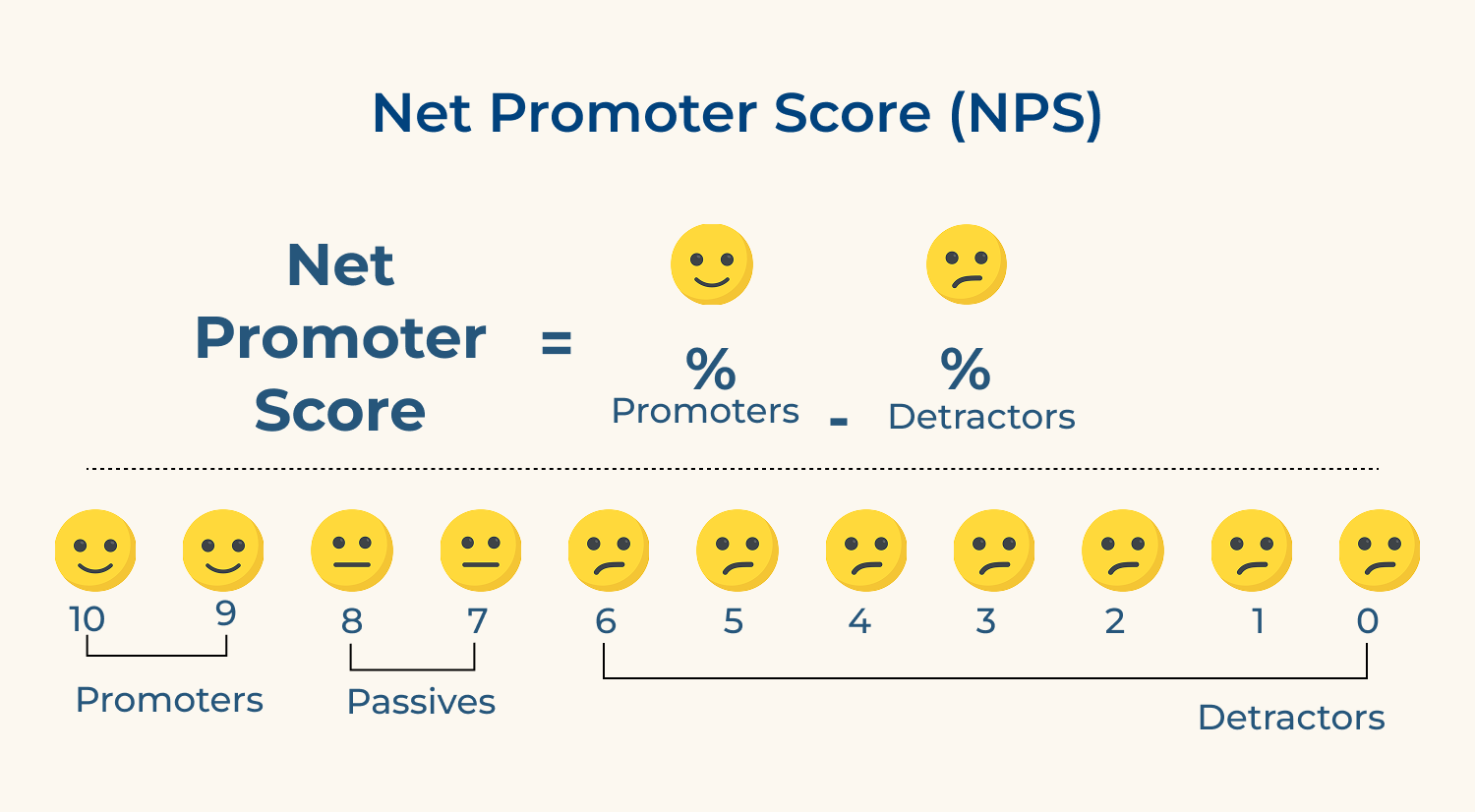
Based on their responses, customers are categorized into three groups: Promoters (9-10), Passives (7-8) and Detractors (0-6). By calculating the percentage of promoters minus the percentage of detractors, you can get your Net Promoter Score.
Businesses offering customer support/service agreements and tracking the performance against SLAs can be a useful measurement tool. Analyze metrics such as response time, resolution time and customer satisfaction after the issue is resolved. It will give you an idea of how well your customer service team is meeting the agreed-upon service levels.
Customer complaints and escalations are valuable indicators of service quality. Ensure to establish a system for tracking and documenting these instances. By analyzing the root causes of complaints, you can identify gaps in customer service and take proactive steps to address those issues.
Once you have collected customer service data through surveys, feedback, social media monitoring, and other methods. it is crucial to review and analyze that data regularly. Look for trends, patterns, and areas of improvement. Identify what is working well and what needs to be addressed. Use the information to make data-driven decisions and implement strategies to enhance customer service.
Benchmarking involves comparing your customer service performance with that of your competitors or industry standards.
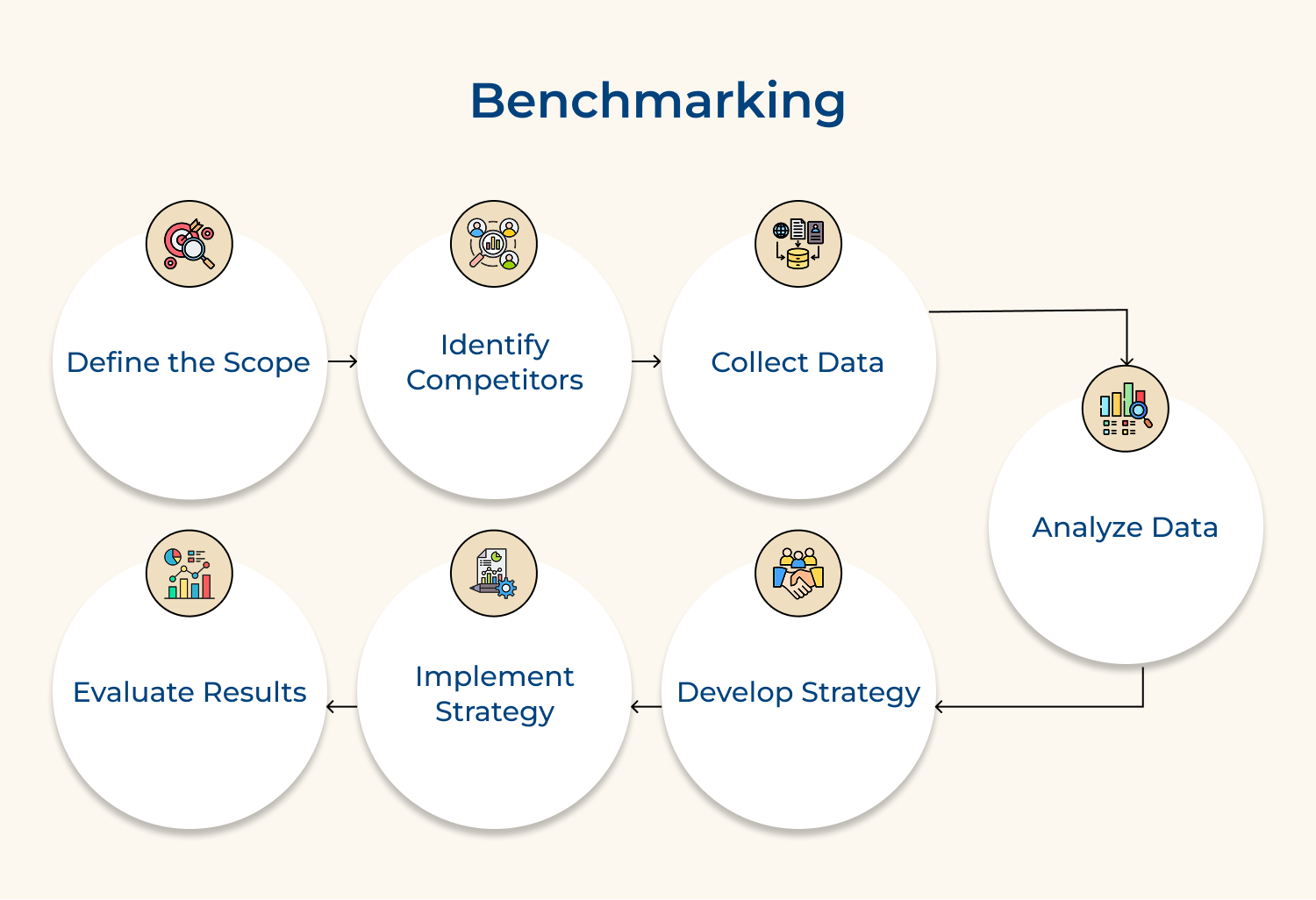
This way can help you assess how your business stacks up and identify areas where improvements are needed. Look for industry reports, customer satisfaction ratings, or customer service awards to get a sense of where you stand.
Modern customers have higher expectations than ever before. Meeting and exceeding expectations can lead to increased customer loyalty and advocacy.
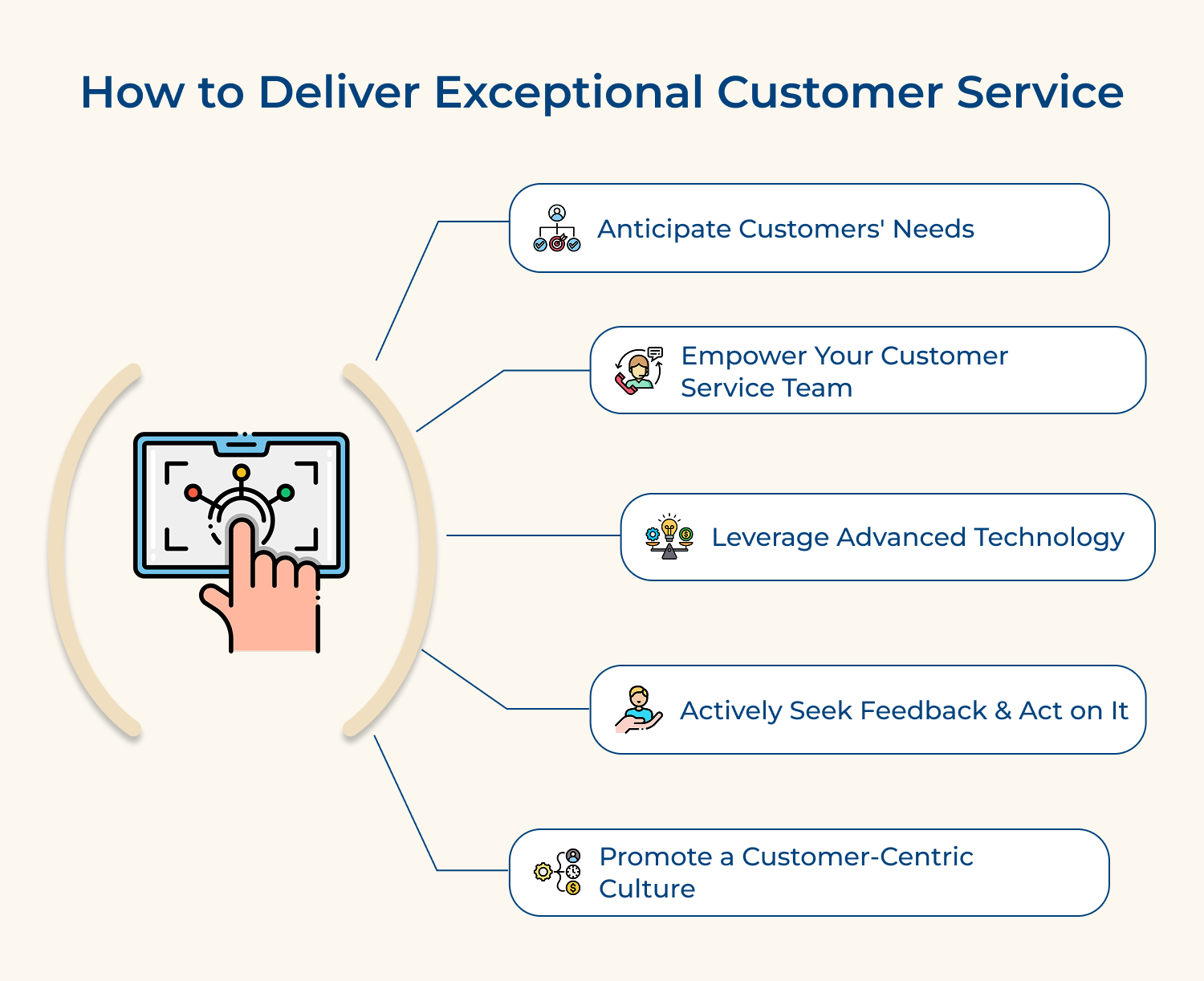
Start by understanding your customers’ expectations and preferences. Conduct market research, collect customer feedback, and analyze customer behavior to gain insights into what your customers value the most. It will help you tailor your customer service approach to meet their expectations.
Here are some pro tips:
Invest in comprehensive training for your customer service team, ensuring they have the knowledge and skills to meet customer needs effectively.
Empower them to make decisions and solve problems independently. Parallelly enable a more personalized and responsive approach.
Here are some pro tips:
Raise your customer service standards by deploying advanced technologies like customer relationship management (CRM) systems, chatbots, and other digital tools to streamline customer interactions and provide quick information.
Implementing the latest technology can enhance efficiency and enable personalized experiences at scale.
Here are some pro tips:
Customer feedback is a great way to understand how your business is performing. Encourage customers to provide feedback and actively listen to their suggestions.
Use the feedback to improve your products, services, and overall customer experience. Transparency and responsiveness to customer feedback build trust & loyalty.
Here are some pro tips:
Businesses should create a culture that prioritizes customer satisfaction and places the customer at the center of decision-making. Ensure all employees understand the importance of delivering exceptional customer service and align their actions with the goal.
Here are some pro tips:
One of the best ways to improve customer service delivery is to regularly assess your customer service processes, measure key performance indicators and identify areas for improvement. Embrace a mindset of continuous learning and evolution to stay responsive to changing customer expectations.
Here are some pro tips:
Omni24 is a comprehensive customer service platform that offers a wide range of features designed to enhance communication and overall customer experience. The platform offers an array of features to streamline communication, provide quick and personalized responses, and enhance collaboration within your customer service team.
Leveraging its multi-channel communication, analytics, and automation capabilities helps you to provide exceptional service. So, if you’re looking to take your customer service to the next level, consider utilizing software and experience the positive impact it can have on your business.

1. Why is it important to maintain a high customer service level?
Maintaining a high customer service level is vital because it directly impacts a business’s reputation and customer loyalty. Exceptional customer service leaves a positive impression on customers, increasing their satisfaction and likelihood of returning or recommending the business to others. It also helps in building a strong brand image, fostering trust and differentiating the business from competitors.
2. What are the three levels of customer service?
The three levels of customer service can be categorized as basic, intermediate and advanced.
3. What factors determine the customer service level of a business?
Several factors contribute to the customer service level of a business. These include the responsiveness of customer service representatives:
4. How does the customer service level impact customer loyalty and retention?
The customer service level directly impacts customer loyalty and retention. A high level of customer service fosters loyalty by making customers feel valued, listened to and appreciated. It creates a positive experience that customers associate with the brand, making them more likely to continue purchasing and recommending the business’s products or services.
 https://omni24.io/wp-content/uploads/2026/07/Customer-Data-Platform.png
1256
2400
Tushar Joshi
https://omni24.io/wp-content/uploads/2023/04/Omni-Logo-1.svg
Tushar Joshi2026-07-08 03:58:592026-07-08 03:58:59How a Customer Data Platform Unlocks Unified Customer Insights
https://omni24.io/wp-content/uploads/2026/07/Customer-Data-Platform.png
1256
2400
Tushar Joshi
https://omni24.io/wp-content/uploads/2023/04/Omni-Logo-1.svg
Tushar Joshi2026-07-08 03:58:592026-07-08 03:58:59How a Customer Data Platform Unlocks Unified Customer Insights https://omni24.io/wp-content/uploads/2026/07/Unified-Customer-View.png
1256
2400
Tushar Joshi
https://omni24.io/wp-content/uploads/2023/04/Omni-Logo-1.svg
Tushar Joshi2026-07-07 03:37:342026-07-07 03:37:34How a Unified Customer View Transforms Customer Experience
https://omni24.io/wp-content/uploads/2026/07/Unified-Customer-View.png
1256
2400
Tushar Joshi
https://omni24.io/wp-content/uploads/2023/04/Omni-Logo-1.svg
Tushar Joshi2026-07-07 03:37:342026-07-07 03:37:34How a Unified Customer View Transforms Customer Experience https://omni24.io/wp-content/uploads/2026/06/Omnichannel-CRM.png
1256
2400
Tushar Joshi
https://omni24.io/wp-content/uploads/2023/04/Omni-Logo-1.svg
Tushar Joshi2026-07-06 03:49:012026-07-06 04:00:22How to Implement Omnichannel CRM Strategy: 7 Key Steps
https://omni24.io/wp-content/uploads/2026/06/Omnichannel-CRM.png
1256
2400
Tushar Joshi
https://omni24.io/wp-content/uploads/2023/04/Omni-Logo-1.svg
Tushar Joshi2026-07-06 03:49:012026-07-06 04:00:22How to Implement Omnichannel CRM Strategy: 7 Key Steps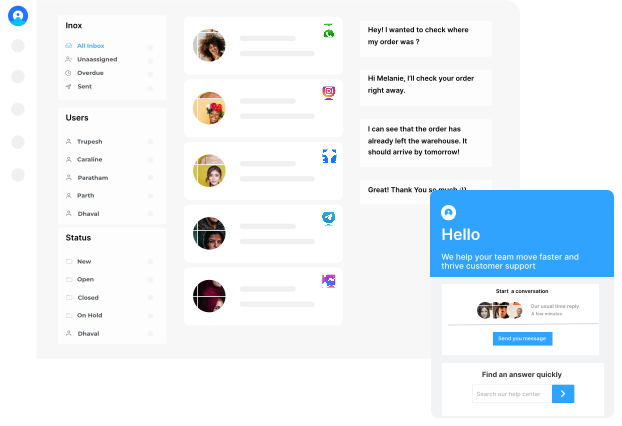
Whether it’s about acquire, engage or support – Omni24 covers all your customer engagement needs in one complete platform.

Copyright ©2026 Veemo All rights reserved.
CA, Los Angeles, Hall Ave, 19011