How to Create a Customer Service Plan: 8 Effective Strategies
Learn how to create a customer service plan that improves retention, efficiency and customer experience with practical strategies.

Learn how to create a customer service plan that improves retention, efficiency and customer experience with practical strategies.
Struggling with inconsistent customer service? You’re not alone. When teams don’t have clear guidelines, they handle situations differently and that confuses customers as well as frustrates employees. The result? Lost trust, negative reviews and missed revenue.
Even your team feels the pressure, facing unhappy customers without the right tools or training. But here’s the good news: it doesn’t have to stay that way. With a solid customer service plan, you can turn things around—Zendesk data shows consistent service boosts retention by 89%.
In this article, we’ll walk you through eight practical strategies to create consistent, positive experiences that build loyalty and empower your team to succeed with confidence.
A customer service plan is a structured framework that outlines how a company delivers support and creates positive experiences at every touchpoint. It defines standards, processes, and strategies to meet customer needs consistently while building lasting relationships. This roadmap ensures everyone knows their role in delivering exceptional service.
The plan works by connecting customer expectations with operational capabilities through clear guidelines. Teams follow established protocols for handling inquiries, resolving issues. and collecting feedback. Regular evaluation helps identify improvement areas and adapt to changing customer preferences.
Key Objectives:
Explore the abundant benefits of having a well-structured customer service plan that transforms your business outcomes, leading to satisfied customers as well as sustained success.
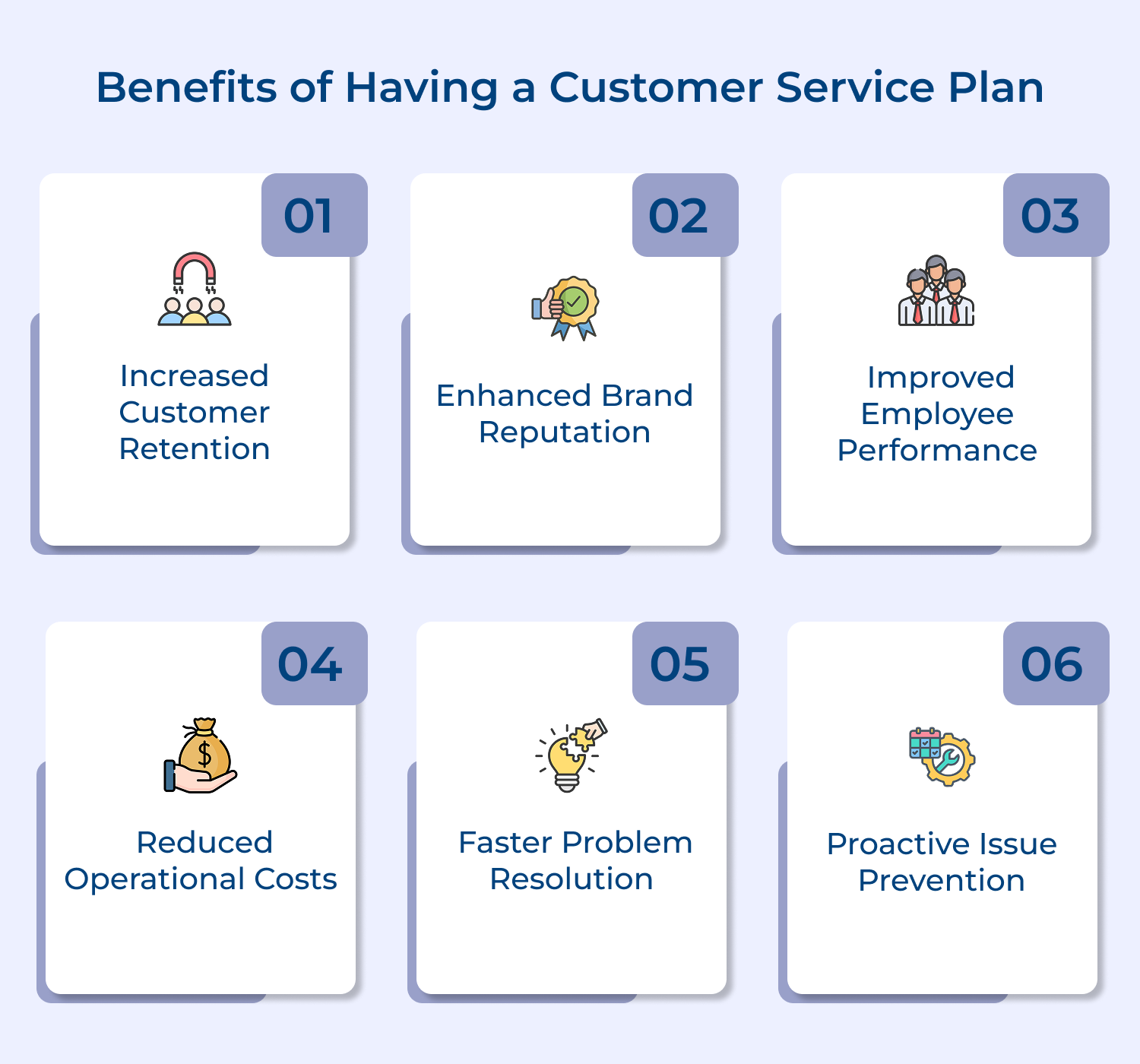
1. Increased Customer Retention
A solid service plan helps you keep existing customers by addressing their needs consistently. When customers know they can count on you for support, they’re less likely to switch to competitors even when problems arise.
2. Enhanced Brand Reputation
How you handle customer interactions shapes public perception of your business. A thoughtful service plan ensures positive experiences that customers eagerly share with friends and family through conversations as well as social media.
3. Improved Employee Performance
Clear guidelines eliminate guesswork for your team. With defined processes and expectations, staff members can confidently handle customer interactions without constantly seeking managerial approval or direction.
4. Reduced Operational Costs
Addressing problems efficiently saves money in the long run. A strategic plan helps identify recurring issues so you can fix root causes rather than repeatedly applying temporary solutions to the same problems.
5. Faster Problem Resolution
A structured service plan creates clear pathways for addressing different types of issues. When everyone knows exactly how to handle specific situations, customers get solutions quickly without being bounced between departments or left waiting for answers.
6. Consistent Customer Experience
A well-defined plan ensures customers receive the same high-quality service regardless of who assists them. This reliability builds trust as customers know what to expect whether they’re interacting with your business online, by phone or in person.
Creating a customer service plan doesn’t have to be complicated. Here are eight practical strategies that can transform your customer experience.
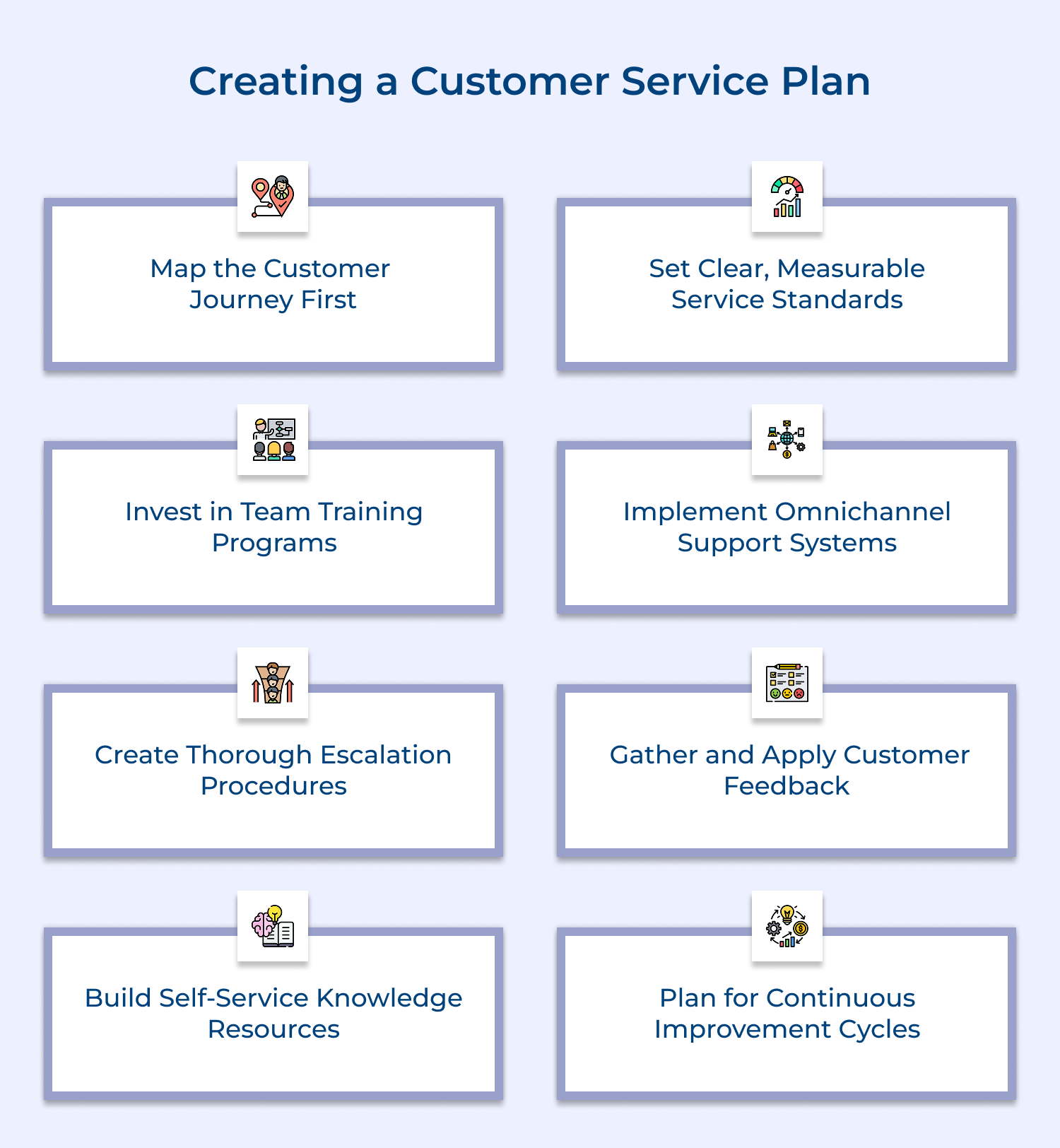
Customer journey mapping shows how people interact with your business, from first hearing about you to getting help after they buy. This visual helps you see the whole experience from the customer’s point of view, not just isolated touchpoints. And that’s key to finding opportunities for improvement.
Effective Ways to Map the Customer Journey:
Hold cross-functional workshops to align teams and create a shared, customer-centered view of the journey.
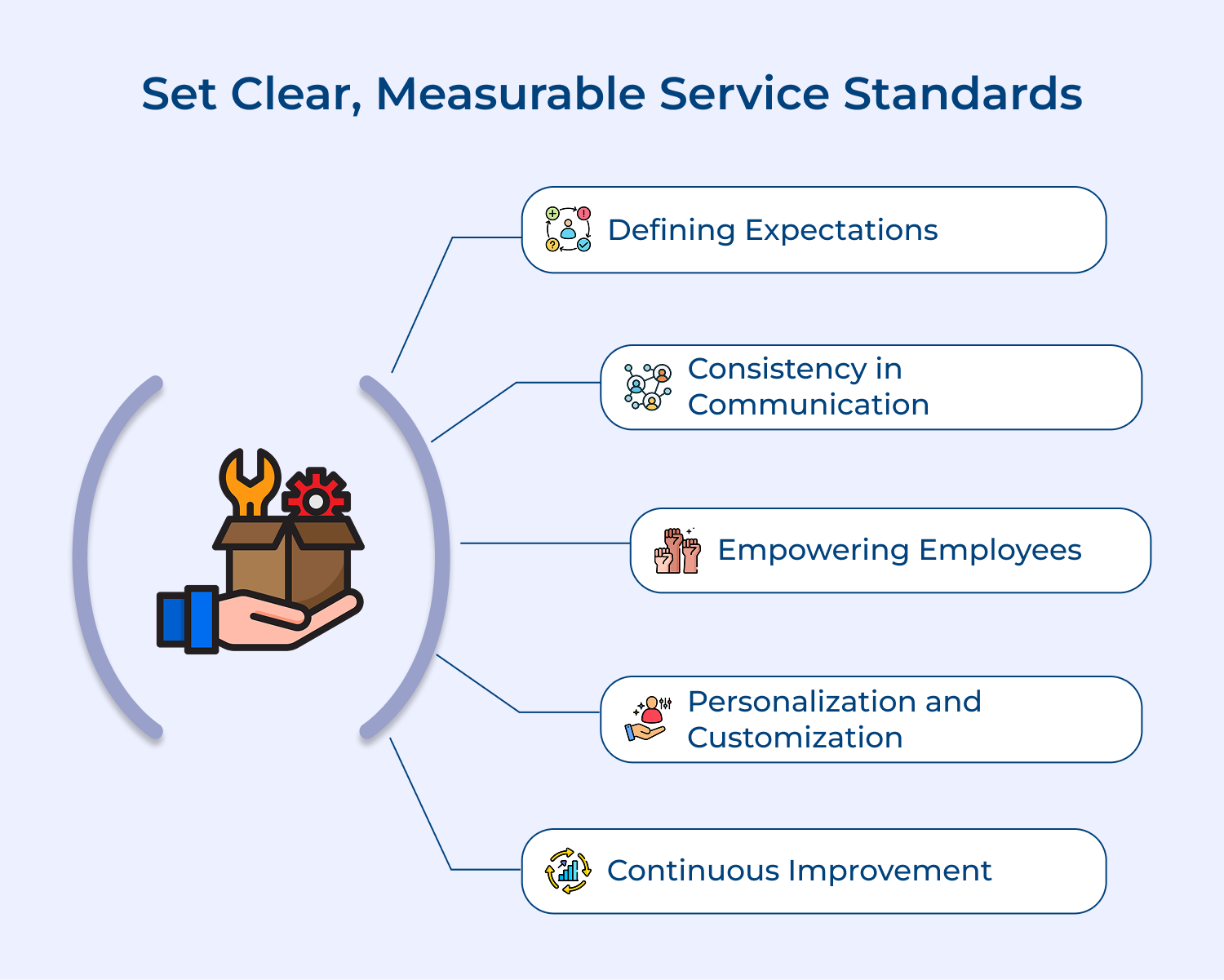
Service standards set the tone for consistency and accountability by clearly outlining what great service looks like. Without them, it’s hard to tell if you’re improving or slipping. These benchmarks give your team a clear target and help everyone stay on the same page.
Four Clear, Measurable Service Standards:
Consistency across all channels matters. If a customer has a great phone experience but gets ignored on email, they’ll remember the worst part. Clear service standards help you deliver the same quality, no matter how customers reach out.
Training turns your team into confident, capable customer service pros who can handle just about anything. Well-trained employees make fewer mistakes, ease customer frustration, and build stronger relationships. Plus, it makes everyone’s day less stressful for customers and staff alike.
Key Team Training Programs Necessary for Customer Service:
Tailor training to your team’s learning styles and create a culture where mistakes are lessons, not failures.
Omnichannel support brings all your customer communication channels together into one smooth, connected experience. It prevents the all-too-common frustration of customers repeating themselves as they move from chat to phone or email to social media. The goal? A seamless journey, no matter how they reach out.
Key Elements of Effective Omnichannel Support:
When a customer switches from chat to phone, their history should go with them. This saves time and shows you value their effort. The right tools can link customer info across channels so agents stay in the loop.
A centralized system that logs every interaction helps agents pick up where others left off. With a full view of past issues, your team can personalize responses and avoid asking the same questions twice.
Some customers want quick answers via chat, others need detailed help over the phone. Matching support options to their needs ensures better service and smarter resource use.
Escalation procedures are your safety net for handling tough customer issues. Without clear steps, tricky situations can drag on, confuse your team and leave customers feeling ignored. A solid process ensures problems are handled by the right people, fast and fairly.
Why Escalation Procedures Matter:
They help teams know when and how to pass things up the chain. Instead of guessing or bouncing customers around, issues go straight to someone who can actually help.
For instance, a small billing error under $50 might be handled by frontline staff. But if a customer reports repeated delivery failures, that should go straight to a supervisor for deeper review.
Pro tips:
Customer feedback gives you a reality check on how your service is really doing. It uncovers blind spots and highlights areas for improvement that internal teams often overlook. But to get the full picture, you need to gather input in different ways.
Why use multiple feedback collection methods?
Different channels reach different customers at different points in their journey. Here are three great methods:
Why analyze patterns beyond individual complaints?
One complaint might be random. Several with the same theme? That’s a deeper issue. Group feedback by touchpoints, look for timing trends and compare experiences across segments. Most importantly, close the loop and let customers know their input led to real changes. It builds trust as well as loyalty.
Self-service tools give customers the power to solve problems on their own—no waiting, no back-and-forth. They ease the load on your support team while offering fast, 24/7 help for common questions and issues.
How to Build Effective Self-Service Resources:
Start by reviewing support tickets to spot recurring themes. Organize questions from simple to complex and write them using the same words your customers use—not internal jargon. This makes it easier for people to find exactly what they need.
Show, don’t just tell. Screenshots, videos and animations walk customers through each step, especially for technical tasks. Numbered instructions help keep things clear and easy to follow.
Your knowledge base isn’t “set it and forget it.” Review search terms with no results and tweak articles that lead to support requests. Keeping content fresh ensures your self-service tools stay helpful as your offerings evolve.
Continuous improvement keeps your customer service evolving instead of staying stuck in old habits. It’s about regularly stepping back, reviewing what’s working (or what’s not) and making small, smart changes that add up over time. This approach helps you stay sharp, avoid complacency and keep customers happy.
Questions to ask before launching a Continuous Improvement Cycle:
Think of it like a workout routine for your service operations, steady effort leads to real progress.
For instance, a retail brand noticed a spike in support calls about returns. By testing clearer instructions, better labels and proactive tracking updates, they chipped away at the issue. Each change cut call volume by 5%, leading to a 30% drop in six months. Small steps, big results.
Let’s delve into the common hurdles that can arise and explore how to overcome them to ensure your customer service plan doesn’t just exist on paper but thrives in practice.
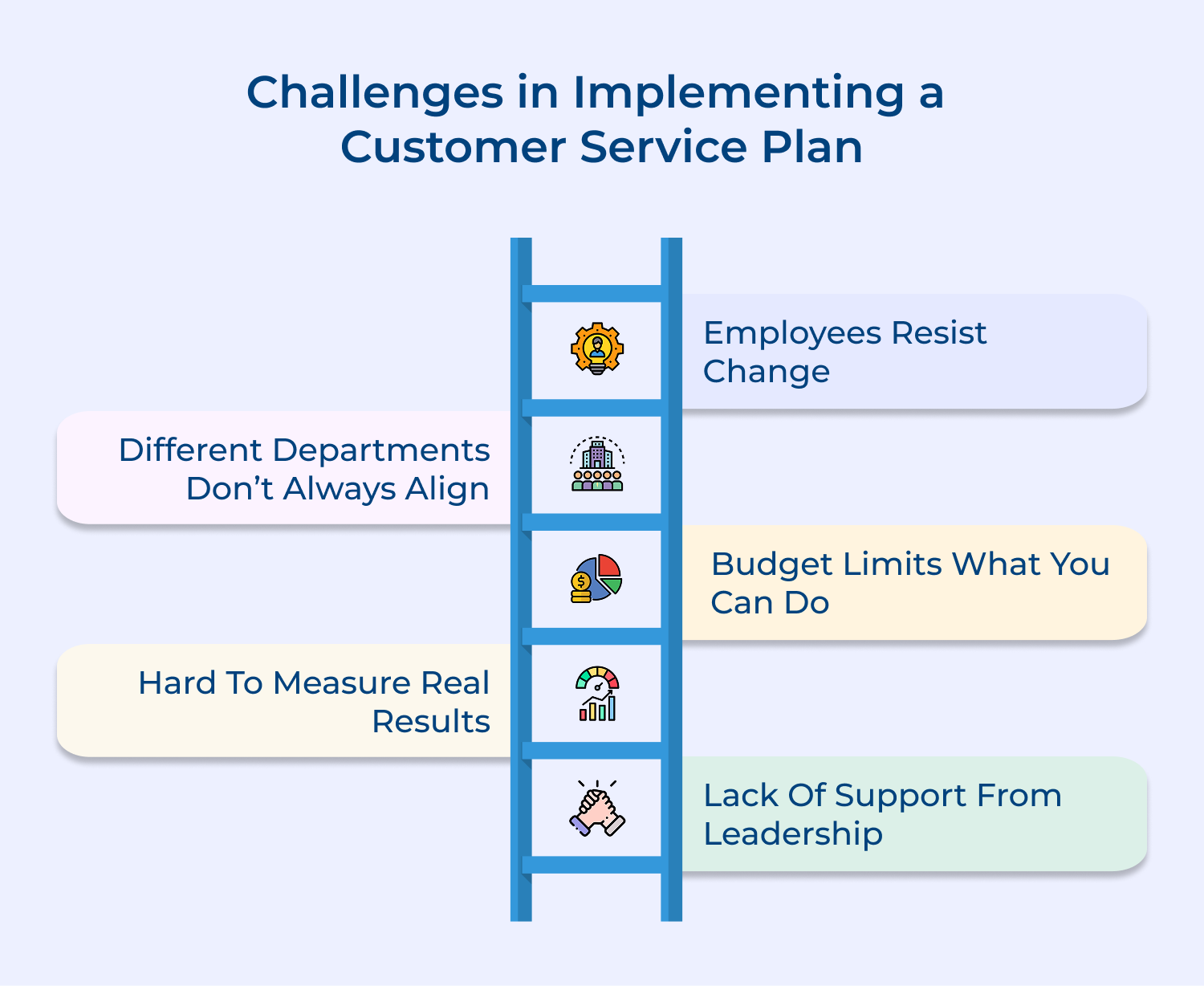
1. Employees Resist Change
People don’t like changing routines they’re used to. Long-time staff might say, “Why fix something that’s not broken?” Sometimes they just go along with new rules without really trying, or even quietly push back.
2. Different Departments Don’t Always Align
Teams like marketing and operations often have their own ways of doing things. This means customers might get mixed experiences depending on who they talk to, instead of a smooth, consistent journey.
3. Budget Limits What You Can Do
Money can be tight. Sometimes companies spend on flashy front-end stuff but ignore important behind-the-scenes fixes. Customers notice when things don’t work well and it frustrates them.
4. Hard to Measure Real Results
It’s easy to track things like call times, but that doesn’t always show how happy customers really are. Without the right measures, it’s tough to know if your changes are helping.
5. Lack of Support from Leadership
If the bosses don’t see customer service as important, it won’t get enough time or money. They might focus on what seems more profitable now, even if it hurts long-term customer relationships.
How to Overcome These Challenges:
As we delve into the realm of tech-driven customer service, here are five groundbreaking technologies that can elevate your customer service plan to new heights.
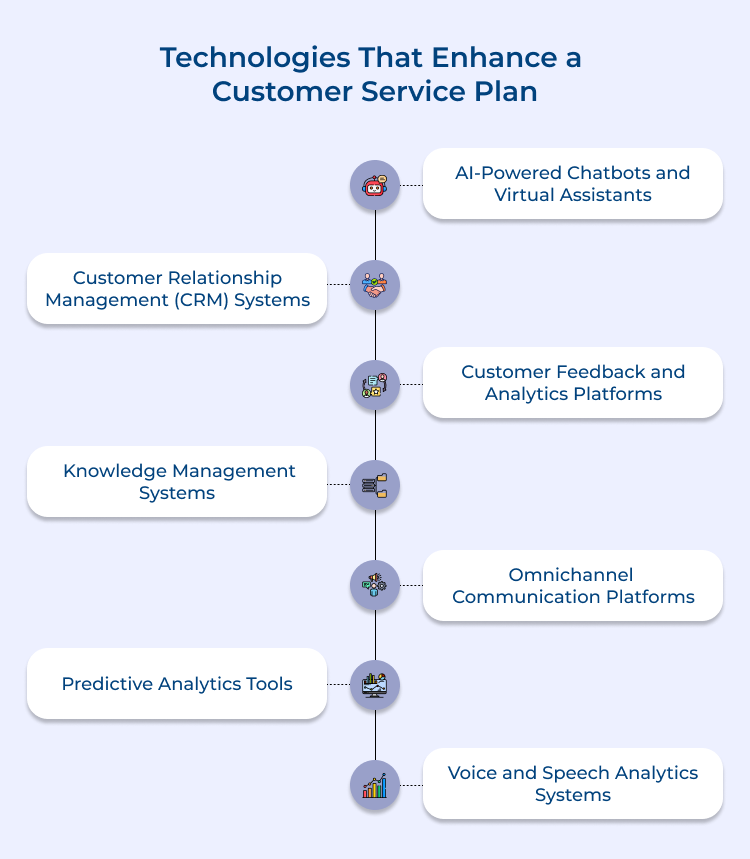
Artificial intelligence chatbots provide instant responses to customer queries 24/7 without human limitations. They handle routine questions, gather initial information and direct complex issues to the right specialist. Over time, these systems learn from interactions to become increasingly effective at understanding customer intent. Here are key features that make them valuable:
CRM platforms centralize customer data, interaction history and purchase information in one accessible location. This comprehensive view helps staff deliver personalized service based on actual customer behavior rather than generic approaches. The right CRM becomes your service team’s command center. These features make CRMs essential:
Feedback platforms systematically collect, organize and analyze customer opinions across all channels. These tools transform scattered comments into structured data that reveals trends and opportunities for improvement. With proper implementation, they create a continuous improvement loop. Look for these capabilities:
Unified communication systems connect all customer contact methods (email, phone, social media, chat) into one cohesive platform. This integration ensures conversations remain consistent regardless of channel switches, eliminating the frustration of repeating information. Modern platforms create truly seamless experiences through:
Predictive analytics uses historical data and AI algorithms to anticipate customer needs before they arise. These tools identify patterns that humans might miss, allowing service teams to take proactive actions rather than just reacting to problems. Predictive systems transform service from reactive to preventative by forecasting likely issues. These features make predictive analytics powerful:
Customer service plans serve as strategic blueprints that define how organizations deliver consistent, high-quality support experiences. These frameworks establish clear protocols, expectations, and measurable outcomes for every customer interaction.
This foundational approach focuses on responding to customer inquiries as they arise through traditional channels like phone and email. Organizations implementing this plan prioritize quick resolution times and maintain standard operating procedures for common issues, ensuring consistent service delivery across all support representatives.
Companies adopting this strategy actively engage customers before problems occur, utilizing data analytics to identify potential issues and reach out with solutions. This plan emphasizes preventive communication, regular check-ins, and educational content that helps customers maximize product value while reducing future support requests.
This comprehensive approach seamlessly connects multiple customer touchpoints including social media, live chat, phone, email, and self-service portals. The plan ensures consistent information sharing across platforms, allowing customers to switch communication methods without losing context or repeating their concerns.
Designed for high-value customers, this plan delivers tailored experiences through dedicated account managers, priority support queues, and customized service offerings. Organizations leverage customer history and preferences to provide individualized attention that strengthens relationships and increases retention rates significantly.
This modern approach prioritizes customer independence by providing robust knowledge bases, interactive tutorials, community forums, and AI-powered chatbots. The plan reduces support ticket volume while empowering customers to find solutions quickly, creating satisfaction through immediate problem resolution and enhanced user autonomy.
Let’s delve into the additional customer service plan best practices that can set your business apart.
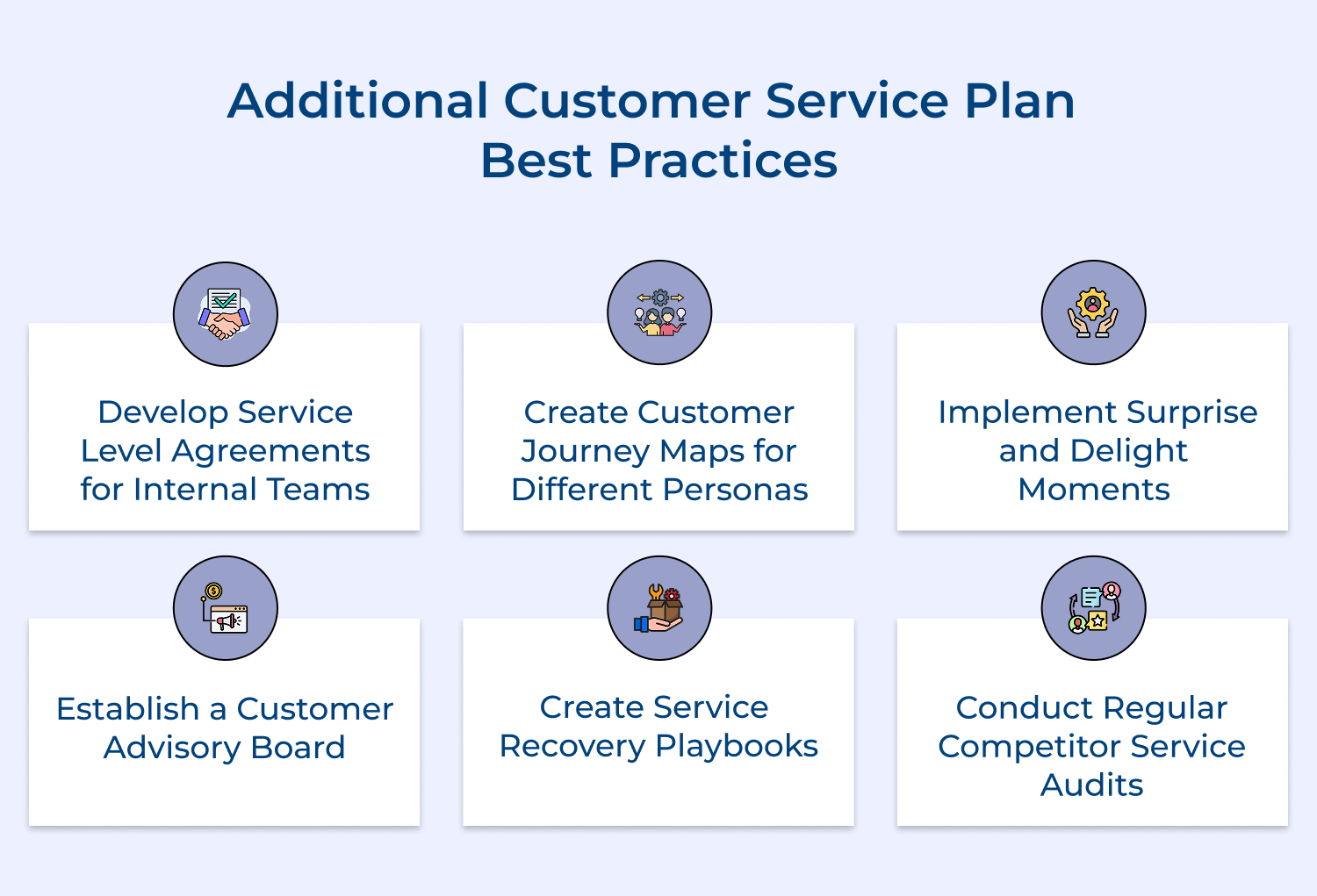
1. Make Service Agreements Between Teams
SLAs aren’t just for outside vendors. Setting clear agreements between your own teams helps everyone know what’s expected. For example, how fast marketing should reply to sales, or how soon product development should fix customer issues.
2. Map Customer Journeys for Different Types of Buyers
Not every customer’s path is the same. Create separate journey maps for different groups. A new buyer’s needs aren’t the same as loyal customers, so your service should reflect that.
3. Surprise Customers with Small Extras
Plan little unexpected treats during the customer journey. It could be a handwritten thank-you note or a free service upgrade. These small moments make customers feel special and turn them into brand fans.
4. Set Up a Customer Advisory Board
Invite some of your best customers to give regular feedback. This group gives you real insights you won’t get from surveys alone and helps you focus on what really matters.
5. Create Clear Plans for Fixing Problems
Make playbooks that show your team exactly what to do when things go wrong. From how to offer compensation to when to escalate issues, having a plan helps turn problems into positive experiences.
6. Check Out What Your Competitors Are Doing
Regularly review how your competitors handle customer service. This helps you see where you stand, spot new trends and find ideas you can use in your own business.
A comprehensive service plan transforms customer interactions from transactional touchpoints into meaningful relationship-building opportunities. By strategically mapping each customer journey stage, businesses create seamless experiences that anticipate needs, resolve issues proactively, while delivering consistent value across all communication channels.
The foundation of exceptional customer experience lies in understanding that every interaction shapes brand perception as well as loyalty. When service plans integrate personalized support, omnichannel accessibility, and continuous feedback loops, they elevate satisfaction levels while driving sustainable business growth through enhanced customer retention.

What role does employee training play in a customer service plan?
Employee training forms the backbone of any effective service plan by equipping staff with the skills to deliver consistent experiences. Beyond product knowledge, comprehensive training develops empathy, problem-solving abilities and communication skills. Regular role-playing scenarios prepare teams for difficult situations while ongoing coaching reinforces positive behaviors and corrects issues before they become habits.
Why is continuous evaluation important in a customer service plan?
Continuous evaluation prevents your service plan from becoming outdated as customer expectations and market conditions evolve. Regular assessment identifies what’s working and what isn’t, allowing for timely adjustments. Measurement creates accountability by comparing performance against benchmarks and helps justify investment in service improvements by demonstrating their impact on business outcomes.
How can feedback be incorporated into a customer service plan?
Feedback integration starts with establishing multiple collection methods that capture both quantitative metrics and qualitative experiences. The gathered insights should directly influence training priorities, process improvements and product development. Creating a systematic approach for analyzing patterns across feedback sources helps identify underlying issues rather than just addressing symptoms. The most effective plans include processes for “closing the loop” by communicating improvements back to customers.
Why is it important to regularly update a customer service plan?
Regular updates ensure your service approach remains aligned with changing customer expectations and business objectives. Technology advancements, competitor innovations and shifts in customer demographics all necessitate periodic revisions. Without regular updates, even the best-designed plans gradually lose effectiveness as they fail to address emerging channels and evolving customer needs. Updates also reinvigorate staff commitment by demonstrating organizational investment in service excellence.
How does a customer service plan impact customer loyalty and retention?
A well-executed service plan directly influences loyalty by creating consistent, positive experiences that strengthen emotional connections with your brand. When customers encounter efficient problem resolution and personalized interactions, they develop confidence that future needs will be handled well. This trust reduces their motivation to explore competitors even when problems occur. The resulting loyalty translates to higher customer lifetime value through repeat purchases, reduced price sensitivity and enthusiastic referrals.
 https://omni24.io/wp-content/uploads/2026/08/Omnichannel-Chatbots.png
1256
2400
Tushar Joshi
https://omni24.io/wp-content/uploads/2023/04/Omni-Logo-1.svg
Tushar Joshi2026-08-13 04:43:302026-08-24 09:02:01How Omnichannel Chatbots Improve Your Customer Experience
https://omni24.io/wp-content/uploads/2026/08/Omnichannel-Chatbots.png
1256
2400
Tushar Joshi
https://omni24.io/wp-content/uploads/2023/04/Omni-Logo-1.svg
Tushar Joshi2026-08-13 04:43:302026-08-24 09:02:01How Omnichannel Chatbots Improve Your Customer Experience https://omni24.io/wp-content/uploads/2026/08/Ecommerce-Chatbots-1.png
1256
2400
Tushar Joshi
https://omni24.io/wp-content/uploads/2023/04/Omni-Logo-1.svg
Tushar Joshi2026-08-12 03:57:552026-08-24 09:03:22Ecommerce Chatbots: What are They and Their Use Cases
https://omni24.io/wp-content/uploads/2026/08/Ecommerce-Chatbots-1.png
1256
2400
Tushar Joshi
https://omni24.io/wp-content/uploads/2023/04/Omni-Logo-1.svg
Tushar Joshi2026-08-12 03:57:552026-08-24 09:03:22Ecommerce Chatbots: What are They and Their Use Cases https://omni24.io/wp-content/uploads/2026/08/Omnichannel-Ecommerce.png
1256
2400
Tushar Joshi
https://omni24.io/wp-content/uploads/2023/04/Omni-Logo-1.svg
Tushar Joshi2026-08-11 04:50:362026-08-24 09:00:45How to Create an Omnichannel Ecommerce Strategy: 7 Best Ways
https://omni24.io/wp-content/uploads/2026/08/Omnichannel-Ecommerce.png
1256
2400
Tushar Joshi
https://omni24.io/wp-content/uploads/2023/04/Omni-Logo-1.svg
Tushar Joshi2026-08-11 04:50:362026-08-24 09:00:45How to Create an Omnichannel Ecommerce Strategy: 7 Best Ways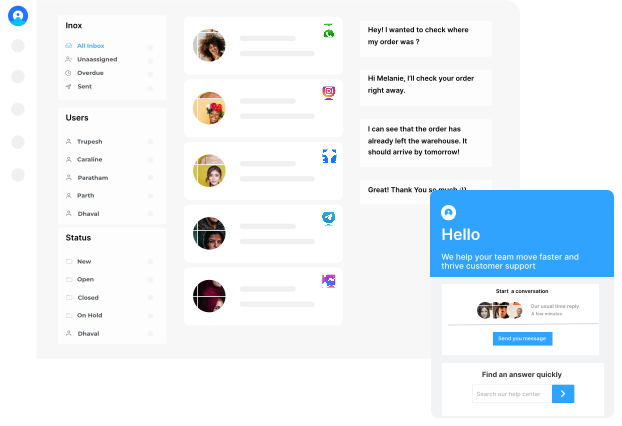
Whether it’s about acquire, engage or support – Omni24 covers all your customer engagement needs in one complete platform.

Copyright ©2026 Veemo All rights reserved.
CA, Los Angeles, Hall Ave, 19011