What is Knowledge Transfer and How to Do It Effectively?
Knowledge transfer is vital for sustaining business growth and continuity. It ensures valuable expertise is shared across teams and reduces dependency on individuals.

Knowledge transfer is vital for sustaining business growth and continuity. It ensures valuable expertise is shared across teams and reduces dependency on individuals.
How can organizations ensure the seamless transfer of knowledge from one generation of employees to the next?
38% of knowledge management teams use AI to recommend or transfer knowledge assets.
As the younger generations enter the workforce, organizations are facing a looming knowledge gap. Effective knowledge transfer processes retain valuable insights and expertise, leading to increased productivity.
To stay competitive, organizations must prioritize knowledge transfer as a strategic imperative. By implementing best practices and technology, they can ensure that critical knowledge is retained within the organization.
Dive into the importance of knowledge transfer and provide practical tips for achieving success.
Knowledge transfer is the process of sharing knowledge and expertise from one person or organization to another. It can involve transferring explicit knowledge, such as facts and information, as well as tacit knowledge, which is more difficult to articulate.
Knowledge transfer plays a critical role in enhancing organizational learning, innovation and efficiency. By effectively moving knowledge across teams or individuals, organizations reduce the risk of knowledge loss, speed up decision-making and foster continuous improvement.
Key features:
A knowledge transfer strategy is a plan or framework designed to facilitate the sharing of knowledge and expertise within an organization. This strategy aims to ensure that valuable information, skills and experience are effectively passed on from one individual or team to another, improving organizational performance.
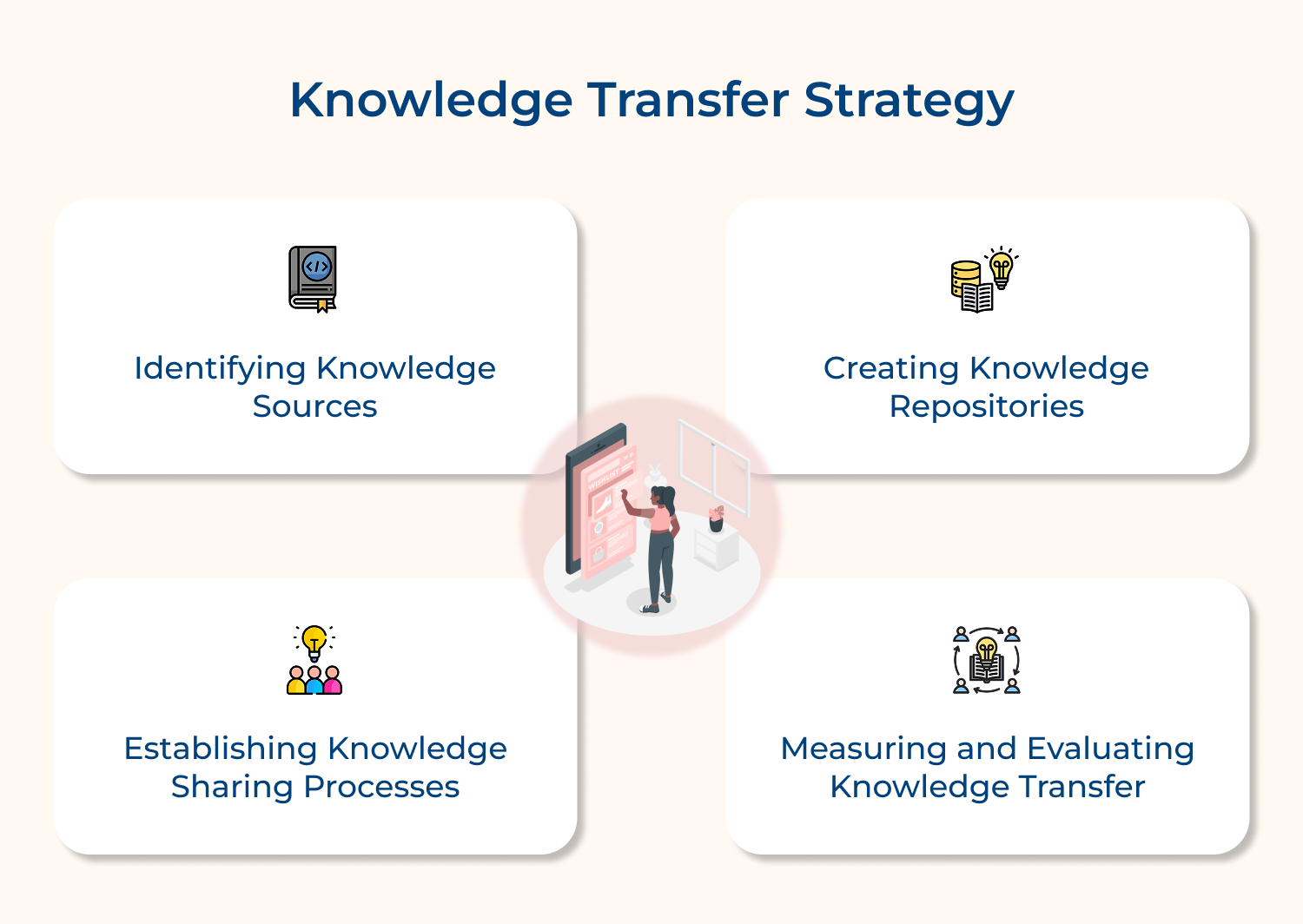
Effective knowledge transfer promotes collaboration, drives innovation and secures business continuity. Organizations that share knowledge well gain a strong competitive advantage.
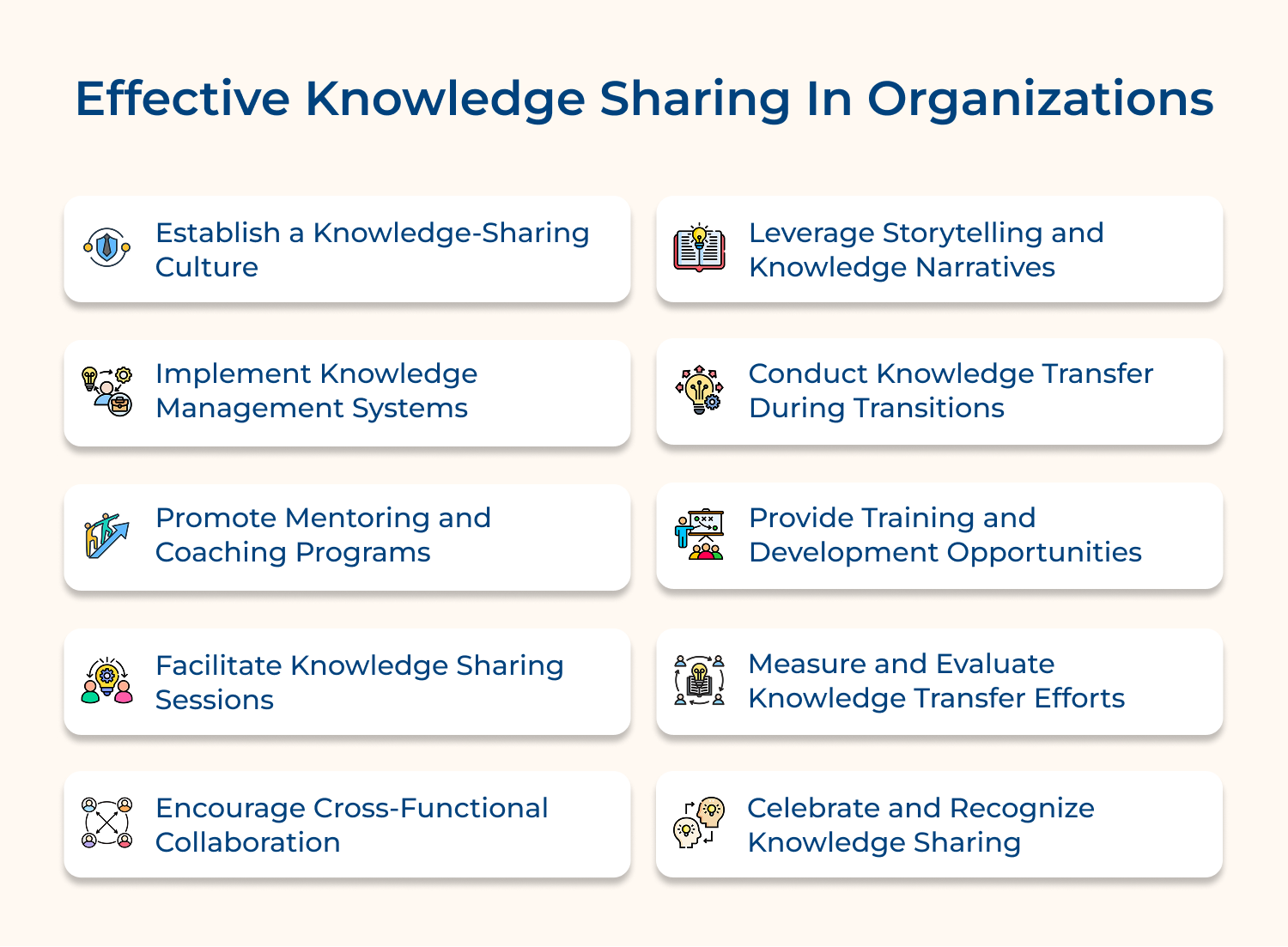
Here’s how to effectively transfer knowledge in an organization, along with tips to improve each point:
Cultivate an organizational culture that values and encourages knowledge sharing. Foster an environment where employees feel comfortable sharing their expertise and seeking knowledge from others.
Best practices to establish knowledge sharing.
Leverage technology to facilitate knowledge capture, storage, and retrieval. Knowledge management systems, such as intranets, wikis, or document management systems, can serve as centralized repositories for organizational knowledge. A knowledge management guide can also be used as a reference for the implementation of the systems.
Here are few tips to follow:
Mentoring and coaching programs provide opportunities for experienced employees to transfer their knowledge to less experienced colleagues. These programs foster personal and professional growth while ensuring knowledge continuity.
Consider the following best practices:
Organize regular knowledge sharing sessions, such as brown bag lunches, workshops, or seminars, where employees can present their expertise, share best practices or discuss lessons learned from projects or challenges.
Here are a few tips to follow:
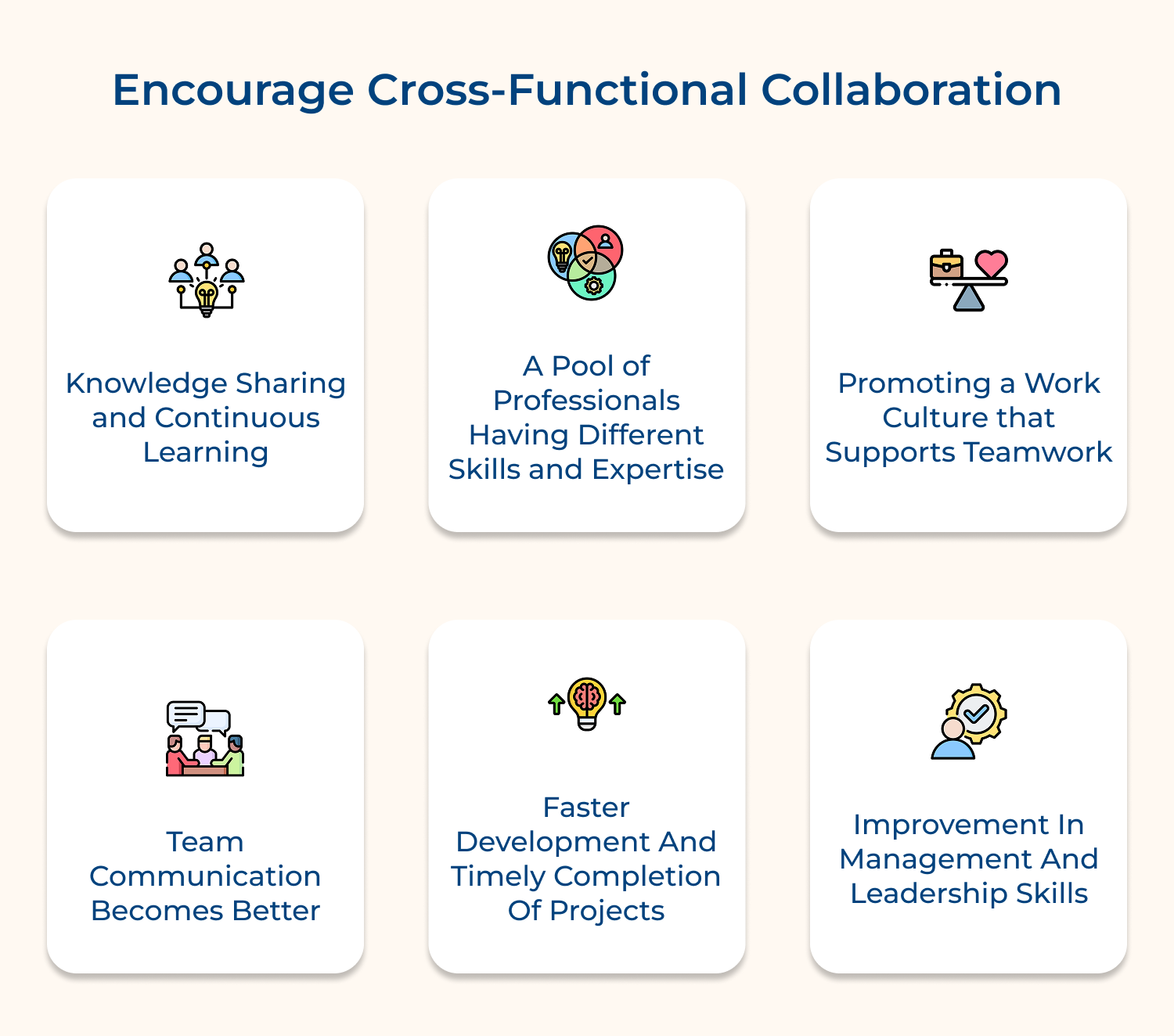
Promote cross-functional collaboration by creating opportunities for employees from different departments or teams to work together on projects or initiatives. This exposure fosters knowledge sharing and promotes a broader understanding of the organization’s operations.
Storytelling and knowledge narratives can be powerful tools for transferring tacit knowledge, which is often difficult to capture in written or explicit form. Encourage employees to share their experiences, lessons learned, and best practices through stories as well as narratives.
Here are a few tips to follow:
Ensure that knowledge is effectively transferred during employee transitions, such as retirements, job changes, or organizational restructuring. Implement processes to capture and document critical knowledge from departing employees.
Consider the following tips during transitions:
Invest in training and development programs to enhance employees’ knowledge plus skills. These programs not only improve individual capabilities but also facilitate knowledge sharing and cross-pollination of ideas.
Here are a few tips to follow:
Establish metrics and key performance indicators (KPIs) to measure the effectiveness of your knowledge transfer initiatives. Regularly evaluate feedback gathered.
Here are a few tips to follow:
Recognize and celebrate employees who actively contribute to knowledge sharing within the organization. This recognition reinforces the desired behavior and motivates others to participate in knowledge transfer initiatives.
Here are a few tips to follow:
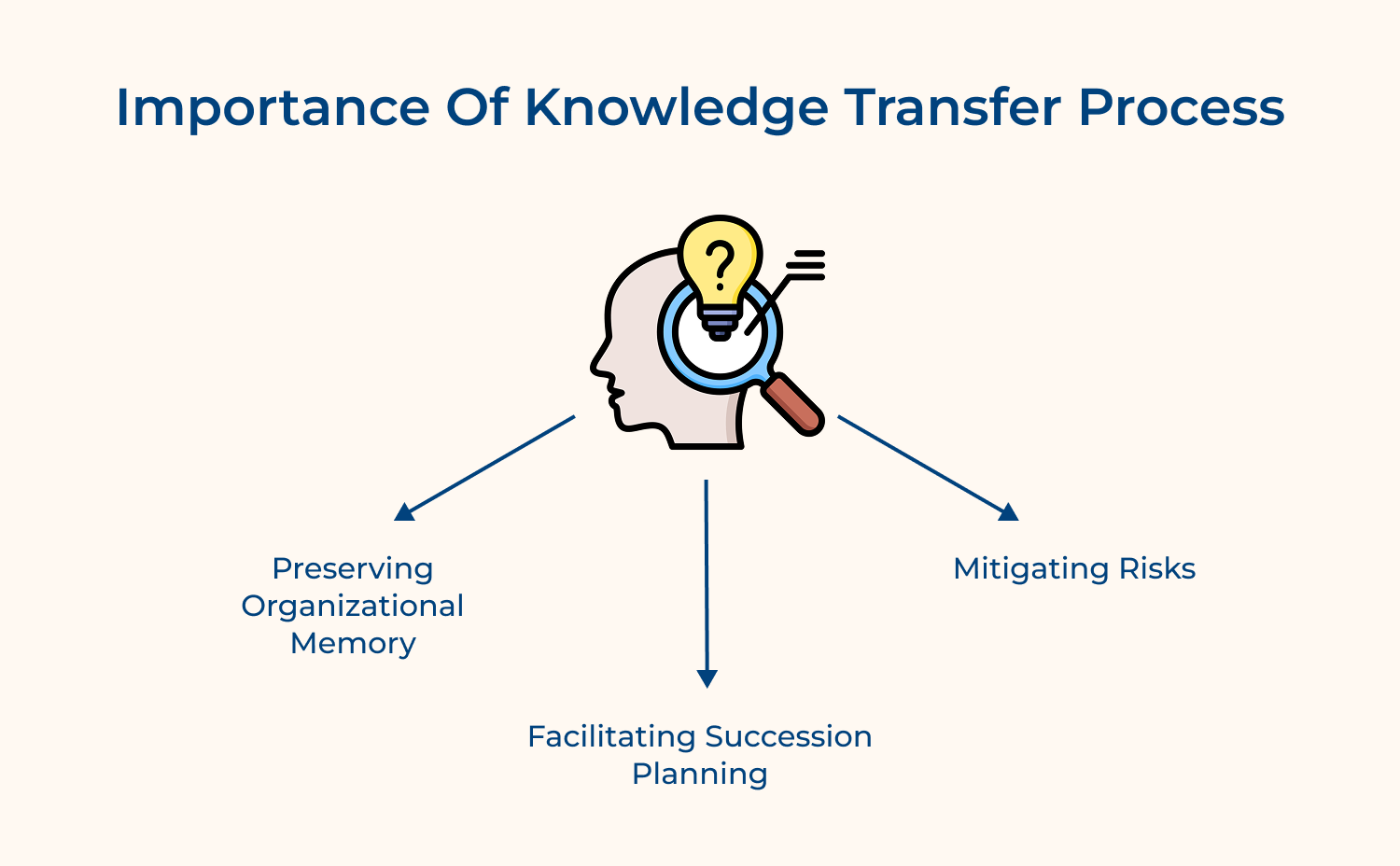
The knowledge transfer process preserves and grows intellectual assets, ensuring business continuity. An effective approach helps organizations maintain a strong competitive edge.
Knowledge transfer has numerous use cases across different industries and organizational functions. Here are some common use cases that highlight the importance and applications of effective knowledge transfer processes:
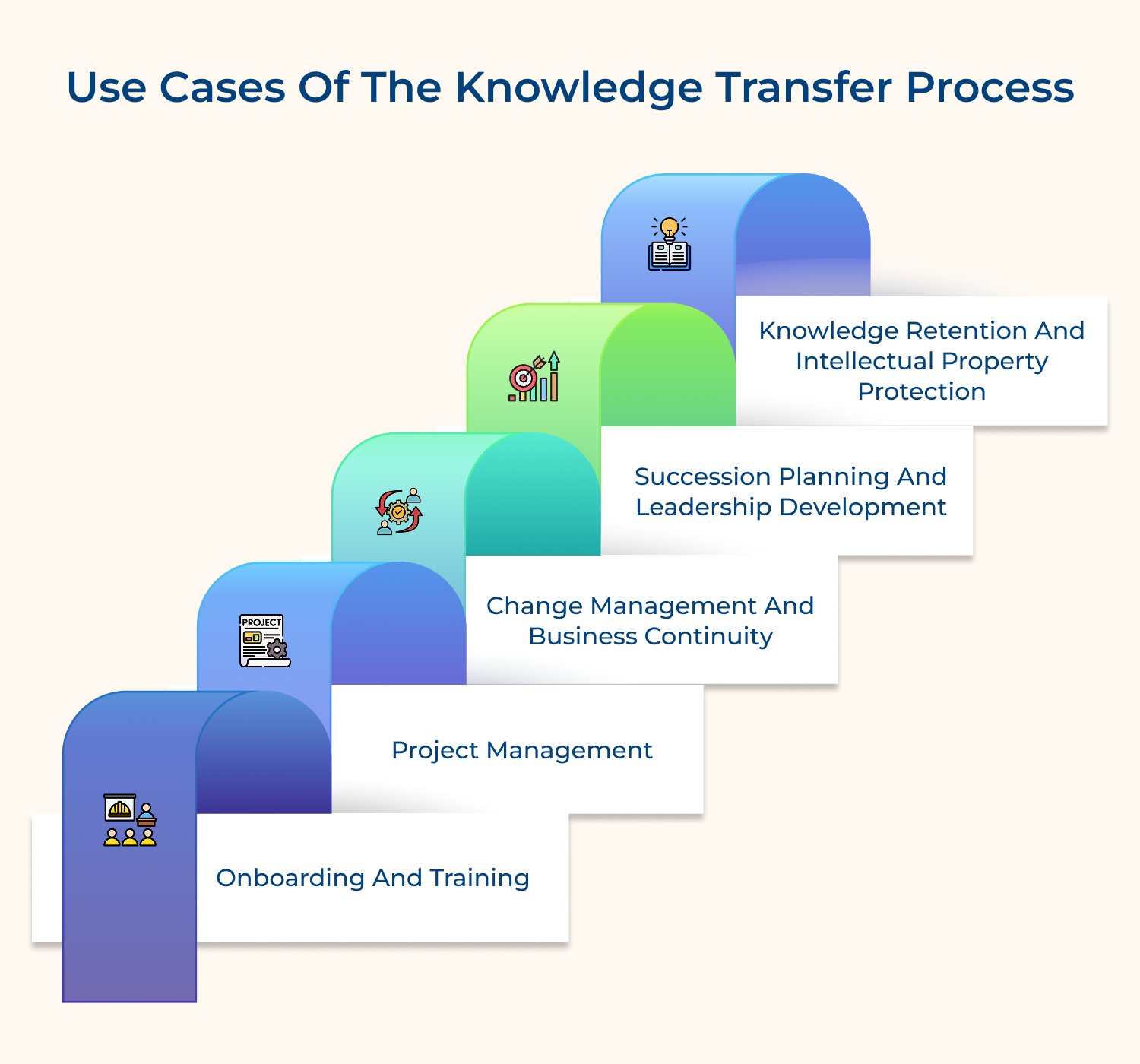
Effective knowledge transfer is crucial for onboarding new employees and providing comprehensive training. By leveraging the expertise of experienced professionals, organizations can develop robust training programs that facilitate the seamless integration of new hires. This not only accelerates the learning curve but also ensures consistency in knowledge and best practices across the organization.
Knowledge transfer plays a vital role in project management, particularly in complex or long-term projects. As team members transition in and out of projects, it is essential to transfer knowledge related to project requirements, decisions, challenges, and lessons learned. This knowledge can be documented in project repositories, facilitating smoother handovers and preventing knowledge gaps that could lead to delays.
During times of organizational change, such as mergers, acquisitions, or restructuring, effective knowledge transfer is essential for ensuring business continuity. By capturing and transferring critical knowledge related to processes, systems, plus best practices, organizations can minimize disruptions, maintain operational efficiency, to facilitate a smoother transition during periods of change.
Knowledge transfer is a key component of succession planning and leadership development initiatives. By facilitating the transfer of knowledge from experienced leaders and subject matter experts to potential successors, organizations can cultivate a pipeline of skilled leaders prepared to take on critical roles.
Organizations invest significant resources in developing proprietary knowledge, intellectual property and trade secrets. Effective knowledge transfer processes help capture and safeguard the valuable intellectual capital, preventing knowledge loss due to employee turnover or other factors. The protection ensures that organizations can maintain their competitive advantage and leverage their unique knowledge assets.
Knowledge transfer within an organization can be hindered by various barriers, which can impede the effective flow of knowledge. Overcoming these barriers is crucial to building a continuous learning culture and organizational success.
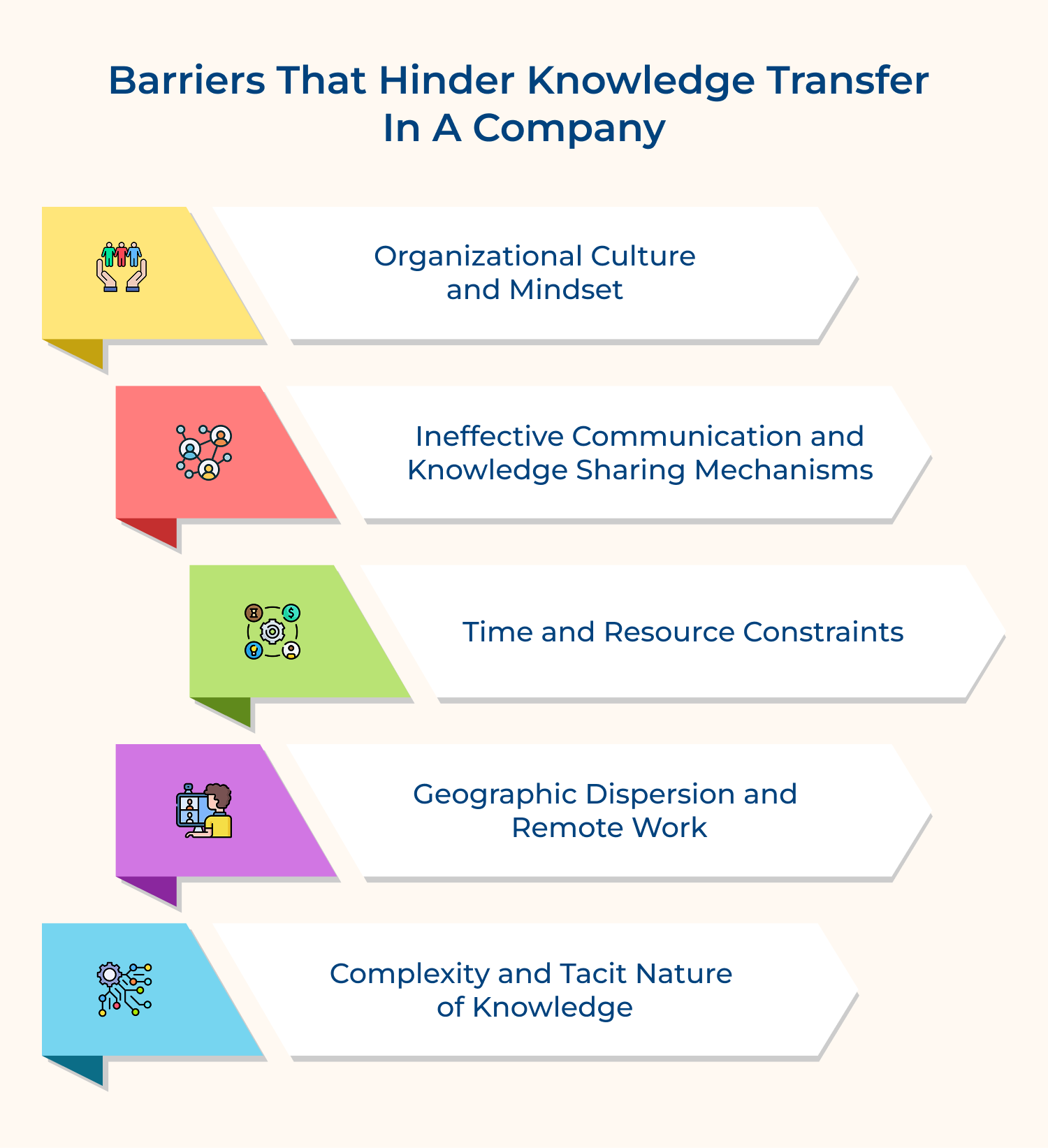
One of the most significant barriers to knowledge transfer is an organizational culture that does not value or prioritize knowledge sharing. If employees perceive knowledge as power and are reluctant to share their expertise, it can create silos. A risk-averse mindset or resistance to change can make individuals hesitant to embrace new knowledge or ideas.
The absence of effective communication channels and knowledge-sharing mechanisms can significantly hinder knowledge transfer. If there are no established platforms, systems, or processes for capturing, storing and disseminating knowledge, it becomes challenging for employees to access the collective knowledge of the organization.
Knowledge transfer initiatives often require dedicated time and resources. If employees are overburdened with their day-to-day responsibilities or lack the necessary support, they may struggle to prioritize knowledge-sharing activities. Limited resources for training, mentoring programs, or knowledge management systems can also impede knowledge transfer efforts.
In organizations with geographically dispersed teams or a significant remote workforce, knowledge transfer can be more challenging. Physical distance with limited face-to-face interactions can hinder the natural flow of knowledge sharing, making it harder to build trust and establish effective communication channels.
Some types of knowledge, particularly tacit knowledge gained through experience in addition to practical application, can be challenging to articulate and transfer. The complexity, as well as the context-specific nature of certain knowledge domains can make it difficult to capture and share effectively.
Embracing knowledge transfer within an organization is crucial for sustainable growth and success. By sharing expertise, skills, plus experiences, employees can learn from one another, boosting innovation, productivity, and collaboration. It creates a culture of continuous learning and improvement, leading to a more efficient plus competitive business environment.
Investing in knowledge transfer programs and encouraging a knowledge-sharing culture can lead to long-term benefits for the organization. Ultimately, prioritizing knowledge transfer is a catalyst for organizational growth and should be a central focus for any forward-thinking company.

What is the role of technology in knowledge sharing management?
Knowledge sharing management plays a crucial role in the success of any organization, and technology plays a key role in facilitating this process. Through the use of technology, organizations can efficiently capture, organize, and share knowledge among employees, leading to improved decision-making, problem-solving increasing overall productivity.
What is a KT session?
A knowledge transfer (KT) session is a structured meeting or workshop where individuals share information, insights, and best practices with each other. These sessions are designed to facilitate the exchange of knowledge plus expertise within an organization, helping team members learn from each other and apply new information to their work.
Why does knowledge transfer matter for your business problem solving?
Knowledge transfer is essential for business problem-solving because it allows organizations to leverage the collective knowledge and expertise of their employees. By transferring knowledge from experienced employees to newer team members, organizations can quickly disseminate important information and best practices, leading to more effective problem-solving.
What’s the goal of knowledge transfer?
The goal of knowledge transfer is to ensure that critical knowledge plus expertise are shared and retained within an organization. This can help prevent the loss of valuable information due to employee turnover or retirement and ensure that knowledge is effectively disseminated throughout the organization.
How does knowledge transfer work?
Knowledge transfer works by creating opportunities for individuals to share their knowledge, experience and expertise with others. This can be done through formal training programs, mentoring relationships, collaborative projects, or informal discussions.
 https://omni24.io/wp-content/uploads/2026/09/Social-commerce-scaled.png
1340
2560
Webvision Solution
https://omni24.io/wp-content/uploads/2023/04/Omni-Logo-1.svg
Webvision Solution2026-10-23 12:18:272026-10-23 12:18:27What is Social Commerce and Why Does It Matter?
https://omni24.io/wp-content/uploads/2026/09/Social-commerce-scaled.png
1340
2560
Webvision Solution
https://omni24.io/wp-content/uploads/2023/04/Omni-Logo-1.svg
Webvision Solution2026-10-23 12:18:272026-10-23 12:18:27What is Social Commerce and Why Does It Matter? https://omni24.io/wp-content/uploads/2026/08/AI-Customer-Service-Agents.png
1256
2400
Webvision Solution
https://omni24.io/wp-content/uploads/2023/04/Omni-Logo-1.svg
Webvision Solution2026-09-21 04:48:512026-09-21 04:48:51How to Build an AI Customer Service Agents: 8 Key Steps
https://omni24.io/wp-content/uploads/2026/08/AI-Customer-Service-Agents.png
1256
2400
Webvision Solution
https://omni24.io/wp-content/uploads/2023/04/Omni-Logo-1.svg
Webvision Solution2026-09-21 04:48:512026-09-21 04:48:51How to Build an AI Customer Service Agents: 8 Key Steps https://omni24.io/wp-content/uploads/2026/08/Omnichannel-Conversational-AI.png
1256
2400
Tushar Joshi
https://omni24.io/wp-content/uploads/2023/04/Omni-Logo-1.svg
Tushar Joshi2026-09-16 03:51:072026-09-16 03:51:07How to Build Omnichannel Conversational AI Strategy
https://omni24.io/wp-content/uploads/2026/08/Omnichannel-Conversational-AI.png
1256
2400
Tushar Joshi
https://omni24.io/wp-content/uploads/2023/04/Omni-Logo-1.svg
Tushar Joshi2026-09-16 03:51:072026-09-16 03:51:07How to Build Omnichannel Conversational AI Strategy
Whether it’s about acquire, engage or support – Omni24 covers all your customer engagement needs in one complete platform.

Copyright ©2026 Veemo All rights reserved.
CA, Los Angeles, Hall Ave, 19011