Customer Service Transformation: What is it & Why it is Important?
Customer experience drives growth through customer service transformation technologies and processes for effective operations.

Customer experience drives growth through customer service transformation technologies and processes for effective operations.
Customer service has evolved significantly over the years, driven by advancements in technology and changes in consumer behavior.
88% of customers say good customer service makes them more likely to purchase again.
Businesses are now realizing the importance of providing personalized customer experiences. It is no heck if we need longer enough to simply resolve customer issues – businesses need to go above and beyond to surpass customer expectations.
Investing in customer service transformation is not just a trend, but a necessity for businesses looking to thrive. Embracing new technologies, reevaluating processes, and prioritizing customer satisfaction can help businesses to create a competitive edge and build stronger client relationships.
Let us explore the key steps to successfully transforming your customer service approach.
Digital transformation is defined as the process of integrating digital technologies into all aspects of a business, fundamentally changing how it operates and delivers value to its customers. It is about implementing new technologies and changing the way a business fully operates to leverage the possibilities that digital technologies offer.
The key objectives of digital transformation include:
Customer service transformation is defined as the process of modernizing the way a business interacts with its customers. It involves implementing new technologies, strategies, and processes to enhance the overall customer experience and build stronger relationships.
The goals of customer service transformation include:
As per Salesforce research, “75% of customers say they have recommended a company based on their excellent customer service”. Digital customer service transformation is vital for businesses as it fuels growth with advanced strategies and meets client expectations.
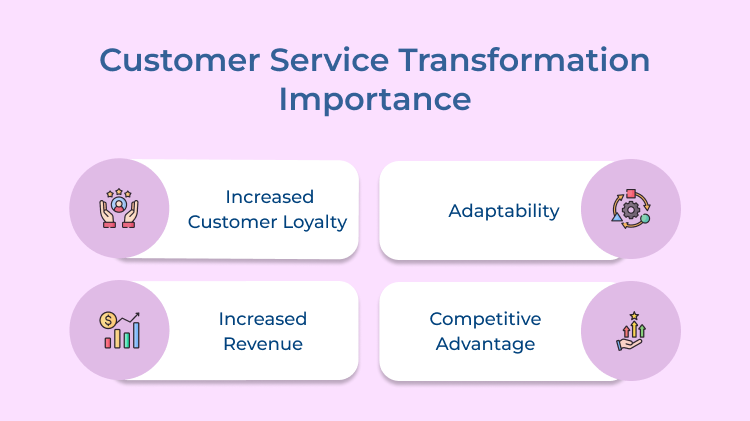
Here are some reasons why customer service transformation is important:
Delivering exceptional customer service constantly evolves and transforms their support strategies to stay ahead of the game. Let us explore ways to bring customer service transformation to your business.
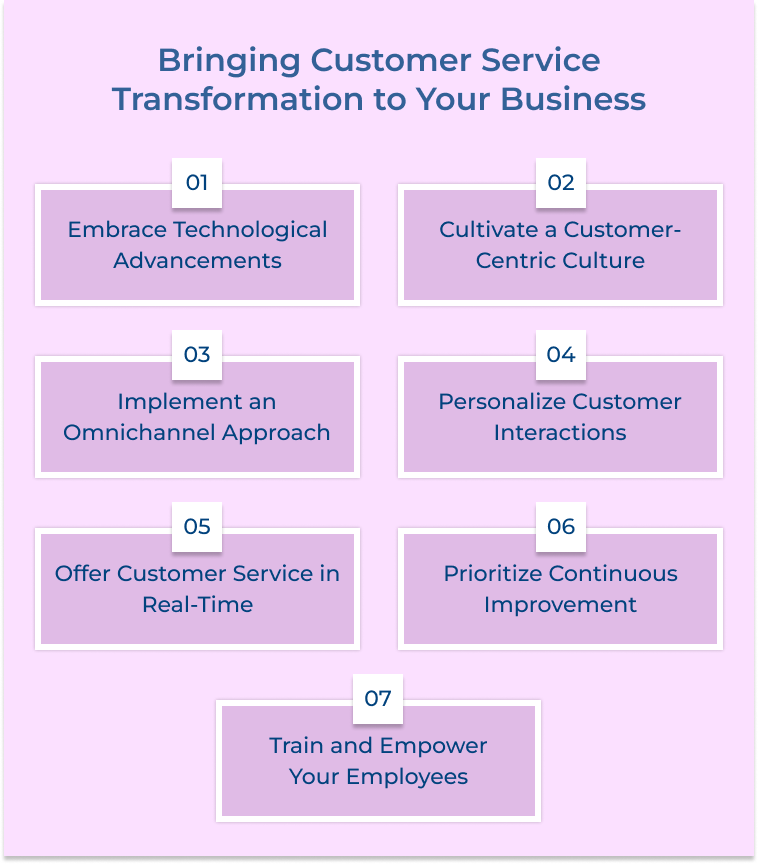
One of the key ways to transform your customer service is to embrace technological advancements.
Implementing customer relationship management (CRM) software can help you manage customer interactions, track customer data, and provide personalized service.
72% of customers stated that they have used self-service portals and 55% have used chatbots as their preferred channels. Leveraging chatbots can help in automating responses to customer inquiries and providing 24/7 support.
Key benefits:
Creating a customer-centric culture within your organization is crucial for delivering exceptional customer service. It involves putting the customer at the center of everything you do, from product development to marketing to service delivery.
Encourage all employees to prioritize the needs and preferences of customers, and empower them to make decisions that benefit the customer.
Key benefits:
Customers expect seamless and consistent service across all channels. More than 73% of consumers shop using different communication channels (online, in-store, mobile).
Implementing an omnichannel approach to customer service allows customers to interact with your business through multiple channels. It ensures that customers can reach out to you in their preferred way and receive a consistent experience across all channels.
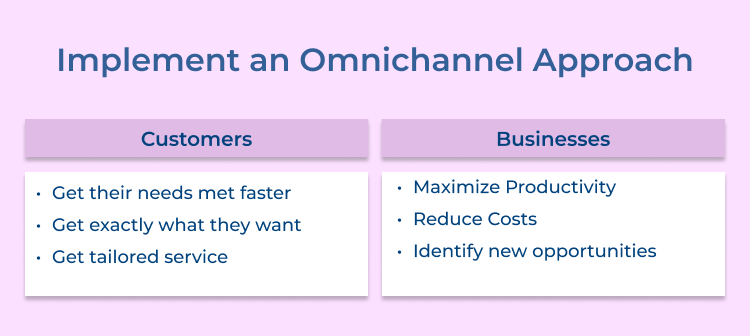
Key benefits:
Personalization is key to providing exceptional customer service. Use customer data and insights to tailor your interactions with customers and provide them with relevant and personalized recommendations.
Make use of personalized marketing campaigns, targeted offers, and customized communications to show customers that you understand their needs and preferences.
Key benefits:
Customers expect immediate responses to their inquiries and issues. As 65% of customers switch brands due to a single bad experience, the threat of customer churn is palpable.
Offering real-time customer service through live chat, chatbots, or social media messaging allows you to address customer concerns promptly and provide timely solutions. It can help build trust and loyalty with customers and enhance their overall experience with your business.
Key benefits:
Customer service transformation is an ongoing process that requires continuous improvement and adaptation.
Regularly solicit feedback from customers through surveys, reviews, and feedback forms to understand their needs and preferences. Use the feedback to identify areas for improvement and make necessary changes to enhance the customer experience.
Key benefits:
Your employees are the frontline of your customer service efforts, so it’s essential to invest in their training and development.
Provide comprehensive training on customer service best practices, communication skills, and problem-solving techniques to ensure that employees are equipped to handle customer inquiries effectively.
Empower employees to make decisions that benefit the customer and give them the autonomy to resolve issues on their own.
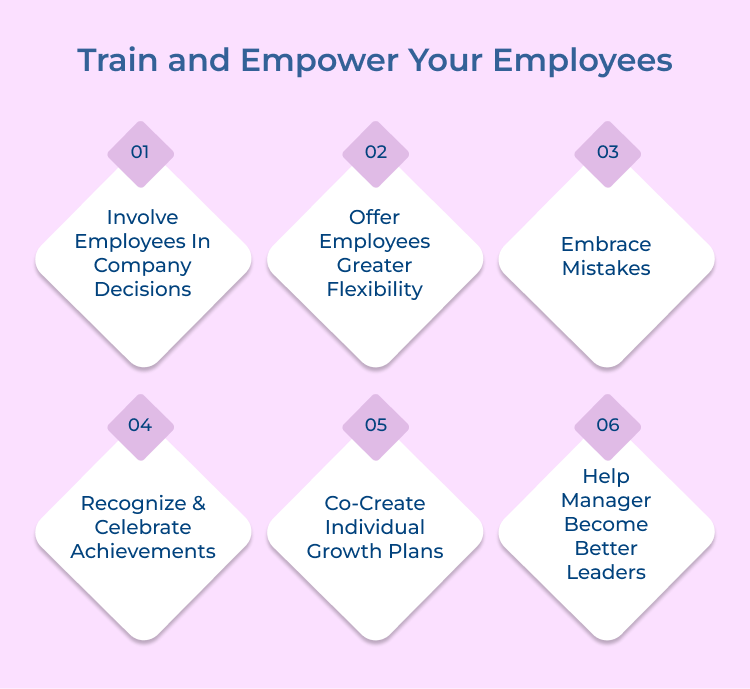
Key Benefits:
Digital transformation is crucial for businesses and developing a successful digital transformation strategy can be a challenging task, but with the right approach, it can lead to increased efficiency, improved customer experiences, and overall business growth.
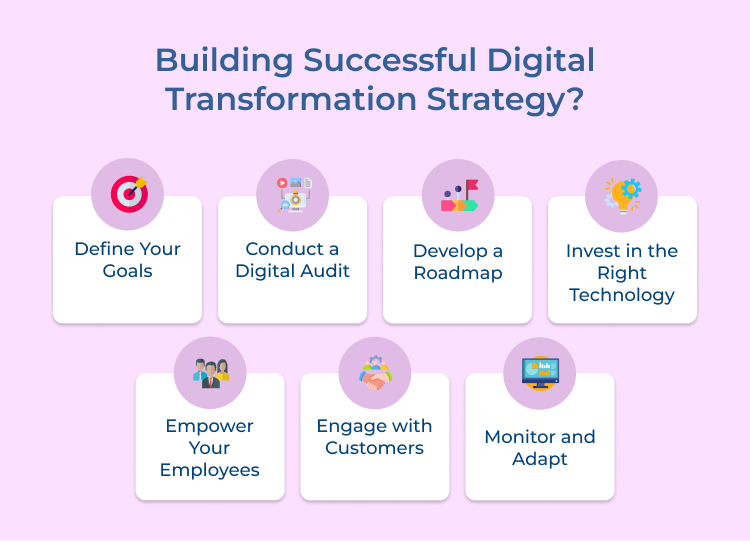
Here are some steps to help you build a successful digital transformation strategy:
Before embarking on a digital transformation journey, it is important to define clear goals and objectives. What are you hoping to achieve through digital transformation? Whether it’s improving internal processes, enhancing customer experiences, or increasing revenue, having a clear vision of your goals will guide your strategy.
Evaluate your current digital capabilities and identify areas that need improvement. It includes analyzing your technology infrastructure, assessing your digital skills and talent, and understanding your customer needs and preferences. A thorough digital audit will provide valuable insights into where your business stands and what areas need focus during the transformation process.
Based on your goals and digital audit findings, develop a detailed roadmap outlining the steps needed to achieve your digital transformation objectives. The roadmap should include timelines, budget estimates, and key milestones to track progress along the way. Having a clear plan in place will help ensure that your digital transformation efforts stay on track and align with your business goals.
Technology is a key enabler of digital transformation, so it’s important to invest in the right tools and solutions that align with your business needs. Whether it’s implementing a new CRM system, leveraging data analytics tools, or adopting cloud-based technologies, choosing the right technology stack is essential for a successful digital transformation.
Digital transformation is not just about implementing new technologies, but also empowering your employees to adapt to change and embrace new ways of working. Provide training and professional development opportunities to help your team build digital skills and competencies that are needed for success in the digital age.
Customer engagement is the key for successful digital transformation strategy. Listen to your clients, gather feedback, and use data analytics to understand their preferences and behavior. By focusing on enhancing the customer experience, you can drive loyalty and build stronger relationships with your target audience.
Digital transformation is an ongoing process that requires continuous monitoring and adaptation. Regularly track key performance indicators, analyze data insights, and adjust your strategy as needed to ensure that your digital transformation efforts are delivering the desired results. Stay agile and responsive to changes in the market and technology landscape to stay ahead of the competition.
Customer service has come a long way in recent years with the advancement of technology and the changing expectations of consumers. The new capabilities of customer service are helping businesses provide better support and build stronger relationships with their customers.
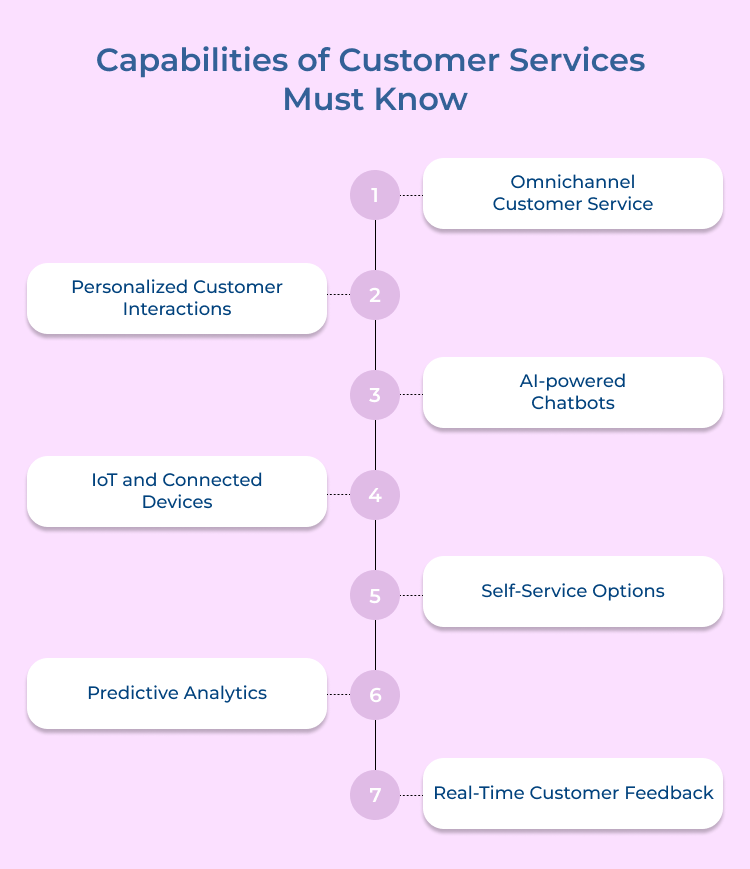
Here are some of the key new capabilities of customer services:
Customers today expect to be able to reach a company through multiple channels, including phone, email, chat, social media, and more. Omnichannel customer service ensures that a customer can start a conversation on one channel and continue it seamlessly on another without having to repeat themselves.
With the help of data analytics and customer relationship management systems, businesses can now personalize interactions with customers. By understanding a customer’s preferences, purchase history, and behavior, companies can tailor their support to meet individual needs and build stronger relationships.
AI-powered chatbots are revolutionizing customer service by providing instant responses to customer queries. These chatbots can handle simple questions, escalate more complex issues to a human agent, and even provide personalized recommendations based on customer data.
The Internet of Things (IoT) is enabling businesses to provide proactive customer service by collecting data from connected devices. For example, a smart home device can alert a company to an issue before the customer even realizes there is a problem, allowing for quicker resolution.
Customers today prefer to find answers to their questions and solve problems on their own. Self-service options such as knowledge bases, FAQs, and tutorials empower customers to help themselves, reducing the need for human intervention and improving efficiency.
Predictive analytics uses data and algorithms to forecast future trends and behaviors. In customer service, predictive analytics can help businesses anticipate customer needs, identify potential issues before they arise, and personalize interactions based on predictive insights.
Real-time customer feedback tools allow businesses to gather instant feedback from customers, whether through surveys, live chat interactions, or social media. The feedback can help companies understand customer sentiment, identify areas for improvement, and make quick changes to enhance the customer experience.
Customer service transformation is indeed a boon for business growth. By focusing on improving the customer experience (CX), businesses can create loyal customers who will not only continue to support the business but also spread positive word-of-mouth.
Implementing latest technologies/strategies to enhance customer service lead to increased customer satisfaction, retention, and revenue growth. It is crucial for businesses to evolve their customer service approach to meet the ever-changing needs and expectations of consumers. Investing in customer service transformation is a wise decision that can bring long-term success and sustainability to any business.

How to succeed with digital transformation in customer services?
A successful digital transformation in customer services involves leveraging technology to enhance customer interactions and streamline processes. To succeed, businesses should prioritize customer-centricity, invest in the right technology platforms, and provide training for employees to effectively use these tools. Regularly collecting and analyzing customer data can help businesses make informed decisions to improve the overall customer experience.
What is an example of customer service transformation?
One example of customer service transformation is the implementation of chatbots on a company’s website or social media platforms. Chatbots use artificial intelligence to provide instant responses to customer inquiries, improving response times and overall customer satisfaction. By utilizing chatbots, businesses can provide 24/7 support to customers, saving time and resources while enhancing the customer experience.
How does customer service transformation work?
Customer service transformation involves incorporating digital technologies and strategies to enhance customer interactions and service delivery. It can include implementing self-service options, utilizing data analytics to personalize customer experiences, and integrating omni channel communication channels for seamless interactions. By embracing digital transformation, businesses can improve operational efficiency, increase customer satisfaction, and drive business growth.
How does the transformation of customer service affect a business?
The transformation of customer service can have a significant impact on a business in various ways. By improving customer interactions and streamlining processes, businesses can increase customer loyalty, retention, and satisfaction. Digital transformation can help businesses stay ahead of competitors, adapt to changing customer preferences, and drive revenue growth. Overall, the transformation of customer service is essential for businesses looking to thrive in today’s digital economy.
 https://omni24.io/wp-content/uploads/2026/08/Omnichannel-Chatbots.png
1256
2400
Tushar Joshi
https://omni24.io/wp-content/uploads/2023/04/Omni-Logo-1.svg
Tushar Joshi2026-08-13 04:43:302026-08-13 04:43:30How Omnichannel Chatbots Improve Your Customer Experience
https://omni24.io/wp-content/uploads/2026/08/Omnichannel-Chatbots.png
1256
2400
Tushar Joshi
https://omni24.io/wp-content/uploads/2023/04/Omni-Logo-1.svg
Tushar Joshi2026-08-13 04:43:302026-08-13 04:43:30How Omnichannel Chatbots Improve Your Customer Experience https://omni24.io/wp-content/uploads/2026/08/Ecommerce-Chatbots-1.png
1256
2400
Tushar Joshi
https://omni24.io/wp-content/uploads/2023/04/Omni-Logo-1.svg
Tushar Joshi2026-08-12 03:57:552026-08-13 04:37:30Ecommerce Chatbots: What are They and Their Use Cases
https://omni24.io/wp-content/uploads/2026/08/Ecommerce-Chatbots-1.png
1256
2400
Tushar Joshi
https://omni24.io/wp-content/uploads/2023/04/Omni-Logo-1.svg
Tushar Joshi2026-08-12 03:57:552026-08-13 04:37:30Ecommerce Chatbots: What are They and Their Use Cases https://omni24.io/wp-content/uploads/2026/08/Omnichannel-Ecommerce.png
1256
2400
Tushar Joshi
https://omni24.io/wp-content/uploads/2023/04/Omni-Logo-1.svg
Tushar Joshi2026-08-11 04:50:362026-08-11 04:50:36How to Create an Omnichannel Ecommerce Strategy: 7 Best Ways
https://omni24.io/wp-content/uploads/2026/08/Omnichannel-Ecommerce.png
1256
2400
Tushar Joshi
https://omni24.io/wp-content/uploads/2023/04/Omni-Logo-1.svg
Tushar Joshi2026-08-11 04:50:362026-08-11 04:50:36How to Create an Omnichannel Ecommerce Strategy: 7 Best Ways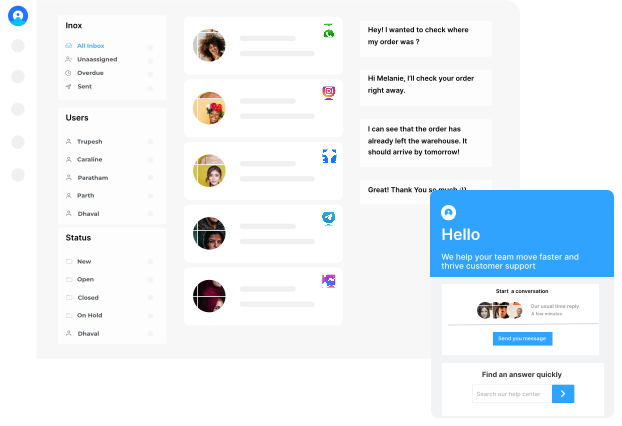
Whether it’s about acquire, engage or support – Omni24 covers all your customer engagement needs in one complete platform.

Copyright ©2026 Veemo All rights reserved.
CA, Los Angeles, Hall Ave, 19011