Customer Care vs Customer Service: What is the Difference?
Customer service vs customer care: Businesses use these words alternatively and incorporate customer care and service practices into their strategies to improve client's experiences.

Customer service vs customer care: Businesses use these words alternatively and incorporate customer care and service practices into their strategies to improve client's experiences.
Customer service and customer care are two sought-after practices that businesses incorporate to deliver excellent experiences. While these terms are often used interchangeably, they play different roles in the overall customer experience.
Customer care vs customer service: Both have distinct meanings and include different strategies. Understanding the similarities & differences between can help businesses to improve the efficiency and quality of their client interactions.
Providing excellent customer service is essential for gaining and retaining clients. Customer care goes beyond just addressing customer queries as well as complaints.
Let us explore how each concept contributes to the overall success of a business.
Customer care refers to providing support to customers before, during and after they make a purchase. It not only resolves customer issues but also builds relationships to ensure customer satisfaction and loyalty.
Key components of customer care include:
Customer service is defined as the assistance provided to customers before, during and after they purchase a product or service. It involves addressing customer inquiries, resolving issues and ensuring that customers have a positive experience with the business.
Key components of customer service include:
Customer support refers to the assistance or guidance provided to customers before, during, and after they purchase a product/service. It is essential for building strong relationships with customers and addressing their needs promptly.
Key components of customer support include:
Businesses must prioritize the satisfaction and retention of their customers. Customer care and customer service are two key departments that play a crucial role in achieving the goal. While these terms are often used interchangeably, they refer to two distinct aspects of the customer experience.
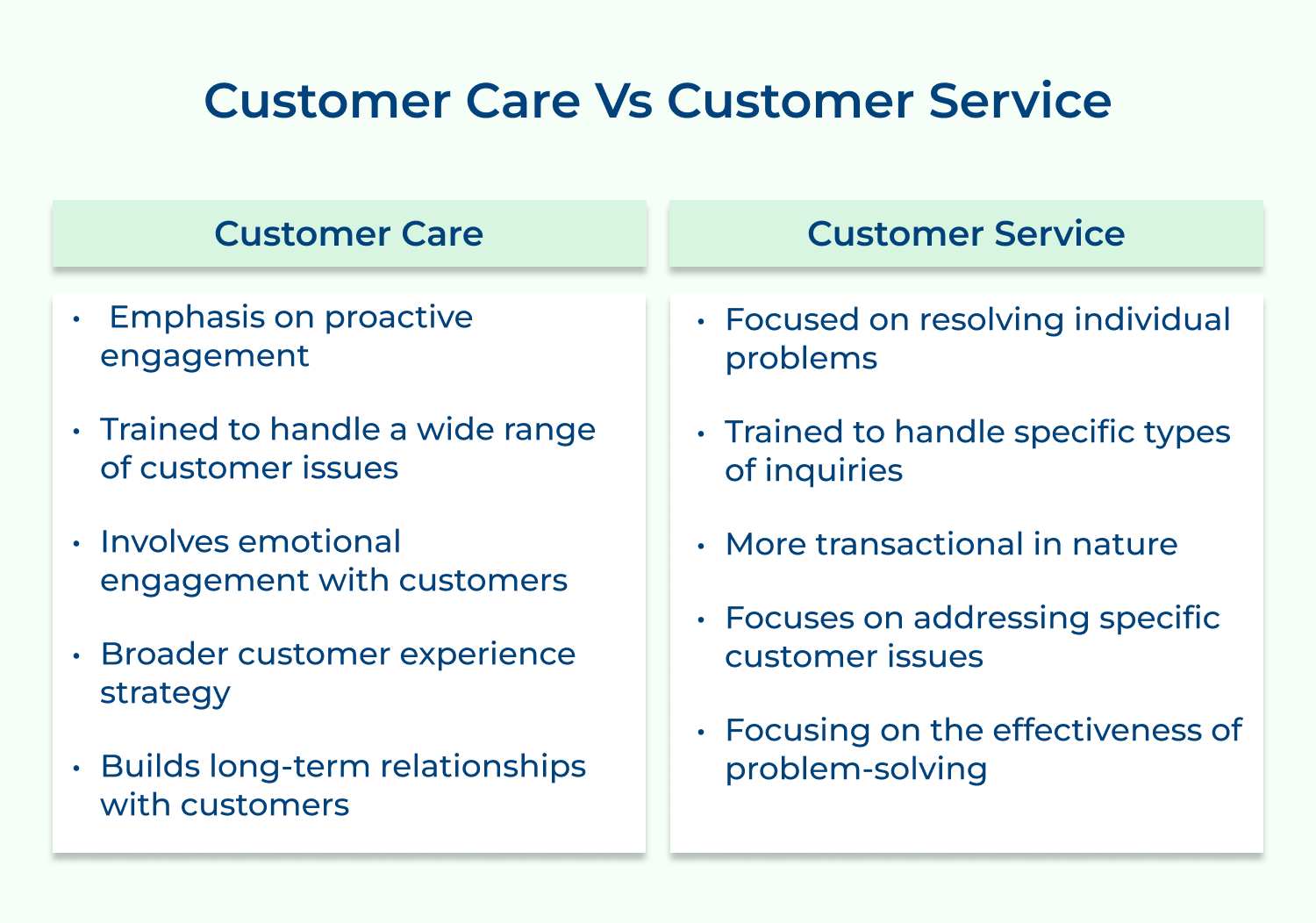
Customer care refers to the overall support provided to customers before, during and after a purchase. It focuses on building long-term customer relationships by holistically addressing their needs.
Customer service is more transactional, focusing on resolving specific issues or inquiries on time.
Customer care places a strong emphasis on proactive engagement with customers to anticipate and address their needs. It involves understanding the customer’s journey and providing personalized support to enhance their overall experience.
Customer service is reactive and primarily focused on resolving individual problems or inquiries as they arise.
Customer care involves ongoing communication with customers through various channels such as phone, email, live chat and social media. It aims to establish a customer rapport and provide continuous support throughout their interactions with the company.
Whereas customer service focuses on immediate communication to address specific issues or questions raised by customers.
Customer care prioritizes building strong, long-lasting relationships with customers by providing personalized attention and support. It aims to create loyal customers who are satisfied with the overall experience they receive from the company.
Customer service focuses on meeting the immediate needs of customers and resolving any problems or concerns they may have.
Customer care is often proactive, seeking to anticipate and address potential issues before they escalate. It involves actively engaging with customers to gather feedback, address concerns and offer solutions to enhance their experience.
Customer service is more reactive and responds to specific requests or inquiries from customers as they arise.
Customer care representatives are well trained to handle a wide range of customer issues and are equipped with the tools needed to provide comprehensive support. They may receive training in areas such as communication skills, conflict resolution and relationship-building techniques.
Whereas customer service representatives are typically trained to handle specific types of inquiries or issues and may focus more on technical knowledge or product expertise.
Customer care takes a holistic approach to problem-solving, considering the customer’s overall experience and long-term satisfaction. It seeks to address underlying issues and provide comprehensive solutions that meet the customer’s needs.
Customer service is more focused on resolving immediate problems or concerns raised by customers in a timely and efficient manner.
Customer care often involves emotional engagement with customers, as reps seek to understand their feelings, motivations and concerns. It aims to build trust with customers by demonstrating empathy and compassion.
Whereas customer service may be more transactional in nature, focusing on providing quick and efficient solutions to customer’s problems without necessarily engaging on an emotional level.
Customer care is measured based on metrics such as customer satisfaction, retention rates and customer lifetime value. It aims to build long-term relationships with customers and generate repeat business through exceptional service.
KPIs and metrics to measure customer service are response time, resolution rate and customer feedback, focusing on the effectiveness of problem-solving.
Customer care is often included as part of a broader customer experience strategy, which aims to deliver a seamless and personalized experience for customers across all touchpoints. It is integrated into the overall customer journey and involves aligning business goals with customer needs.
Whereas customer service is more tactical and focuses on addressing specific customer issues or inquiries as they arise.
Customer care and customer support, both are important aspects of any business, it is essential to understand the key differences between the two in order to provide the best possible service to customers.
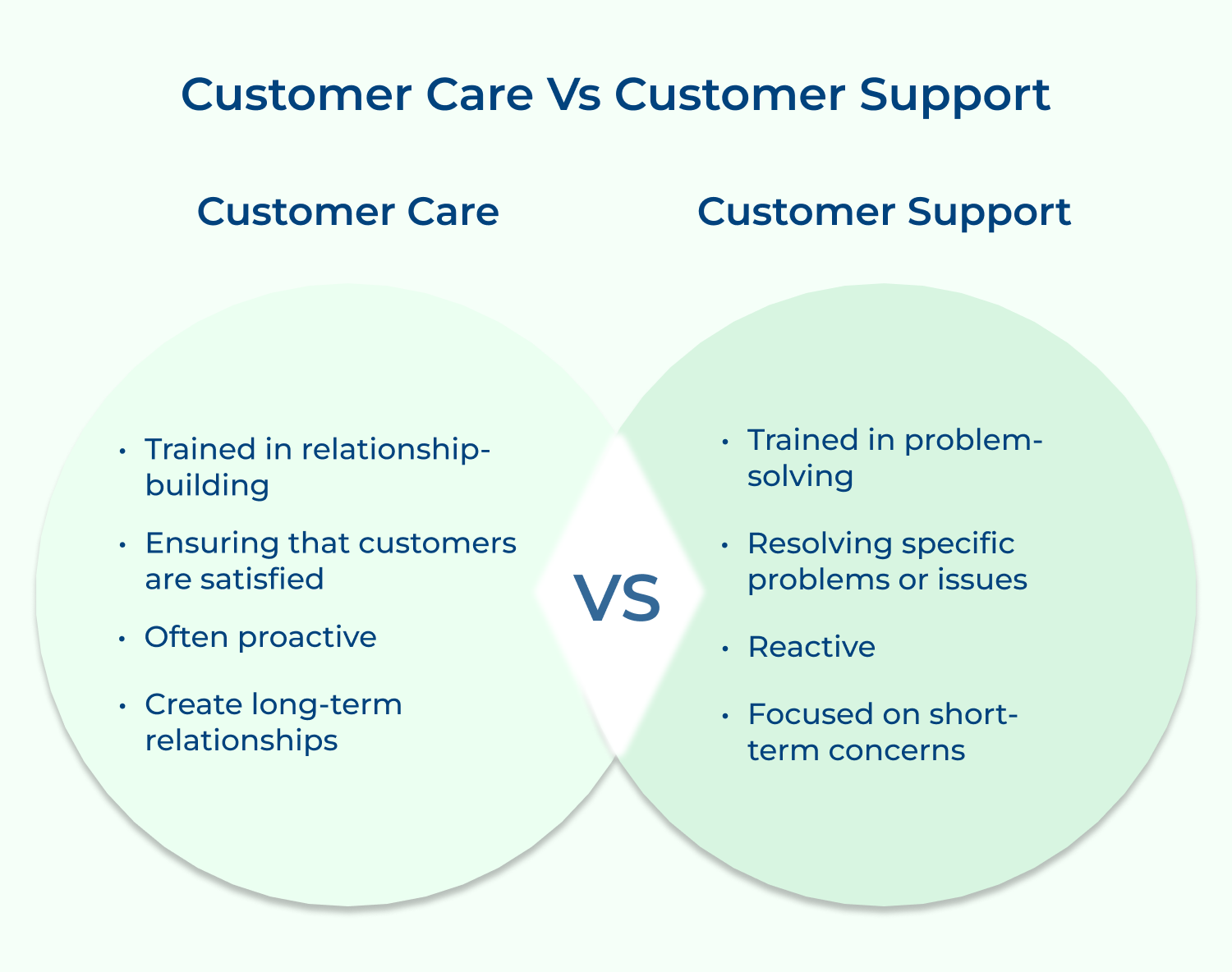
Customer care representatives are often trained in relationship-building and communication skills, as their role involves interacting with customers on a regular basis.
While the customer support champions are trained in problem-solving and conflict resolution skills, as their role involves addressing specific issues or problems.
Customer care is focused on ensuring that customers are satisfied with their overall experience with the company, while customer support is more focused on resolving specific problems or issues that customers may encounter.
Customer care is often proactive, meaning that it involves reaching out to customers to ensure that they are satisfied and addressing any potential issues before they become problems. Customer support is reactive, as it involves responding to customer inquiries or complaints as they arise.
Customer care aims to create long-term relationships with customers, fostering loyalty and repeat business. Whereas customer support is more focused on resolving immediate concerns, with less emphasis on long-term relationships.
Customer service and customer support are often used interchangeably, but they are actually two different aspects of the customer experience. While both involve assisting customers, there are key differences between the two.
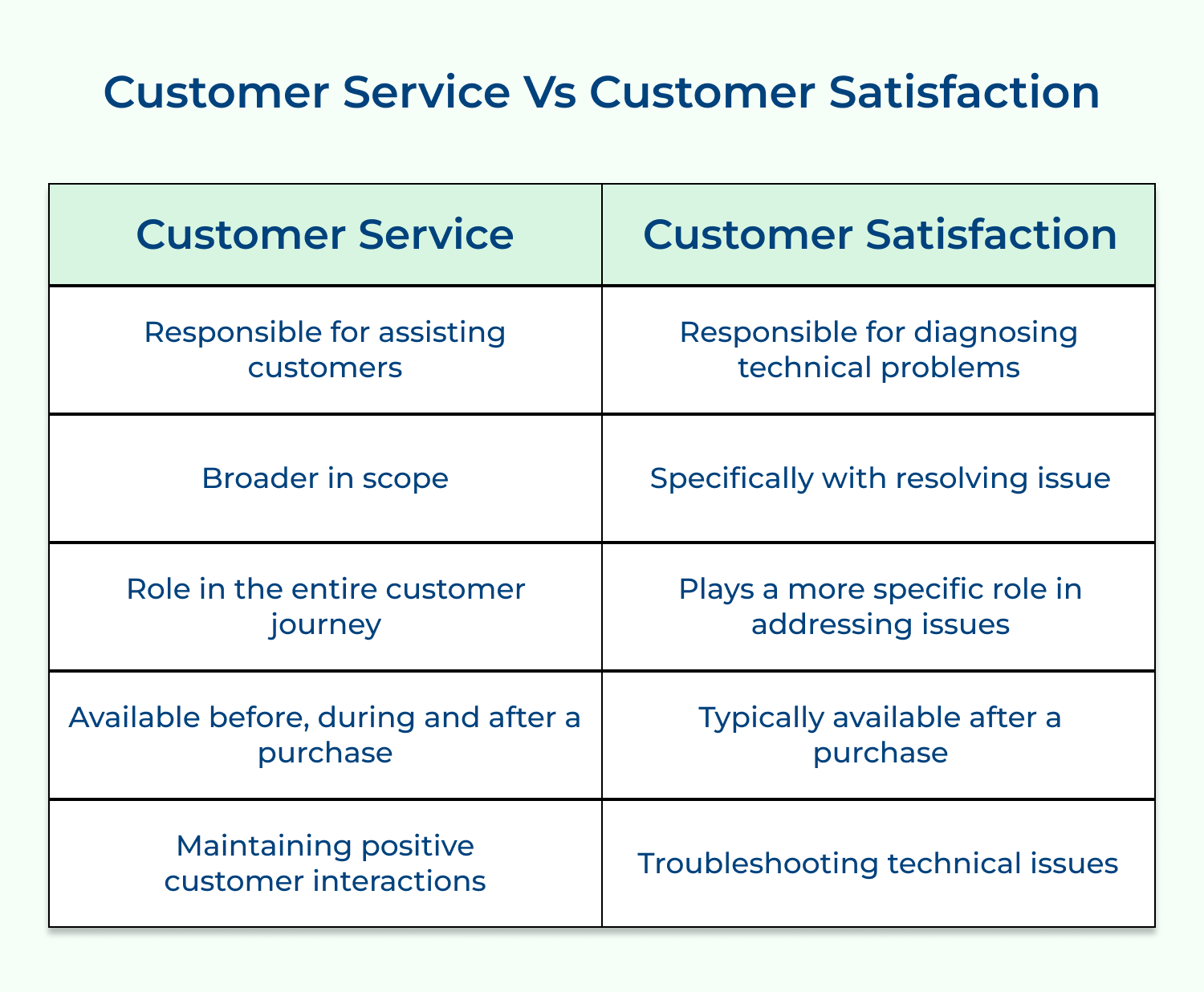
Customer service champions are responsible for assisting customers with general inquiries, product information, order processing and resolving complaints.
The customer support staff is responsible for diagnosing technical problems, providing solutions and escalating issues if necessary.
Customer service is broader in scope and covers all interactions with customers, including answering inquiries, providing product information, handling complaints etc.
The customer support team is more focused and deals specifically with resolving technical or operational issues.
Customer service plays a crucial role in the entire customer journey, from the initial contact to post-purchase interactions, ensuring a positive customer experience.
There is a specific role of customer support in the customer journey for addressing technical issues, troubleshooting problems and resolving complaints.
Customer service is available before, during and after a purchase, providing continuous support to customers at all touchpoints.
Whereas customer support is typically available after a purchase has been made, addressing any post-purchase issues or concerns.
Customer service often involves face-to-face interactions, phone calls, emails, live chat and social media. It is about building relationships and maintaining positive customer interactions.
Customer support typically involves troubleshooting technical issues over the phone, email or live chat.
Customer care and customer service are essential components of any successful business. Providing excellent customer service can help build trust, loyalty and satisfaction among your customers.
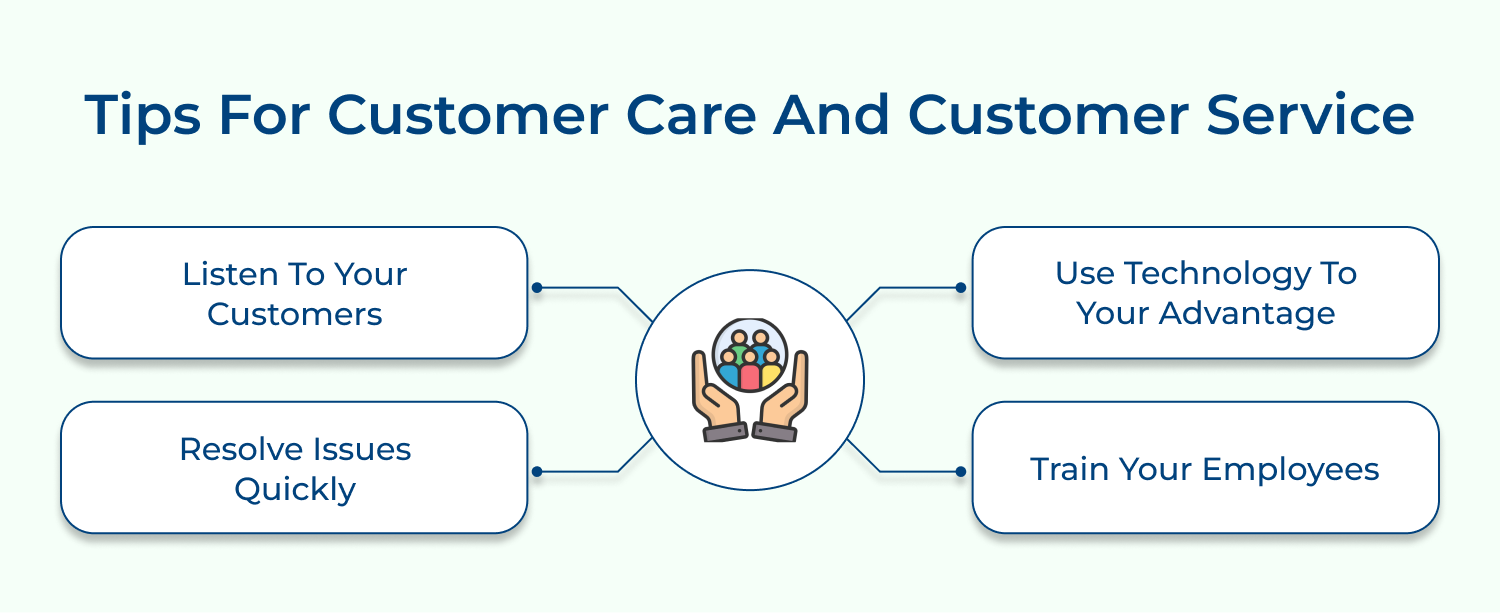
Here are some tips to help you improve your customer care and service:
Understanding the distinction between customer service and customer care is essential for businesses that want to provide exceptional customer experience. By recognizing the roles that each plays, companies can tailor their strategies and approaches to meet customer expectations effectively.
When customer service and customer care work together seamlessly, they can create a customer experience that exceeds expectations. Customer service addresses immediate needs and concerns, while customer care builds lasting relationships.
Both customer service and customer care are essential components of delivering great customer experience. By understanding the difference between the two and incorporating them into their overall customer experience strategy, businesses can create a positive experience for their customers.

What is the difference between customer care and customer service?
Customer care vs customer service are often used interchangeably, but they actually have different meanings. Customer care refers to the overall experience a customer has with a company, from the initial contact to post-purchase support. It involves building relationships with customers, understanding their needs and providing personalized service.
Customer service specifically refers to the assistance provided to customers when they have questions, issues, or complaints. It is more transactional in nature and focuses on addressing specific problems or concerns.
What’s the difference between customer service and customer support?
Customer service and customer support are related terms that are often confused. Customer service covers every interaction a customer has with a company, including sales, inquiries and post-purchase follow-up.
Customer support specifically refers to the assistance provided to customers after they have made a purchase. It can include technical support, troubleshooting or help with using a product or service. Customer support is more focused on resolving specific issues and ensuring customer satisfaction.
How do Customer Care vs Customer Service impact customer loyalty?
Customer Care builds emotional loyalty through empathy and personalized attention, while Customer Service drives satisfaction through efficient issue resolution. Together, they create lasting loyalty—care fosters trust, service ensures reliability, both essential for retention.
Which is more proactive: Customer Care vs Customer Service?
Customer Care is inherently proactive, anticipating needs and nurturing relationships before issues arise. Customer Service is typically reactive, responding to specific requests or problems. Both matter, but care drives prevention.
How do businesses balance Customer Care vs Customer Service?
Businesses balance both by training teams to resolve issues efficiently (Service) while genuinely understanding customer emotions and needs (Care). Platforms like omni24.io unify both functions, ensuring consistent, empathetic, and timely support.
 https://omni24.io/wp-content/uploads/2026/08/Omnichannel-Chatbots.png
1256
2400
Tushar Joshi
https://omni24.io/wp-content/uploads/2023/04/Omni-Logo-1.svg
Tushar Joshi2026-08-13 04:43:302026-08-24 09:02:01How Omnichannel Chatbots Improve Your Customer Experience
https://omni24.io/wp-content/uploads/2026/08/Omnichannel-Chatbots.png
1256
2400
Tushar Joshi
https://omni24.io/wp-content/uploads/2023/04/Omni-Logo-1.svg
Tushar Joshi2026-08-13 04:43:302026-08-24 09:02:01How Omnichannel Chatbots Improve Your Customer Experience https://omni24.io/wp-content/uploads/2026/08/Ecommerce-Chatbots-1.png
1256
2400
Tushar Joshi
https://omni24.io/wp-content/uploads/2023/04/Omni-Logo-1.svg
Tushar Joshi2026-08-12 03:57:552026-08-24 09:03:22Ecommerce Chatbots: What are They and Their Use Cases
https://omni24.io/wp-content/uploads/2026/08/Ecommerce-Chatbots-1.png
1256
2400
Tushar Joshi
https://omni24.io/wp-content/uploads/2023/04/Omni-Logo-1.svg
Tushar Joshi2026-08-12 03:57:552026-08-24 09:03:22Ecommerce Chatbots: What are They and Their Use Cases https://omni24.io/wp-content/uploads/2026/08/Omnichannel-Ecommerce.png
1256
2400
Tushar Joshi
https://omni24.io/wp-content/uploads/2023/04/Omni-Logo-1.svg
Tushar Joshi2026-08-11 04:50:362026-08-24 09:00:45How to Create an Omnichannel Ecommerce Strategy: 7 Best Ways
https://omni24.io/wp-content/uploads/2026/08/Omnichannel-Ecommerce.png
1256
2400
Tushar Joshi
https://omni24.io/wp-content/uploads/2023/04/Omni-Logo-1.svg
Tushar Joshi2026-08-11 04:50:362026-08-24 09:00:45How to Create an Omnichannel Ecommerce Strategy: 7 Best Ways
Whether it’s about acquire, engage or support – Omni24 covers all your customer engagement needs in one complete platform.

Copyright ©2026 Veemo All rights reserved.
CA, Los Angeles, Hall Ave, 19011